table of contents
Keeping software secure gets harder when release cycles speed up and code volume keeps rising. A strong application security consultant helps you find real risk earlier, before it turns into a breach, an audit problem, or a rushed fix.
That matters across web apps, mobile apps, APIs, and cloud services. It also matters when you need secure code review, penetration testing, DevSecOps consulting, and practical security assessments without slowing delivery.
Why companies hire one now
Internal teams usually know the product best. They often don’t have enough time for deep AppSec work. That gap shows up in authorization flaws, weak API controls, unsafe cloud defaults, and missed dependencies.
A consultant fills that gap with focused work. They can threat-model new features, review code, test APIs, and turn findings into fixes engineers can use. If you want a broader view of how AppSec work spans the SDLC, HADESS’s application security expert overview is a useful benchmark.
This also fits 2026 realities. AI-assisted development speeds up delivery, but it also creates more places for mistakes to slip through. Teams now need someone who can work across product, cloud, and development, not just run a scanner.
Skills that separate a real consultant

A good consultant moves between code, architecture, and business risk. That mix matters because findings only help when teams can act on them.
They should be able to:
- review code by hand, not only through automated tools
- test APIs, auth flows, and session handling
- read cloud and CI/CD setups with confidence
- explain risk in plain language
- rank issues by impact, not just count findings
A consultant who only talks about tools is a warning sign. You want someone who can support design review, threat modeling, and pen testing, much like the mix described on Andrew Hoffman’s consulting page.
In 2026, strong candidates also understand AI-related risk, supply-chain issues, and how to fit security into DevSecOps consulting. That matters because noisy tools don’t help much if developers stop paying attention.
If the consultant only promises more scans, you may be buying output, not judgment.
How to evaluate candidates before you sign
Start with one real problem, not a generic interview script. Pick an app, an API, or a release process that has visible risk. Then ask how the consultant would approach it in the first 30 days.
Look for evidence. Ask for a sanitized secure code review sample, a sample remediation plan, and an example of how they briefed engineers or leaders. The best answers show judgment. They explain what to fix first and why.
A short scorecard helps keep the process fair. Use it to compare candidates side by side.
| What to ask | Strong answer looks like | Weak answer looks like |
|---|---|---|
| How do you find risk in a release? | They mention code review, architecture, and test paths | They only mention tools |
| How do you handle API security? | They discuss auth, scope, token misuse, and logging | They only mention OWASP |
| What does success look like? | Fewer high-risk issues, faster fixes, better handoff | More findings |
| How do you work with engineers? | Clear tickets, examples, and short feedback loops | A long report with little context |
If a candidate can’t talk through one of your apps in plain English, keep looking. If they can map findings to SOC 2, PCI DSS, or ISO 27001 evidence, that is a strong sign for compliance-heavy teams.
If your team needs help comparing firms or sourcing options, Book a Discovery Call with Bud Consulting.
What hiring costs in 2026, and what you get back
In the US, many freelance or contract app security consultants charge about $60 to $150+ per hour in 2026. Project-based work often lands between $5,000 and $20,000+, depending on scope. For a broader market view, TechCloudPro’s 2026 rate guide is a useful benchmark.
| Model | Best for | Good when |
|---|---|---|
| Hourly | Short review bursts | You need triage or release support |
| Project-based | Secure code review, pen testing, cloud review | The scope is clear |
| Retainer | Ongoing advisory and DevSecOps consulting | You release often and need steady guidance |
The return shows up in fewer last-minute fixes, cleaner audits, and less engineer time lost to rework. It also shows up when the consultant catches a weak auth flow or a bad API pattern before users do. That saves far more than a few days of billable time.
A hiring process that keeps the work moving
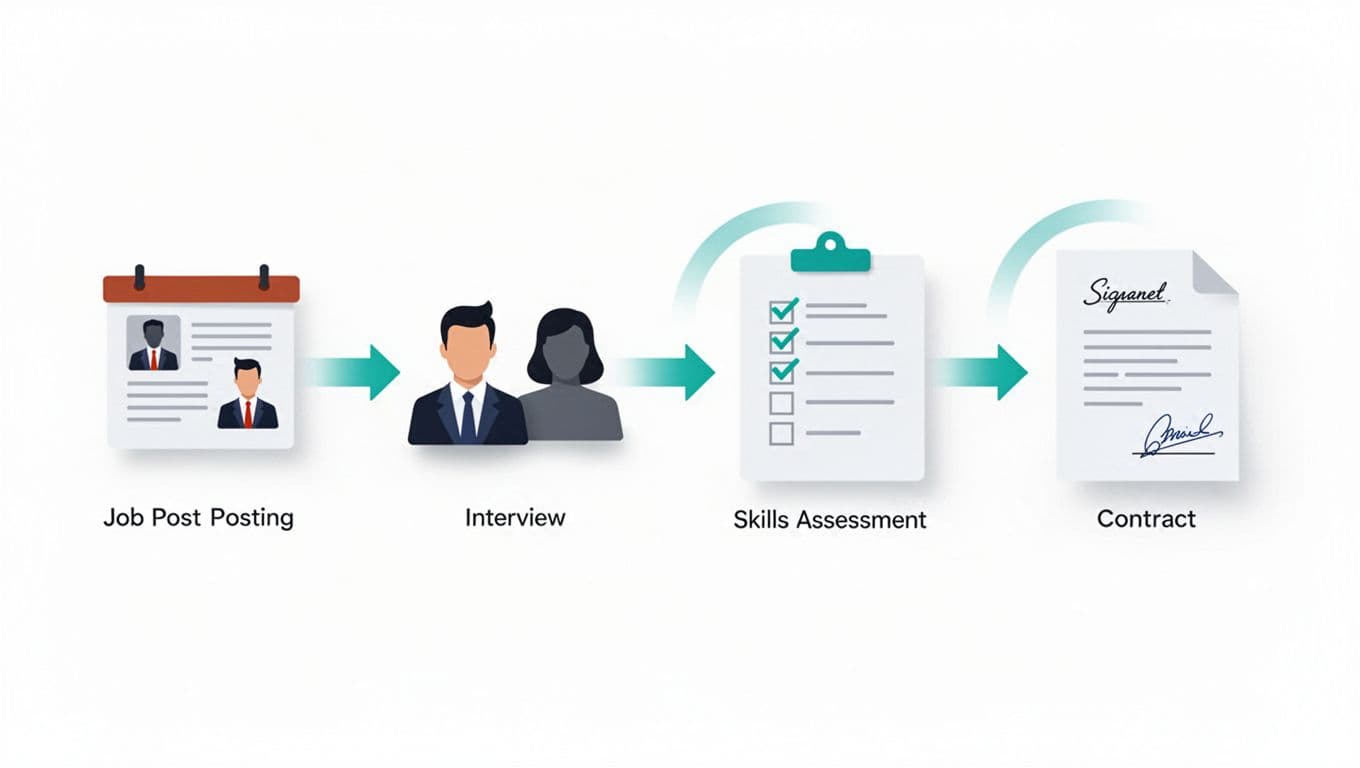
A simple process works best.
- Define the first 90 days and the business risk you want reduced.
- Pick one real app or API for the consultant to review.
- Ask for a sample deliverable, not just a slide deck.
- Test how they talk to engineers, leaders, and procurement.
- Agree on success metrics before the work starts.
Keep the metrics simple. Focus on fewer high-risk findings, faster remediation, and better release confidence. If the consultant also helps your team improve coding habits, the value compounds over time.
Hire for outcomes, not just credentials
The best consultant does more than point out bugs. They help your team ship with fewer surprises, cleaner audits, and stronger control over APIs, cloud apps, and release gates.
That matters even more in 2026, when speed is high and weak spots spread fast. Choose the person who can reduce risk without turning security into a bottleneck.