table of contents
A vague cybersecurity audit quote can hide a lot of extra work. One vendor may price a light review, while another quotes for control testing, interviews, and retesting.
That gap causes confusion fast. If you want fair bids, you need a clear scope, clean terms, and the right questions.
What vendors need before they price the work
Vendors do not quote from a job title alone. They price based on scope, access, evidence, and time.
A small company with one cloud app will not get the same quote as a group with hybrid infrastructure, many users, and strict rules. The more detail you give, the less guesswork they need.
Before you ask for a quote, share the basics:
- The size of the business, including users, devices, apps, and locations
- The systems in scope, such as cloud tools, servers, endpoints, and identity platforms
- Any compliance target, like SOC 2, ISO 27001, PCI DSS, or HIPAA
- Whether the work is remote, onsite, or both
- The kind of report you need, such as a summary for leaders or a technical report for engineers
That list matters because each item changes the effort. A vendor may need more interviews, more evidence review, or more testing time.
Ask vendors to show their assumptions in writing. Hidden assumptions are where quotes start to drift.
The scope details that move the number
A cybersecurity audit quote changes as soon as the environment gets more complex. A single office with one business app is simpler than a company with multiple cloud accounts, legacy systems, and several business units.

Here are the main pricing drivers that often change the number:
Organization size affects how much evidence the team must review. More users, systems, and sites mean more work.
Environment complexity also matters. Cloud, on-prem, remote access, third-party tools, and multiple identity systems all add scope.
Compliance requirements can raise the price because the vendor must map evidence to a framework or rule set.
Testing depth changes the effort too. A document review takes less time than control testing, interviews, or technical validation.
Reporting needs matter more than many teams expect. An executive summary, risk ranking, and remediation roadmap take different levels of effort.
Remediation support can be priced separately. Some vendors only deliver findings. Others stay on to help fix them or retest.
A good quote request says what is in scope and what is out. It also says whether you want a one-time audit, a broader assessment, or a follow-up review after fixes.
Audit, assessment, penetration test, and compliance gap analysis are different asks
These terms get mixed up often, but they do different jobs. If you use the wrong term, you may get the wrong quote.
| Service | Main goal | Typical output | Quote impact |
|---|---|---|---|
| Cybersecurity audit | Check controls against a standard or policy | Evidence review, control testing, findings, and recommendations | Depends on scope size and documentation depth |
| Security assessment | Review the broader security posture | Prioritized weaknesses and improvement areas | Often broader, but less formal |
| Penetration test | Try to exploit real weaknesses | Technical findings and proof of impact | Depends on target count and testing depth |
| Compliance gap analysis | Compare current state to a framework | Gap list and roadmap | Depends on the number of requirements and evidence needs |
If you want proof that controls work, ask for an audit. If you want an attack simulation, ask for a penetration test. If you need a roadmap before certification work, ask for a gap analysis.
That distinction helps you compare quotes on equal terms. It also keeps vendors from pricing work you never asked for.
How to write a request that gets useful answers
A strong request reads like a brief, not a sales inquiry. It should give vendors enough detail to price the job and enough room to ask smart follow-up questions.
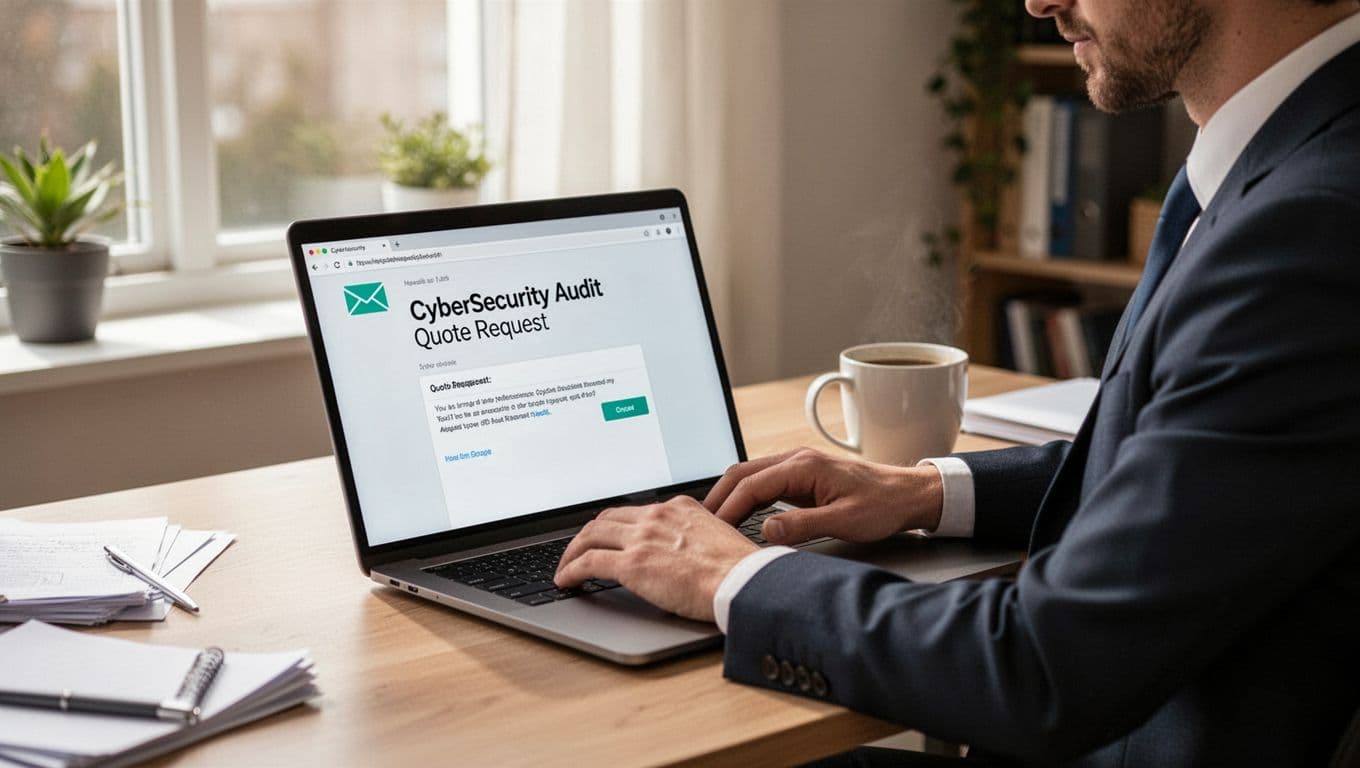
Use a short email like this:
Subject: Request for cybersecurity audit quote
Hi [Vendor Name],
We’re requesting a quote for a cybersecurity audit of [company name]. Our environment includes [number] users, [number] endpoints, [cloud/on-prem systems], and [any key tools or business units].
We need coverage for [framework, control set, or business goal]. Please include your assumptions, testing approach, deliverables, timeline, and any optional remediation support or retest pricing.
Please also note any exclusions, travel costs, and information you need from us to confirm scope.
Thanks,
[Name]
This kind of request saves time on both sides. It also gives procurement and leadership a quote they can compare cleanly.
If you want help tightening that scope before you send it out, Book a Discovery Call with Bud Consulting.
Compare quotes by scope, not just by total
A low total can look great on paper. Still, the cheapest bid may leave out the work you need most.
Check each response for three things. First, see whether the vendor listed assumptions. Second, confirm the deliverables, including report type and any retest. Third, look for clear exclusions, such as travel, extra systems, or advisory hours.
You should also ask how the vendor prices changes. If your environment expands mid-project, what happens next? A clear quote answers that before the contract starts.
The best bids are easy to compare because they describe the same work in plain language. That is far more useful than a glossy number with no detail.
A well-written cybersecurity audit quote request does one thing well. It turns a vague search into a focused buying decision.
When the scope is clear, the price makes sense. When the scope is fuzzy, the lowest bid can cost the most later.