table of contents
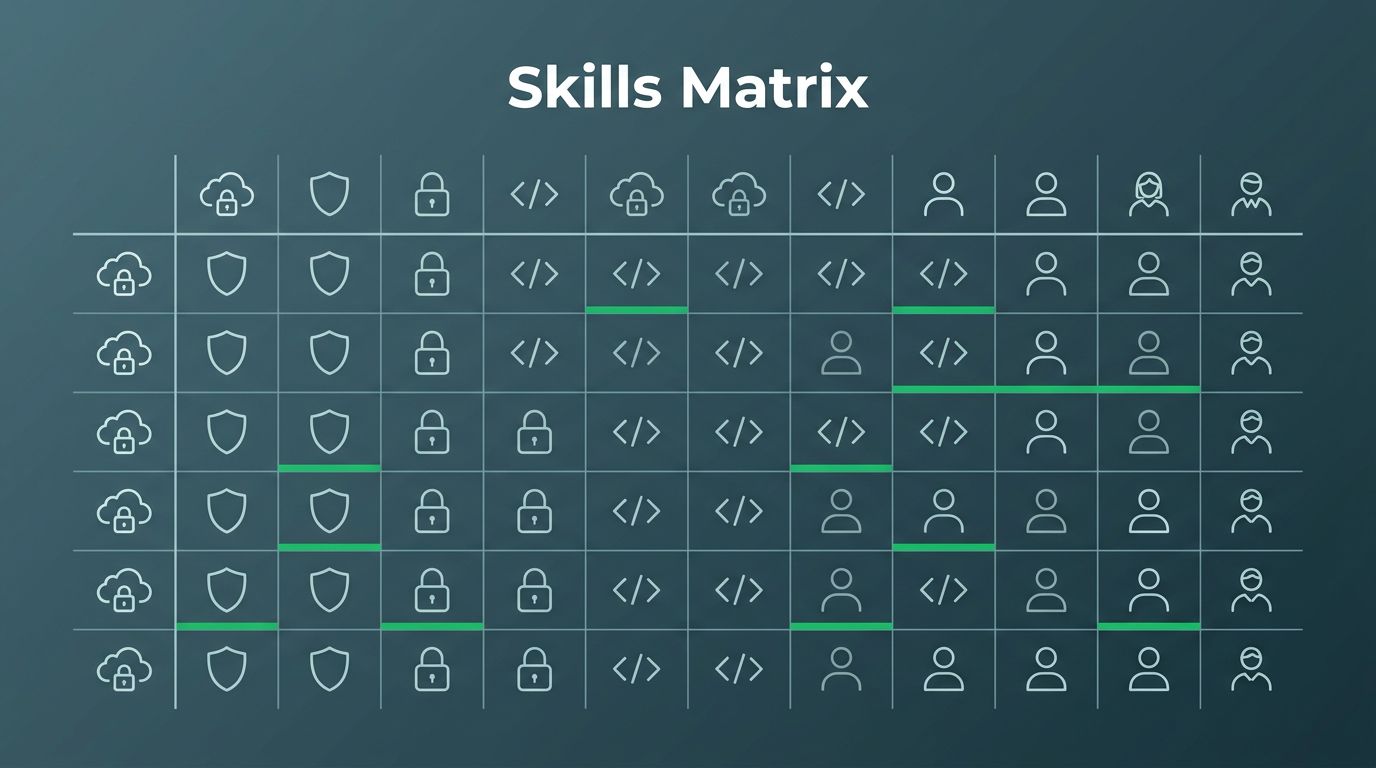
A growing company can look secure on paper and still miss the skills that matter most. A security team skills matrix shows where your team has depth, where one person owns too much, and where business risk is rising.
It also keeps security planning grounded in real work. That makes it easier to choose between training, hiring, and outside support.
Start with the security work that drives risk
A useful matrix tracks functions, people, and confidence levels. It should show whether your team can run security operations, manage GRC work, review applications, secure cloud setups, control identity and access, lead incident response, and handle vulnerability management. It should also show who can write detections, tune alerts, and guide others.
Depth matters because a specialist can solve hard problems. Coverage matters because work does not stop when one person is out. Redundancy matters because a single point of failure turns into business risk fast.
If your cloud security lead is also your only incident lead, that gap deserves attention. The same is true when one engineer owns both IAM and AppSec. The matrix helps you spot those overlaps before they turn into outages or audit gaps.
Use a scoring model that people can defend
A score only works when everyone uses the same meaning. Keep it simple and use the same scale for every role.
| Score | Meaning | Example evidence |
|---|---|---|
| 0 | No practical skill | Has not worked in this area |
| 1 | Basic awareness | Can follow a runbook with help |
| 2 | Working skill | Can handle common tasks alone |
| 3 | Strong skill | Can solve unusual problems and guide others |
| 4 | Expert | Sets standards, reviews work, coaches the team |
Use the score only for skills you can prove. A person can know the theory and still need help in a live event. Separate execution from leadership too. Someone may do the work well but still need support when coaching others.
The best scorecards show risk, not ego.

Build the matrix around real security functions
The matrix should mirror real functions, not job titles. A small team may combine several areas under one person. As the company grows, those areas need clearer ownership.
Use a simple template like this.
| Function | What the matrix should prove | Common growth gap |
|---|---|---|
| Security operations | Can triage, tune, and escalate alerts | No one owns after-hours response |
| GRC | Can map controls, manage evidence, support audits | Too much manual follow-up |
| AppSec | Can review code, threat model, coach engineers | No one sets secure design rules |
| Cloud security | Can define guardrails and handle misconfigurations | Cloud work spread across admins |
| IAM/PAM | Can manage joiner, mover, leaver, and privileged access | Access reviews slip |
| Incident response | Can lead the event and coordinate teams | No clear incident commander |
| Vulnerability management | Can prioritize, verify, and report fixes | Backlog grows without context |
| Detection engineering | Can build and test detections | Alerts stay noisy |
| Security leadership | Can set priorities and plan hiring | No one connects security to budget |
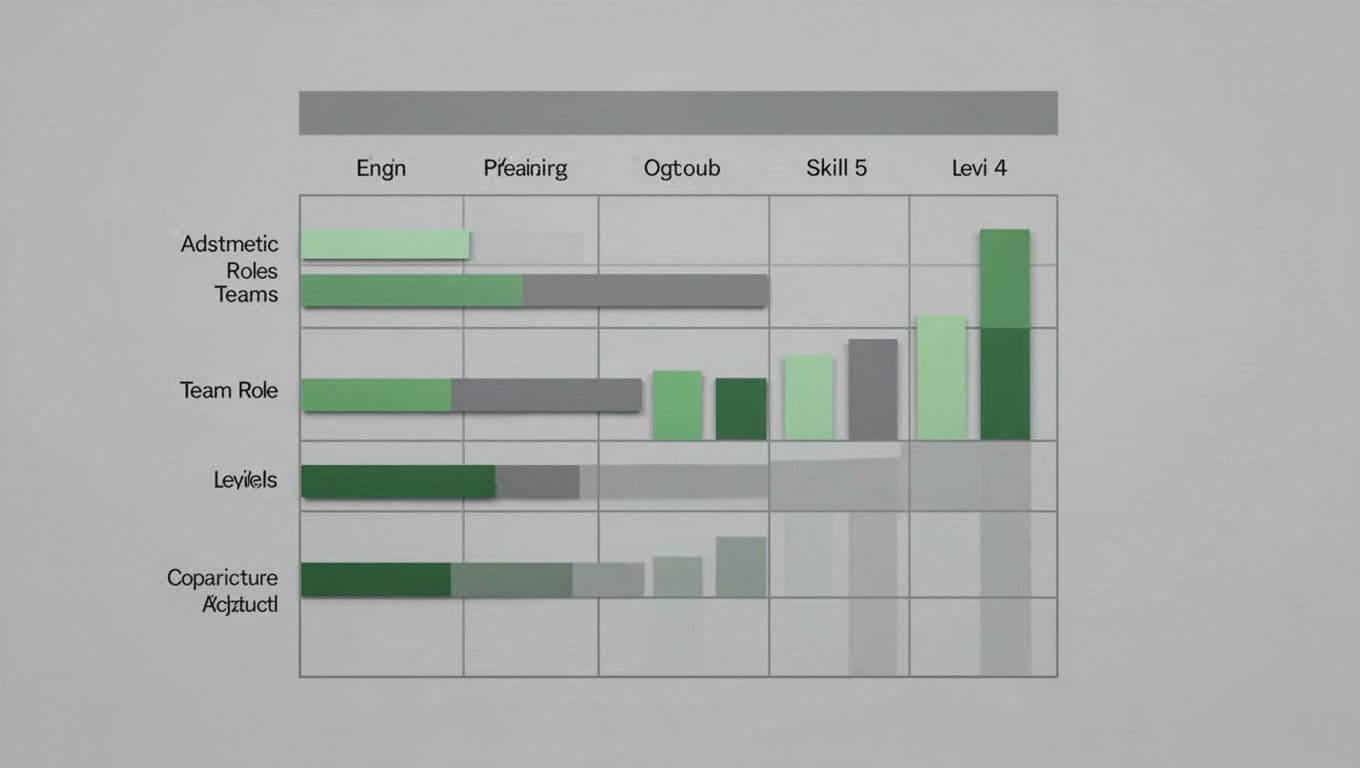
If you want a starting layout, a cybersecurity skills matrix template gives you a clean grid to adapt. When incident response needs extra attention, an incident response skills matrix template helps you map who leads, who supports, and who can backfill. Keep the first version plain. You want a tool that guides action, not a spreadsheet that becomes a project of its own.
Adjust the matrix as the company grows
In a startup, the matrix often shows broad generalists. One or two people may cover SecOps, cloud basics, IAM, and incident response. That is normal, but it needs backup plans.
| Stage | Team shape | Skills that need focus |
|---|---|---|
| Startup | Small generalist team | SecOps, CloudSec, IAM, incident response basics |
| Mid-market | Split ownership | AppSec, GRC, detection engineering, backup coverage |
| Mature | Specialized team with backfills | Leadership depth, process, training, succession |
By mid-market, breadth alone stops working. You need named owners for AppSec, CloudSec, IAM, GRC, and detection work. At that point, the matrix should show who can lead, who can review, and who can step in after hours.
A more mature team usually needs stronger separation. Detection engineering, threat hunting, incident command, and leadership all need clearer depth. Training can still close many gaps, but some areas need a real hire because the risk or volume is too high.
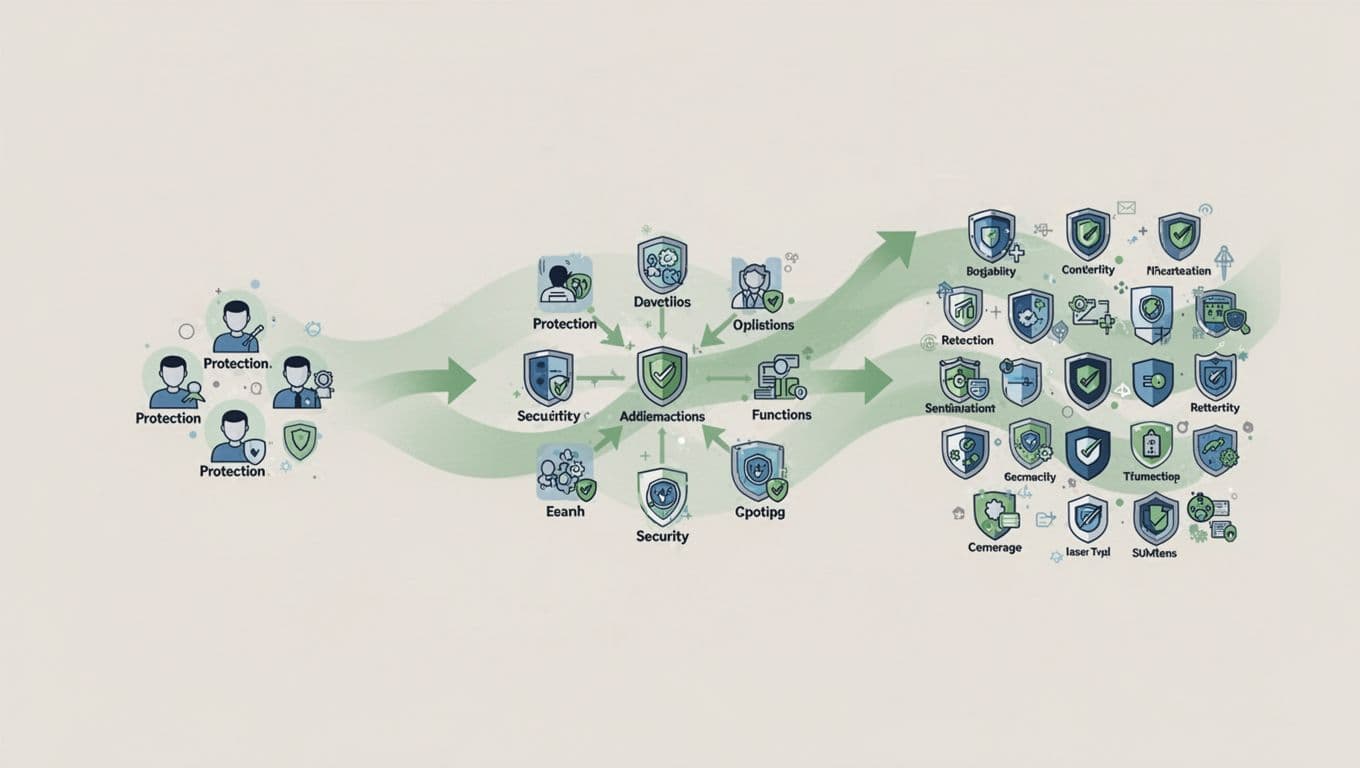
Use the matrix to track that shift. When products launch in new regions, cloud risk changes. When audits get heavier, GRC and IAM matter more. When incident volume grows, response coverage matters more than heroic effort.
Turn the gaps into hiring and training decisions
Once the matrix is current, turn it into a decision list. Low-risk gaps with room for learning belong in training plans. High-risk gaps with heavy workload belong in hiring plans. Niche or occasional needs often fit outside help better than a permanent role.
That is where the matrix becomes useful for budgeting and planning. It shows whether you need a senior cloud security architect, an IAM/PAM specialist, an AppSec lead, or stronger detection engineering. It also helps when a manager asks why one open role matters more than another.
If you need help turning those gaps into a practical hiring plan or advisory path, Book a Discovery Call with Bud Consulting.
A matrix only works if it stays tied to the business. Review it after major launches, new tools, or a real incident. That habit keeps coverage, depth, and redundancy aligned with risk instead of guesswork.