table of contents
Zero trust projects fail when teams buy tools before they agree on access rules. That mistake gets expensive fast, especially in 2026, when identity-first security, hybrid cloud, and third-party access are part of everyday risk.
A zero trust consultant helps you turn broad security goals into a working plan. The right one can separate signal from vendor noise, then build a roadmap your business can support.
Why zero trust needs a specialist now
The old perimeter is gone. Users sign in from home offices, SaaS apps sit outside the network, and contractors touch sensitive systems from shared devices.
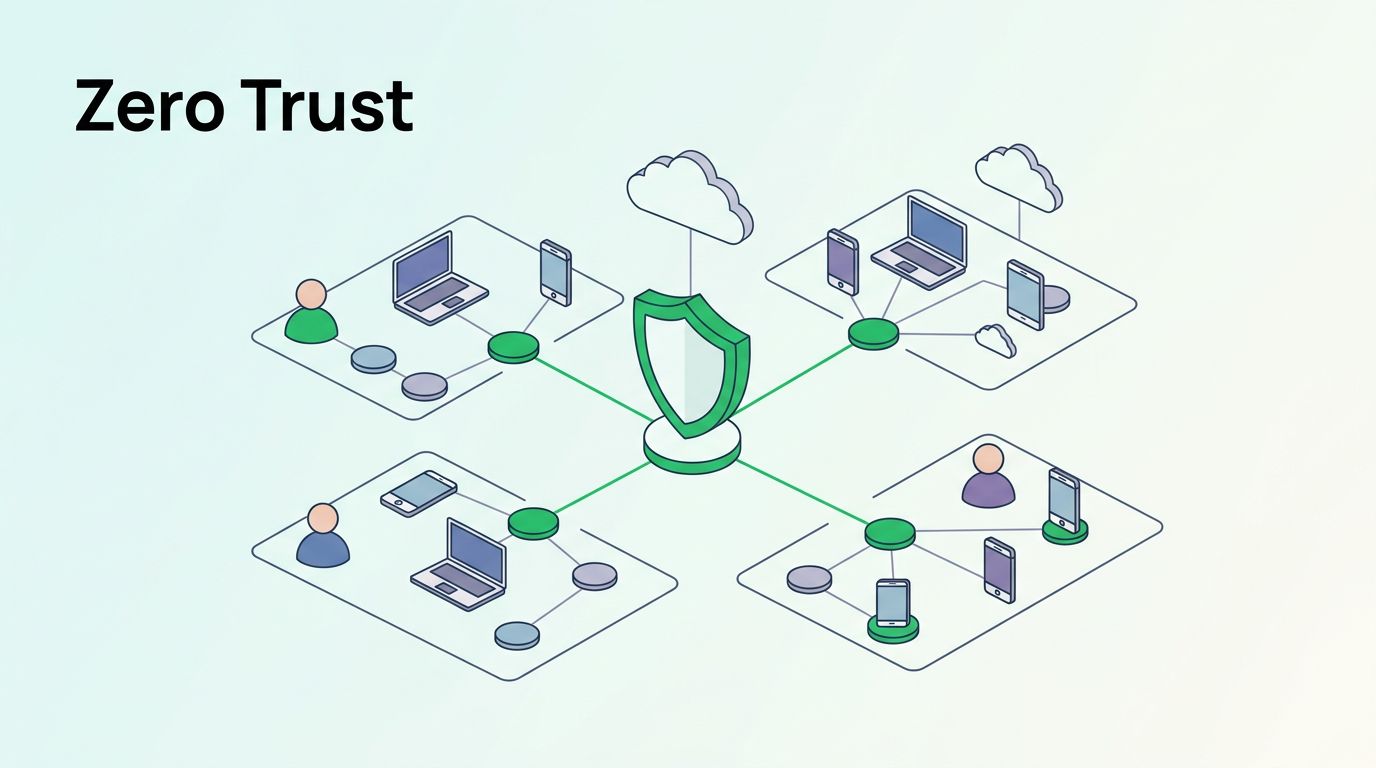
That mix changes the job. A strong consultant looks at identities, devices, data, and trust paths together. They also design for continuous verification, least privilege, and microsegmentation, not just a better VPN story.
NIST still gives buyers a useful baseline. Its zero trust architecture project page and high-level implementation document help separate strategy from product pitches.

What a capable consultant should bring
A good consultant does more than explain zero trust in a slide deck. They should map your current state, define gaps, and show how controls will work across cloud and on-prem environments.
| Capability | What it should look like |
|---|---|
| Identity-first design | Maps users, service accounts, devices, and vendors before choosing controls |
| Least privilege | Limits access by role, data, time, and risk |
| Microsegmentation | Separates critical apps and data into tighter trust zones |
| Continuous verification | Rechecks sessions with device health, location, and behavior signals |
| Third-party access | Covers contractors, suppliers, and partners without broad standing access |
If a consultant cannot connect those areas, the plan will stay abstract. If they can, the roadmap becomes usable.

You should also expect them to work well with architects, IAM teams, network leads, and compliance owners. Zero trust touches all of them. That means the best consultants can explain tradeoffs without hiding behind jargon.
A practical way to evaluate candidates
Start with a short, direct conversation. Ask how they would assess your environment, then listen for structure. Good answers mention discovery, policy design, pilot scope, phased rollout, and governance.
Use this checklist during interviews:
- Scope: Do they cover identities, endpoints, apps, data, and third parties?
- Method: Can they explain how they move from assessment to rollout?
- Proof: Do they bring sample roadmaps, control maps, or prior outcomes?
- Fit: Have they worked in regulated, hybrid, or multi-cloud settings?
- Ownership: Will they help your team run the model after launch?
A good consultant reduces uncertainty before asking you to buy anything.
Also ask how they measure progress. If they only talk about tools installed, keep looking. You want milestones tied to access reduction, segmentation, policy enforcement, and audit readiness.
If you want a deeper buyer lens on access tooling, GigaOm’s evaluation criteria for ZTNA solutions is a useful reference point.
Mistakes that slow the project down
The most common mistake is starting with a product demo. That approach can lock you into a tool before you define the policy.
Another problem is treating zero trust as a one-time network project. It touches identity governance, privileged access, device posture, app access, and logging. If those pieces sit in separate plans, progress slows.
Watch for these warning signs:
- The consultant keeps the conversation focused on VPN replacement.
- Third-party access gets pushed to a later phase.
- Microsegmentation is described without business data or app maps.
- Compliance is treated as the finish line instead of one input.
- No one owns policy updates after go-live.
A strong consultant keeps the business question in view. Which users need access, to what, under what conditions, and for how long? That is the core of the work.
What success should look like after the engagement
A useful engagement ends with clear artifacts, not vague confidence. You should have an access model, a phased roadmap, a prioritized control list, and a plan for ownership.
In practical terms, that often means fewer standing privileges, tighter control around crown-jewel apps, better contractor access, and cleaner audit evidence. It also means your teams know which controls matter first.
If you still have a senior talent gap after the strategy work, or you need help finding the right specialist to execute it, Book a Discovery Call with Bud Consulting.
A zero trust program should make access decisions clearer, not more confusing. The best consultant helps you get there with identity-first controls, continuous verification, and a plan your organization can actually run.