table of contents
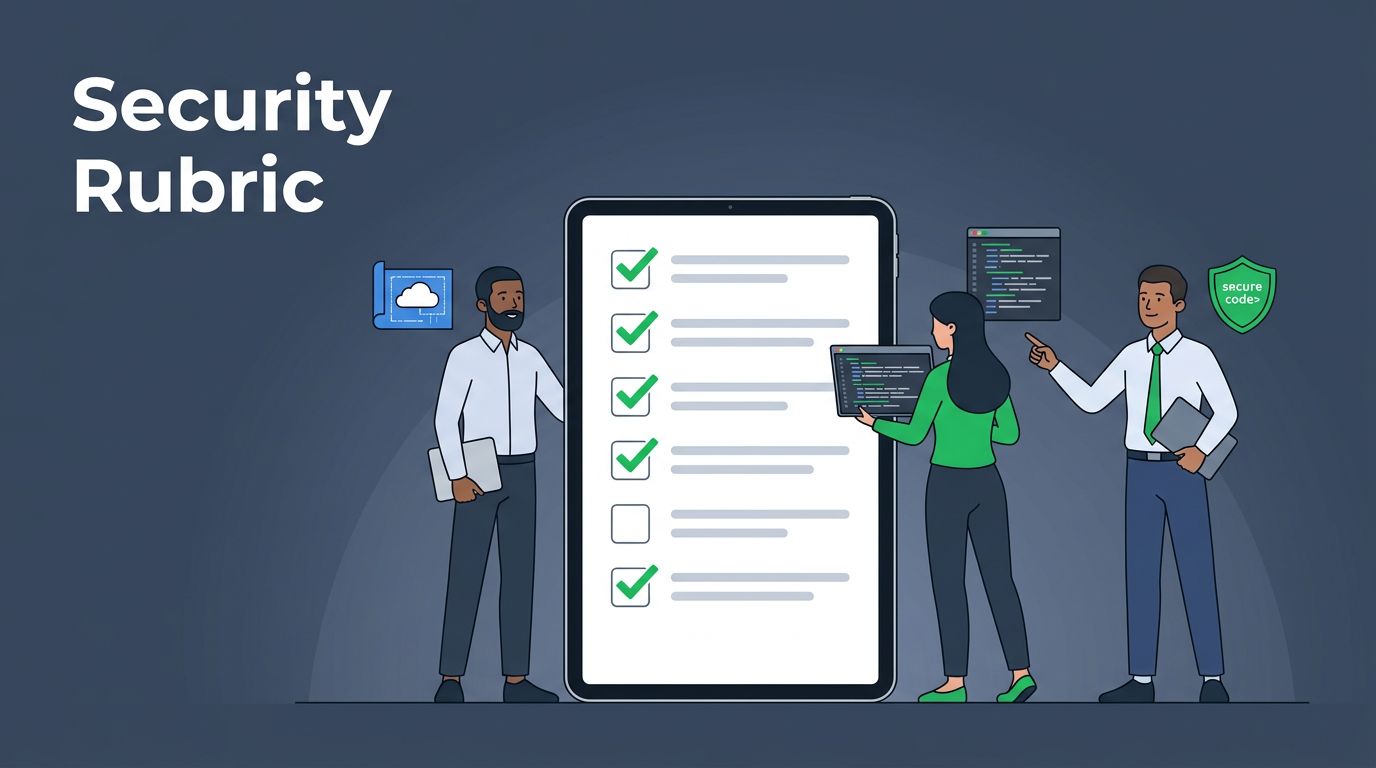
A strong security interview rubric saves time, but more importantly, it keeps hiring fair. It gives each interviewer the same yardstick, so strong candidates don’t get lost in opinion.
That matters in security hiring, where roles differ a lot. A cloud security architect, a detection engineer, and an appsec lead may all be excellent, yet their strengths look different on paper and in a panel.
A good rubric helps you spot real skill, separate must-have abilities from skills you can train, and compare candidates with less bias. It also makes the final decision easier to defend.
Start with the role, not a generic checklist
The best rubrics begin with the actual job. A threat hunter, for example, needs different judgment than a GRC-adjacent technical analyst. A one-size-fits-all scorecard blurs those differences.
Start by writing the outcomes the person must own in the first six months. Then map interview questions to those outcomes. That keeps the process tied to work, not theory.
NIST’s guidance on writing a hiring rubric is a solid reference point for this kind of structure. For a more skills-based format, the interview guide and evaluation rubric from the Rework America Alliance shows how to keep scoring grounded in job tasks.
A role-specific rubric also helps technical interviewers ask better follow-up questions. If the candidate says they handled an alert, the next question should test depth. What did they check first? What did they ignore? Why?
Score the dimensions that predict job performance

The most useful rubrics score a small set of dimensions, then define what good looks like in plain language. Here is a simple version that works across technical security roles.
| Dimension | What strong evidence looks like | What weak evidence looks like |
|---|---|---|
| Technical depth | Explains root cause, tradeoffs, and tooling clearly | Gives broad answers without detail |
| Systems thinking | Connects people, process, and technology | Focuses on one tool or one step only |
| Communication | Explains risk in simple terms | Uses jargon or avoids clear answers |
| Incident judgment | Prioritizes well under pressure | Jumps to action without triage |
| Collaboration | Works across teams without friction | Treats security as a solo job |
| Security fundamentals | Knows core controls and common failure points | Misses basic concepts or terms |
That structure works well across hiring needs. For detection and response, ask how the person would triage noisy alerts. For application security, test how they think about code paths, ownership, and risk. For cloud security, look for IAM, segmentation, and service-level control thinking. For GRC-adjacent technical roles, check whether they can translate control gaps into practical fixes.
A strong scorecard helps the panel compare answers on the same scale. That matters more than a long list of questions.
The goal is consistent judgment, not a perfect interview.
Separate must-have skills from trainable skills
This is where many hiring teams get stuck. They treat every skill like a hard gate, then lose good candidates who could ramp quickly.
Start with must-have skills. These are the things the person needs on day one. For a senior cloud security role, that may include IAM design, risk review, and stakeholder handling. For a detection engineer, it may include log analysis, alert tuning, and incident triage.
Then mark trainable skills. These can grow with time, coaching, or domain exposure. A candidate may know endpoint response but not your stack. That can still be fine if the core thinking is strong.
Use a simple split:
- Must-have: core concepts, role-specific judgment, and basic tool fluency
- Trainable: internal process knowledge, niche platform depth, and company-specific workflows
- Hiring signal: clear evidence the candidate has learned complex systems before
- Red flag: weak fundamentals that would slow the team from day one
This split keeps hiring honest. It also reduces false negatives, which are common in security hiring.
If you want help building a rubric for senior security engineering, appsec, cloud, or GRC-adjacent roles, Book a Discovery Call with Bud Consulting.
Make scoring consistent across interviewers
A rubric only works if the panel uses it the same way. That means every interviewer needs anchors, examples, and a shared definition of each score.
A 1-to-5 scale works well when you define each level. For example, a “3” might mean the candidate can do the work with guidance. A “5” should mean they can lead, teach, or improve the process.
Calibration helps too. Before live interviews, have the panel review one sample candidate response and score it together. Then compare notes. Small differences are normal. Large gaps show where your rubric needs clearer language.
Write notes during the interview, not after the debrief. Facts beat memory. A short note like “explained IAM tradeoff and called out logging gap” is more useful than “seemed strong.”
This is also where fair hiring lives. A clear rubric reduces snap judgments and keeps candidates on equal footing, even when interviewers come from different teams.
Hire for repeatable judgment, not gut feel
A solid security interview rubric does more than score answers. It shows which candidates can think clearly, work with others, and make safe choices under pressure.
The best rubrics are short, role-specific, and easy to use. They focus on what matters most, then leave room for growth in the rest.
When hiring teams score the same way, they make better offers and fewer bad bets. That is good for candidates, and it is better for the security program.