table of contents
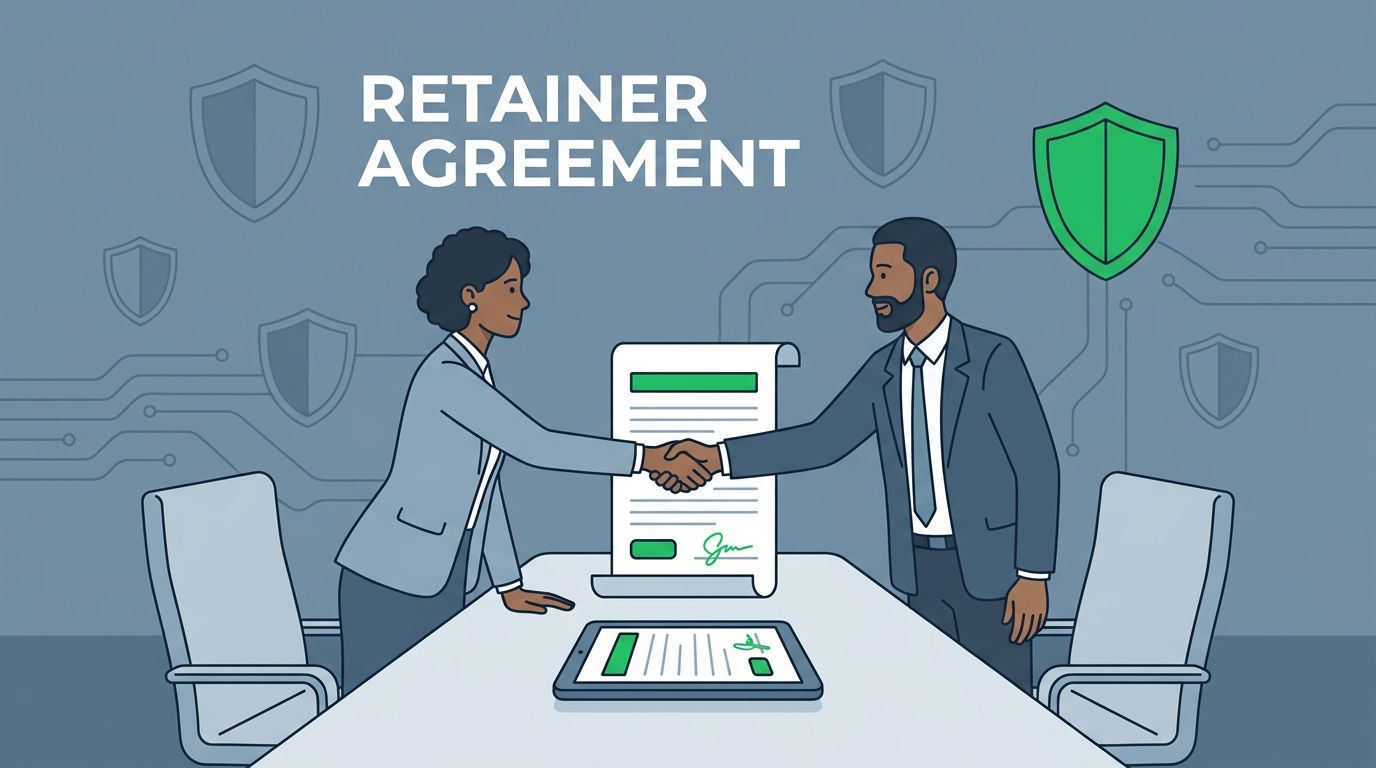
A cybersecurity consultant retainer agreement can save time, money, and arguments before they start. It gives the client steady access to help, and it gives the consultant predictable work.
That matters when support covers incident response, policy reviews, vendor checks, or control testing. It also matters when the work needs to align with NIST, ISO 27001, or SOC 2 without pretending every draft agreement is a legal shield.
The strongest agreements keep the scope plain, the pricing fair, and the response rules easy to follow.
Why retainers work better than ad hoc support
Retainers work best when the client needs ongoing judgment, not a one-time report. A monthly agreement is easier to manage than a pile of emails and purchase orders.
For a general structure, Mercury’s consulting retainer guide gives a useful starting point. For incident-heavy support, Cisco Talos’ incident response retainer description shows how emergency help and proactive work can sit in the same package.
The value is simple. Clients know who to call, and consultants know what they are expected to deliver. That lowers friction when a breach, audit, or policy review lands on a busy week. It also helps the consultant spot drift early, before a small gap turns into unpaid work.

The clauses that prevent scope creep
The agreement should spell out the work in plain English. If a clause needs a lawyer to translate it, it’s probably too vague.
A solid retainer should cover these points:
- Scope of services, such as monthly advisory calls, email support, or one control review. This matters because it tells both sides what sits inside the fee.
- Response times, such as “critical incidents receive a response within four business hours.” This matters because security work often needs fast triage.
- Deliverables, such as a short risk summary and action list each month. This matters because the client needs something measurable.
- Out-of-scope work, such as pen tests, major remediation, or new policy builds that need separate approval. This matters because small requests can grow fast.
- Fees and billing, such as a monthly retainer due on the first of the month with late fees after 15 days. This matters because payment timing keeps the relationship stable.
- Confidentiality and access, such as protection for client data and limits on system access. This matters because the consultant may handle logs, credentials, or incident notes.
- Ownership, such as the client owning final reports while the consultant keeps pre-existing tools and templates. This matters because both sides need to know what can be reused.
- Term and exit, such as either party ending the agreement with 30 days’ notice. This matters because a clean exit reduces stress if priorities change.
If the scope is vague, every urgent email can turn into a contract dispute.
These clauses prevent scope creep. They also make the agreement easier to enforce when the work shifts from advice to action.

How frameworks like NIST, ISO 27001, and SOC 2 fit in
Security retainer language gets better when it matches the framework the client already uses. If the team tracks controls for SOC 2, maps policies to ISO 27001, or uses NIST CSF as the main guide, the agreement should say so.
For a broader look at service terms, this overview of cybersecurity service contracts and SLAs helps frame where response obligations and liability often show up.
That doesn’t mean the consultant promises certification. It means the consultant may review evidence, test controls, support tabletop exercises, and help the client close gaps. In 2026, many agreements also mention MFA hardening, backup tests, vendor reviews, and AI-use guardrails, because those items show up in real risk reviews.
If privacy laws, breach notice rules, or industry contracts apply, tailor the text to the jurisdiction and the client’s data types. The agreement should say who can access logs, how long records stay in retention, and whether the consultant can contact third-party providers during an incident. That kind of clarity matters more than polished wording.
Common mistakes that turn a retainer into a dispute
A poor retainer often sounds friendly until the work starts. The fastest way to avoid conflict is to remove assumptions.
| Common issue | Better wording | Why it matters |
|---|---|---|
| Vague scope | “Monthly advisory support, up to 12 hours, for the named services.” | Cuts unpaid extras. |
| Open-ended incident help | “Priority response during business hours, after-hours work by approval.” | Protects both calendars and budgets. |
| Missing billing rule | “Invoices are due within 15 days.” | Keeps payment simple. |
| No exit plan | “30 days’ written notice ends the retainer.” | Avoids a messy breakup. |
A template can help, but it should never stay generic. Good starting points exist, including this retainer template from eForms and a consulting retainer example from ManyRequests, yet the final version still needs your scope, risk level, and jurisdiction.
Great retainers do one thing well. They make security support predictable without boxing the consultant into vague promises or the client into surprise costs.
If you need to shape the agreement around advisory support, incident response, or senior security talent, Book a Discovery Call with Bud Consulting to talk through the right fit. The best contract is the one that matches the work on the ground.