table of contents
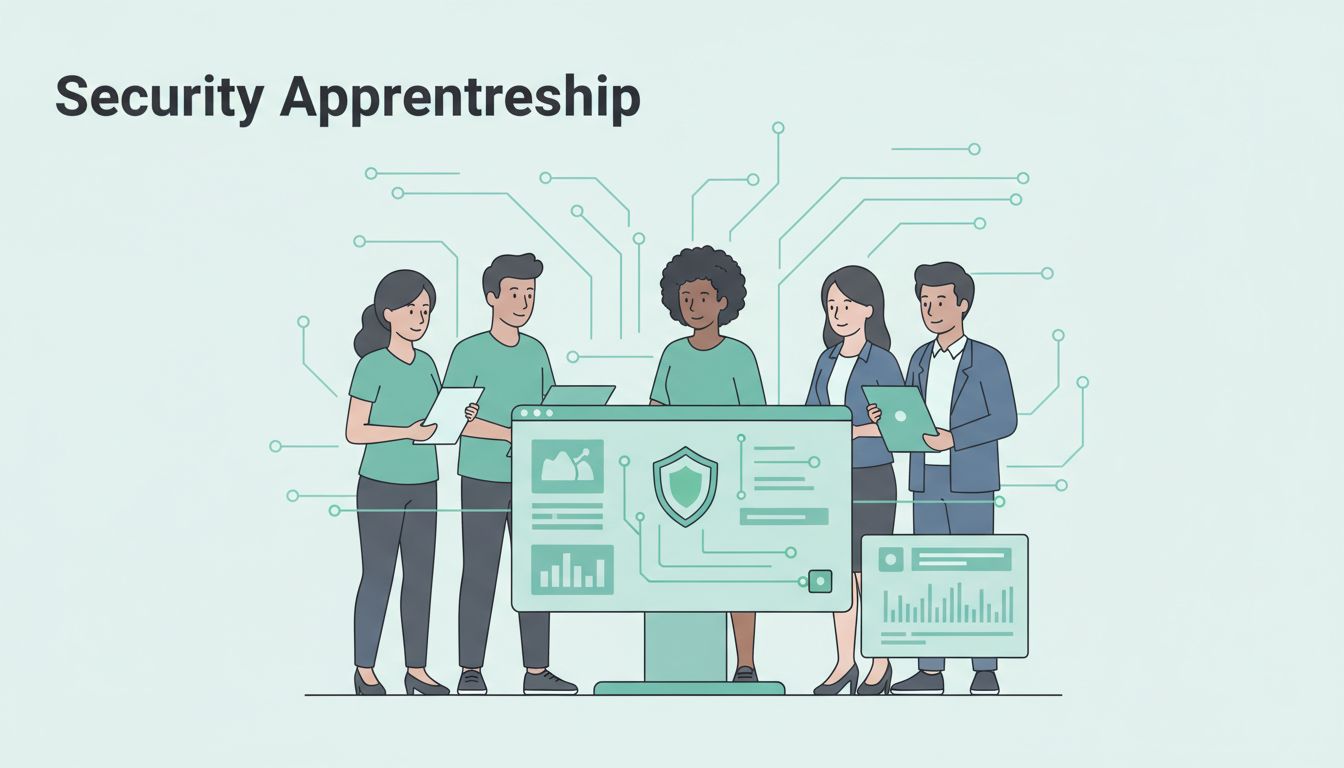
A security apprenticeship program can solve a painful talent problem without waiting for the market to fix itself. When you build from a template, you get a repeatable way to grow junior talent, support managers, and keep the work tied to real security needs.
That matters for growing teams. You need people who can learn fast, do useful work early, and stay long enough to build skill. A loose training plan usually falls apart. A clear template gives the program shape before the first apprentice starts.
Start with the role you want to fill
A good security apprenticeship program starts with one entry role, not a dozen possible outcomes. Pick a job that your team can support well, such as SOC analyst, security operations associate, IAM support analyst, or GRC coordinator. Then define what good looks like after six months and after one year.
For a useful model of how apprenticeships support cybersecurity hiring, see NIST’s apprenticeship guidance. If you want a more formal workforce lens, the Department of Labor’s cybersecurity youth apprenticeship guide shows how registered apprenticeships fit broader hiring plans.
Use this template section as your starting point:
| Template field | What to define | Simple example |
|---|---|---|
| Target role | The first job the apprentice grows into | Junior SOC analyst |
| Core skills | The skills you will teach and test | Alert triage, ticket hygiene, identity basics |
| Work output | The tasks they will handle | Phishing reviews, access checks, runbook updates |
| Mentor model | Who coaches and reviews the work | One senior analyst, weekly check-in |
| Completion bar | How you decide they are ready | Capstone project and manager sign-off |
This keeps the program practical. It also helps HR, L&D, and security leaders speak the same language.
A 12-month structure that fits growing teams
A simple schedule works better than a crowded syllabus. Most teams do well with a four-stage arc, especially when the apprentice learns while doing real work.
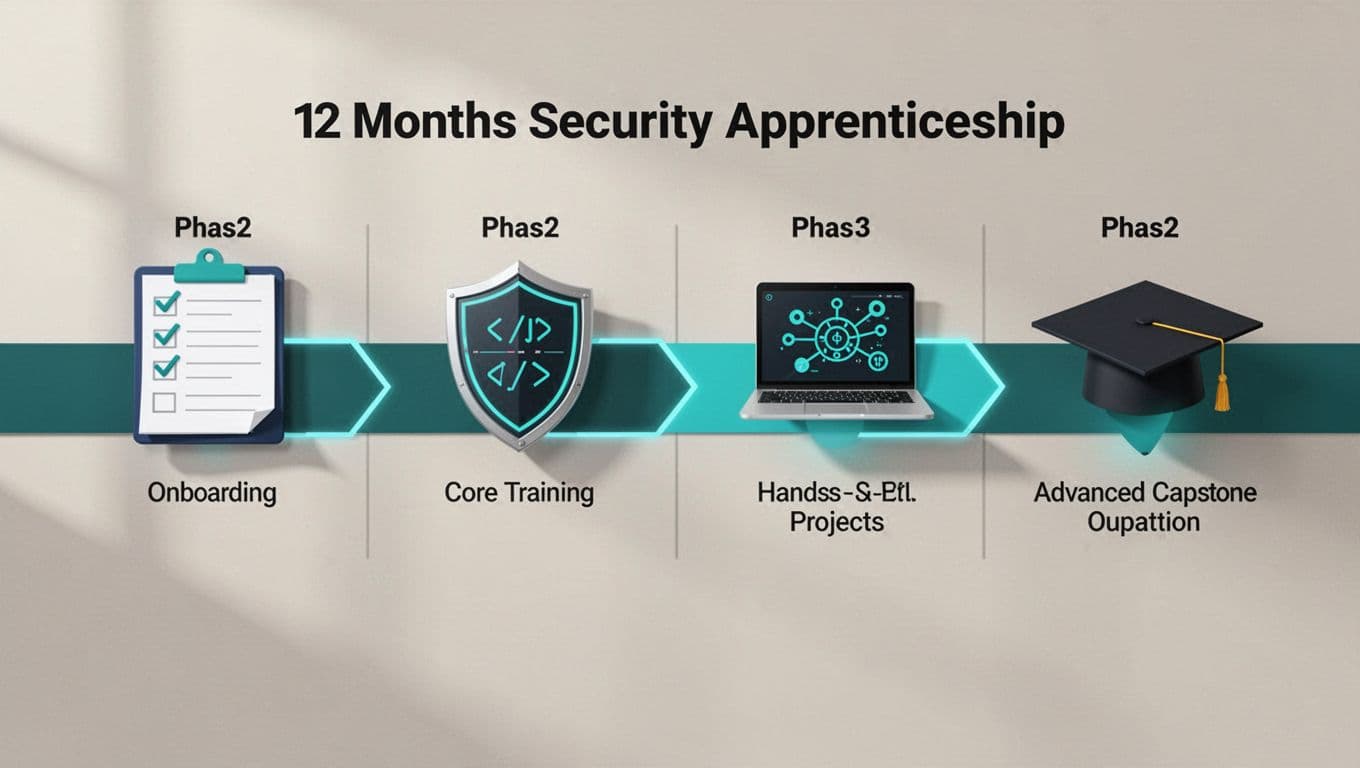
In the first quarter, focus on onboarding, tools, policies, and team context. The apprentice should learn how your tickets move, how escalations work, and where documentation lives.
During months four to six, move into supervised tasks. That can include log review, access requests, phishing triage, or ticket quality checks. The work should be small enough to review, but real enough to matter.
By months seven to nine, give the apprentice a wider lane. They can own a small workflow, support a project, or handle a recurring task with less help. In the final quarter, wrap the learning into a capstone. The capstone should show judgment, not just task completion.
A shorter program can work too. If your team is small, compress the same structure into six to nine months. Keep the stages, then trim the pace.
Make mentorship part of the schedule
The mentor is the spine of the program. Without that role, the apprentice gets assignments, but not growth. A good mentor explains the why behind the work, reviews output early, and gives direct feedback before habits harden.

The manager has a different job. They protect time, set priorities, and make sure the apprentice has real work. The apprentice then practices, asks questions, and learns to work with less support over time.
A strong template treats mentorship as part of the job, not as extra goodwill.
Keep the cadence fixed. A 30-minute weekly session is enough for most growing teams. Add a longer monthly review for skills, progress, and any blockers. That rhythm is simple, and it is easier to sustain.
Measure the program like a hiring channel
If you do not track results, the program turns into a nice idea with no proof. Measure it like a talent pipeline and a training system.
Track these four areas:
- Time to first independent task: How long until the apprentice can handle a ticket or workflow alone.
- Task quality: How often the work needs rework or heavy correction.
- Completion rate: How many apprentices finish the full program.
- Conversion rate: How many move into a junior security role or stay on the team.
You can also watch retention after six and 12 months. That matters, because a strong apprenticeship should reduce churn and help fill open roles faster. If those numbers improve, the program is doing real work for the business.
Build the program for the next cohort
The best security apprenticeship program template is simple enough to repeat and strong enough to adapt. It should define the role, the learning path, the mentor rhythm, and the success metrics before the first hire starts.
That structure helps growing teams build skill from within instead of waiting for rare external candidates. It also gives new hires a fair path into security work, which makes the pipeline healthier over time.
If you want help shaping the first cohort or aligning the program with your hiring plan, Book a Discovery Call with Bud Consulting.