table of contents
Security buyers rarely say yes after one friendly intro. They ask for proof, check risk, and move slowly. That’s why a security referral program needs more than a reward and a landing page.
The best programs bring in fewer leads and better ones. They fit long sales cycles, technical reviews, and compliance checks. They also protect your brand from weak or risky introductions.
If you want referrals that turn into real pipeline, start with trust, process, and measurement.
Start with referral sources that already carry trust
The strongest referral sources already sit close to your buyer. Existing clients know your value. MSPs and MSSPs see adjacent problems. Consultants and auditors hear pain points during reviews. Technology vendors spot gaps in stack coverage. Industry associations can open peer-to-peer doors.
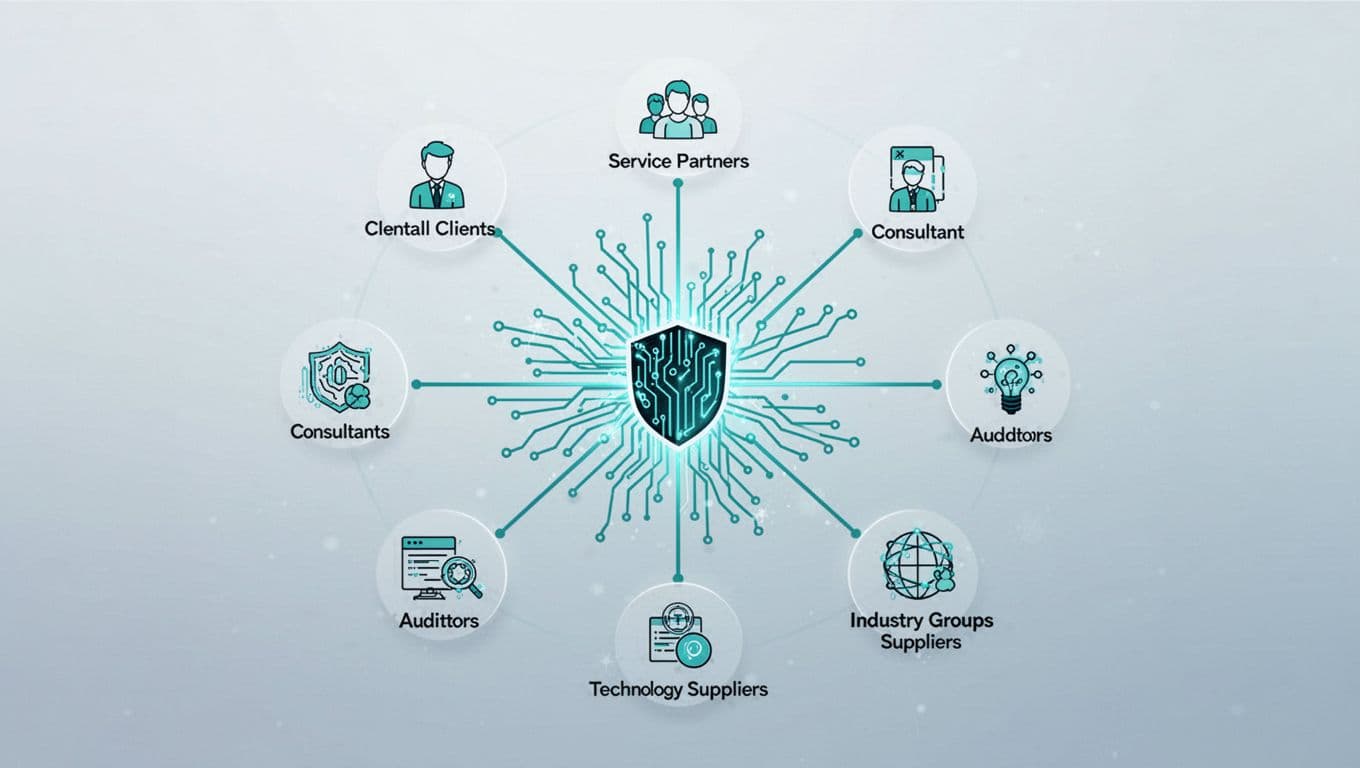
A broad list looks good in a spreadsheet, but it often creates noise. In security, a noisy referral is expensive because every intro takes time, technical effort, and follow-up.
Set a simple fit test before you recruit anyone. Ask whether the source knows your buyer, understands the pain, and can make a natural introduction. If any of those answers is weak, wait. Quality matters more than volume.
In security, one well-matched referral can beat ten polite introductions.
For MSPs, the same logic applies. How to build a successful MSP referral partner program shows how partner-led growth works best when the fit is clear.
Design the offer so people feel safe introducing you
A referral program in cybersecurity has to feel professional. If the offer looks pushy, people stop trusting it. If the rules are vague, the wrong leads come in.
Keep the incentive simple. Cash can work. Service credits can work. Recognition, executive access, or useful content can work too. For many security firms, the trust signal matters more than the payout size.
Make the terms easy to read. State who can refer, what counts as a qualified intro, when the reward is earned, and how privacy works. That matters because security teams care about how contact data and customer details move through the process. For a useful overview of program controls, security features for referral programs is a practical reference.
A good referral brief should cover four things:
- The exact buyer profile.
- The problem the referral should match.
- The next step after the intro.
- The reward or thank-you, if one applies.
When partners know the rules, they refer with confidence. That confidence shows up in better meetings and fewer dead ends.

Build a referral flow that respects long sales cycles
Security sales usually need more than a quick intro. Buyers want technical fit, proof of risk reduction, and often a compliance review. Because of that, your referral flow needs to move fast without feeling rushed.
Start with a clean intake form. Ask for company name, contact role, pain point, current tools, and reason for the intro. Then route the lead to the right rep or technical lead within one business day. A slow response kills momentum.
Every referral handoff should capture the same details:
- Who referred the lead.
- Why the lead is a fit.
- What problem the buyer is trying to solve.
- What the first meeting should cover.
After the first meeting, send the referrer a short update. They don’t need a full deal room. They do need to know that the intro was handled well.
That loop matters even more in regulated industries. If the account involves sensitive data, tell partners what they can and can’t share. If your team works with compliance-heavy buyers, treat that guidance as part of the program, not an afterthought.
Measure what matters, not just referral volume
A lot of referral programs fail because they track the wrong numbers. Raw referral count looks nice, but it hides weak fit. In security, you want metrics that show trust, quality, and revenue.

Use this scorecard to keep the program honest:
| KPI | What it tells you | Healthy signal |
|---|---|---|
| Referral-to-meeting rate | Whether referrals are well qualified | Rising over time |
| SQL rate | Whether sales accepts the lead | Close to direct-sourced leads |
| Pipeline created | Whether the program creates value | Clear growth by partner source |
| Close rate | Whether referred accounts fit well | Stable or better than average |
| CAC | Whether the program beats paid channels | Lower than paid acquisition |
| Partner activation rate | Whether partners actually refer | More partners sending at least one intro |
If referral-to-meeting is low, the partner list is too broad. If SQL rate is weak, the handoff needs work. If pipeline is strong but close rate lags, the issue is fit, not volume.
Keep partners active without chasing volume
Most referral programs don’t fail at launch. They stall because partners forget about them. That’s common in security, where people are busy and the sales cycle is long.
Give partners a reason to remember you. Short quarterly updates work well. So do simple one-pagers, sample email language, and a clear ideal customer profile. MSPs, consultants, and vendors all need slightly different support, so don’t send the same message to everyone.
If MSPs are part of your plan, this MSP referral partner program guide is a useful model for shaping outreach and rewards.
Also, track which partners stay active. A small set of reliable referrers is worth more than a long list of dormant names. That’s the core of partner activation rate. It tells you whether your program is alive, not just announced.
If your team also needs help sharpening the technical story behind the offer, Book a Discovery Call with Bud Consulting can be a practical next step.
A security referral program works when it feels safe to refer and easy to follow. The strongest versions use trusted sources, simple rules, and real measurement.
That matters in cybersecurity because weak introductions waste time. Strong ones shorten the path to trust.