table of contents
Fast growth can make security hiring messy fast. Titles appear before the work is clear, and pay decisions start to drift. Then two people with the same title may carry very different scope, which creates friction for managers and recruiters.
A strong security job architecture gives the team a common language. It helps you hire faster, level work fairly, and explain career growth without guesswork. It also keeps compensation and promotion decisions tied to scope, not personality. That matters when security talent can choose from many offers.
Start with the work, not the titles
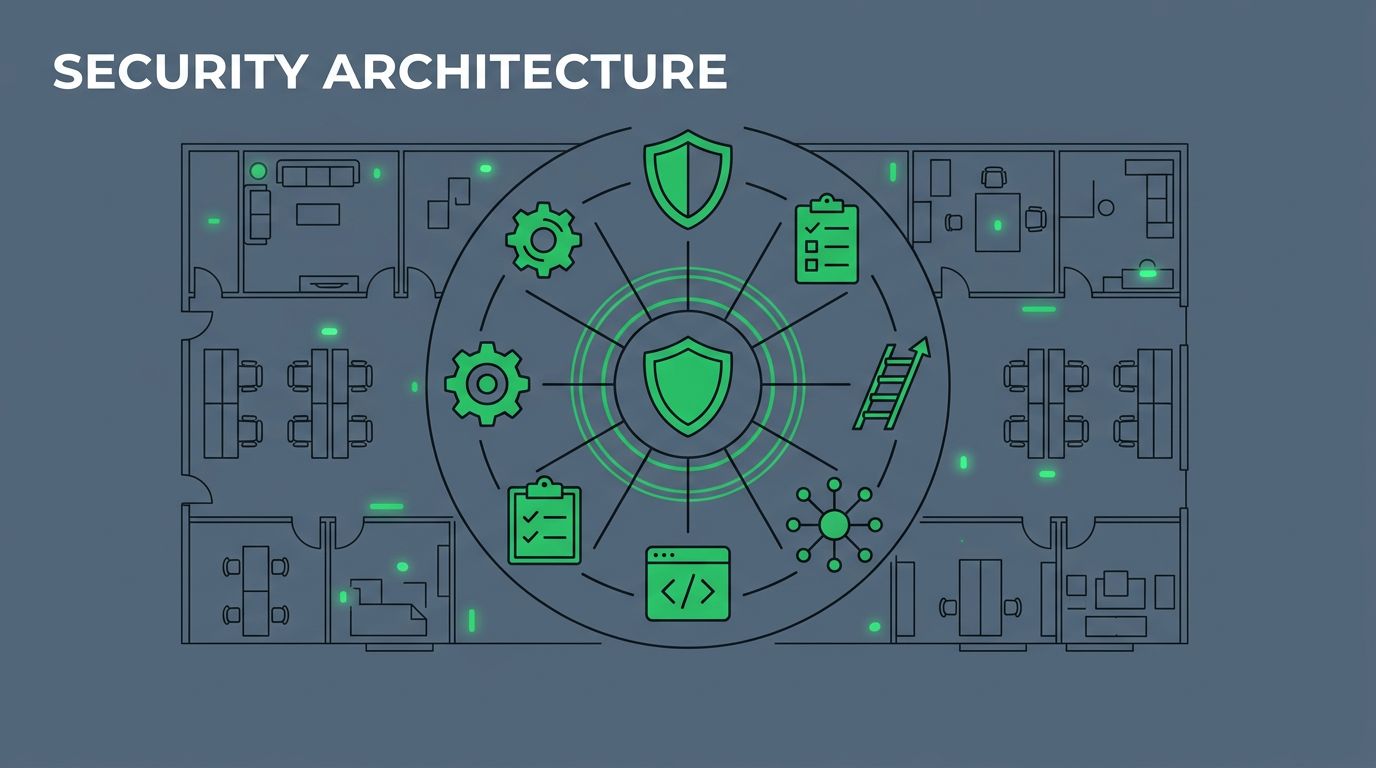
The best security org design starts with job families. A fast-growing company usually needs six core areas: security engineering, detection and response, GRC, security operations, product or application security, and leadership.
Each family solves a different problem. Security engineering builds controls and hardens systems. Detection and response finds threats and contains them. GRC manages risk, evidence, and audits. Security operations handles day-to-day protection. Product and application security protects software, APIs, and release pipelines. Leadership sets direction, budgets, and hiring priorities.
| Job family | Core focus | Common roles | What good looks like |
|---|---|---|---|
| Security engineering | Build guardrails and secure platforms | Security engineer, cloud security engineer | Designs controls that scale |
| Detection and response | Find, triage, and contain threats | Detection engineer, incident responder | Spots issues fast and reduces impact |
| GRC | Manage risk and proof | GRC analyst, compliance lead | Turns controls into evidence |
| Security operations | Run core security tasks | SOC analyst, IAM engineer | Keeps daily work reliable |
| Product and application security | Secure code and delivery | App sec engineer, DevSecOps engineer | Makes releases safer without slowing teams |
| Leadership | Guide strategy and people | Head of Security, VP Security, CISO | Aligns security with company goals |
A useful rule is simple, one title should not hide three different jobs. If a role mixes platform work, audit work, and incident response, the architecture needs another pass.
For examples of how broad these paths can be, see HireJack’s security career path and this 2026 DevSecOps engineer guide.
If every team defines “senior” in a different way, your pay bands lose meaning.
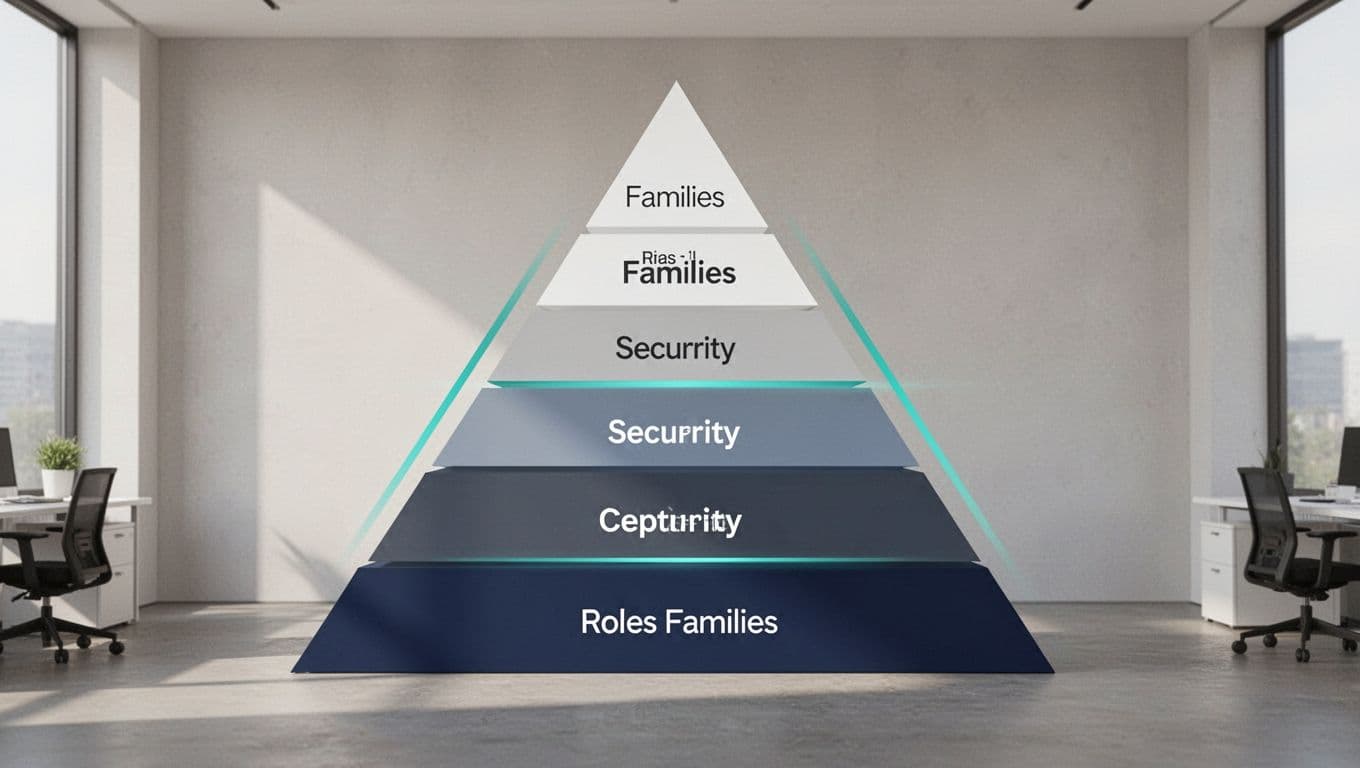
Build one leveling model across every family
Once the work is mapped, the next step is leveling. The same logic should apply across every security family, even if the day-to-day tasks differ.
A clear model usually tracks scope, autonomy, and business impact. Junior roles need more review. Mid-level roles own a defined area. Senior roles lead projects and solve cross-team problems. Staff and principal roles shape standards, coach others, and handle high-risk decisions.
| Level | Scope | Typical signal |
|---|---|---|
| L1 | Narrow tasks with close review | Learns systems and follows playbooks |
| L2 | Well-defined work in one area | Solves routine issues with guidance |
| L3 | Owns projects or a small service | Works across teams and improves process |
| L4 | Leads a domain or large program | Sets standards and mentors others |
| L5 | Shapes strategy for a function | Drives roadmaps, hiring, and risk choices |
Some companies add L6 for senior leadership or staff-plus experts. That can work, but only if the expectations are sharp. A VP-level role should not be graded the same way as a principal engineer.
For a useful comparison of level thinking, Coursera’s cybersecurity job leveling matrix shows how skills and scope can be arranged across career stages.

Promotion clarity depends on the same model. If an engineer becomes a manager, the new role needs a new bar. If a GRC lead starts owning multi-region audits, the level should reflect that increase in scope.
Keep hiring, pay, and promotion decisions on the same rubric
A security job architecture breaks down when hiring and compensation use different rules. Job descriptions, interview loops, and pay bands all need to point to the same level.
That means every opening should answer three questions:
- What family does this role belong to?
- What level is it?
- What outcomes define success in the first year?
Interview panels should score the same skills that the job description names. Compensation bands should sit around the level, not the manager. Promotion packets should show evidence of broader scope, stronger judgment, and less supervision.
That approach also helps founders avoid title inflation. A team does not need a “Head of” for every gap. It needs clear ownership, real scope, and a path to grow into larger roles.
For a practical leveling reference, GCS Network’s cybersecurity job roadmap is another useful market example.
If you’re aligning a new framework with market data and senior hiring plans, Book a Discovery Call with Bud Consulting can help you pressure-test the structure before it goes live.
Update the framework for 2026 security demands
Security job architecture cannot stay frozen. In 2026, AI security, platform security, and continuous compliance are shaping how teams hire.
SANS’ 2026 cybersecurity workforce research points to AI and compliance as pressure points. That fits what many companies already see. AI systems need threat modeling, model access controls, and testing for prompt injection or data poisoning. Platform security teams now need people who can secure cloud landing zones, identity layers, and internal platforms together.
Compliance also looks different now. Point-in-time audit prep is giving way to ongoing evidence collection and control monitoring. GetCybr’s continuous compliance guide makes that shift clear. So does the rise in AI security jobs in 2026.
Fast-growing companies should reflect that change in their architecture. Add explicit scope for AI security, platform security, and continuous control testing. Otherwise, those duties get hidden inside old roles and never get the level or pay they deserve.
A solid framework does more than sort titles. It gives security leaders a way to grow the team without confusion. It also gives employees a fair path forward, which matters when the company is scaling and the work keeps changing.
When the structure is clear, hiring gets easier, promotions feel fairer, and security can keep pace with growth.