table of contents
A security champions program can stall when nobody knows what the champion is supposed to do. The result is uneven support, scattered requests, and frustrated engineers.
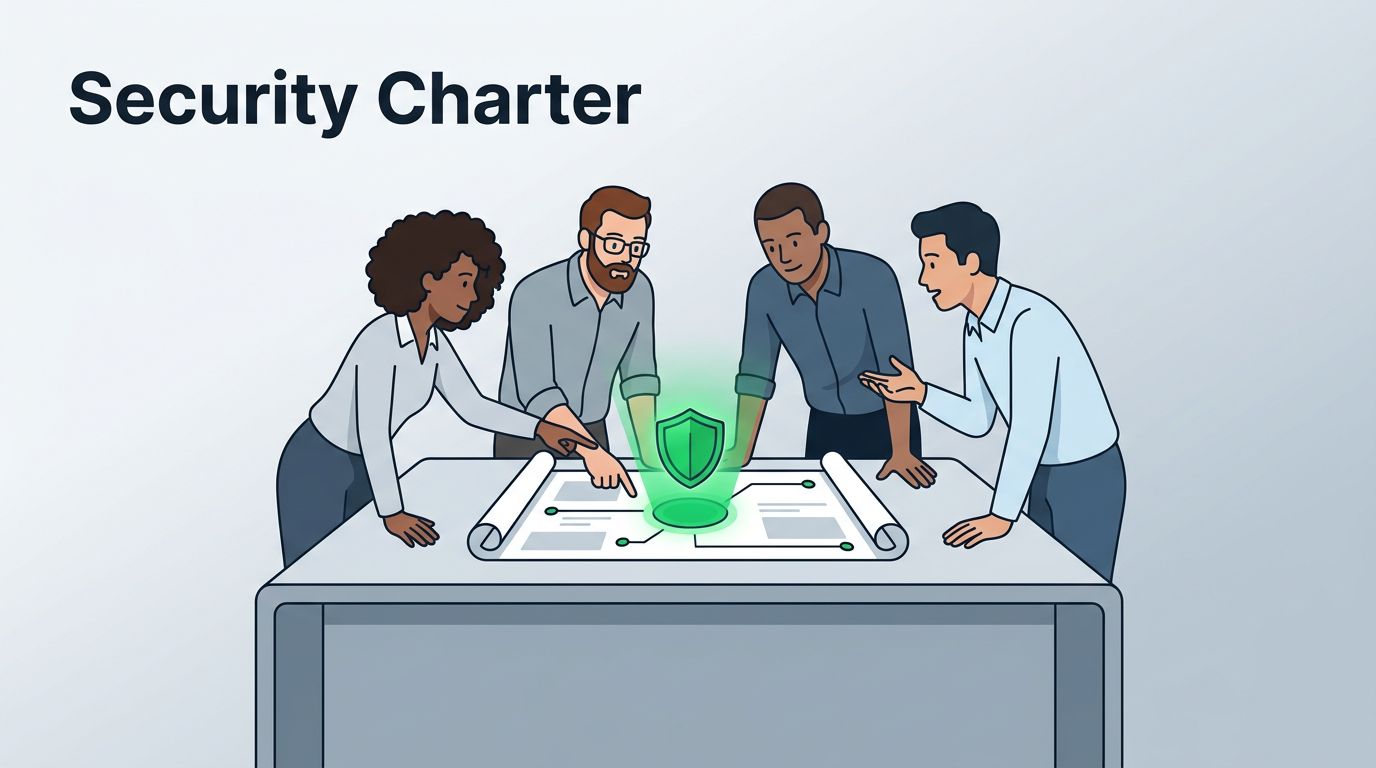
A security champions charter fixes that by setting clear scope, ownership, and guardrails. It gives AppSec and engineering one shared playbook, so security work fits into delivery instead of sitting beside it.
The best charters are short, specific, and tied to real SDLC work. They answer who owns what, when the champion gets involved, and how issues move to the right team.
What a Security Champions Charter Actually Defines
A charter is an operating agreement, not a policy doc. It tells teams how the program runs in day-to-day work. That includes selection, time commitment, escalation paths, support from AppSec, and how success gets measured.
If you want a neutral starting point, the OWASP Security Champions Guide is a solid reference. It gives broad program ideas, but your charter should translate them into your delivery model.
In practice, the charter should answer four questions. Who can be a champion? What decisions can they make? What do they own? How do they get help?

A charter works only when it changes day-to-day behavior, not when it sits in a folder.
The Core Parts Every Charter Needs
Keep the charter tight, but don’t leave out the basics. A useful version usually includes these pieces:
- Program purpose should explain the problem the charter solves, such as slow security reviews or weak feedback loops.
- Membership rules should say how champions are chosen, how long they serve, and when they rotate out.
- Time commitment should be realistic. Many teams start with a small, fixed slice of time each sprint.
- Champion duties should include threat modeling input, secure code review help, security question routing, and awareness of common risks.
- AppSec duties should include coaching, office hours, review support, and fast answers on escalations.
- Success measures should track practical outcomes, such as fewer late findings or faster vulnerability triage.
The point is clarity. A charter that says “help with security” is too vague. A charter that says “review threat models, join design reviews, and raise high-risk findings within one business day” is usable.
For examples of how teams frame this work, the practical champion program guidance is worth a look.
Sample Security Champions Charter Template
Use this language as a starting point, then edit it for your team.
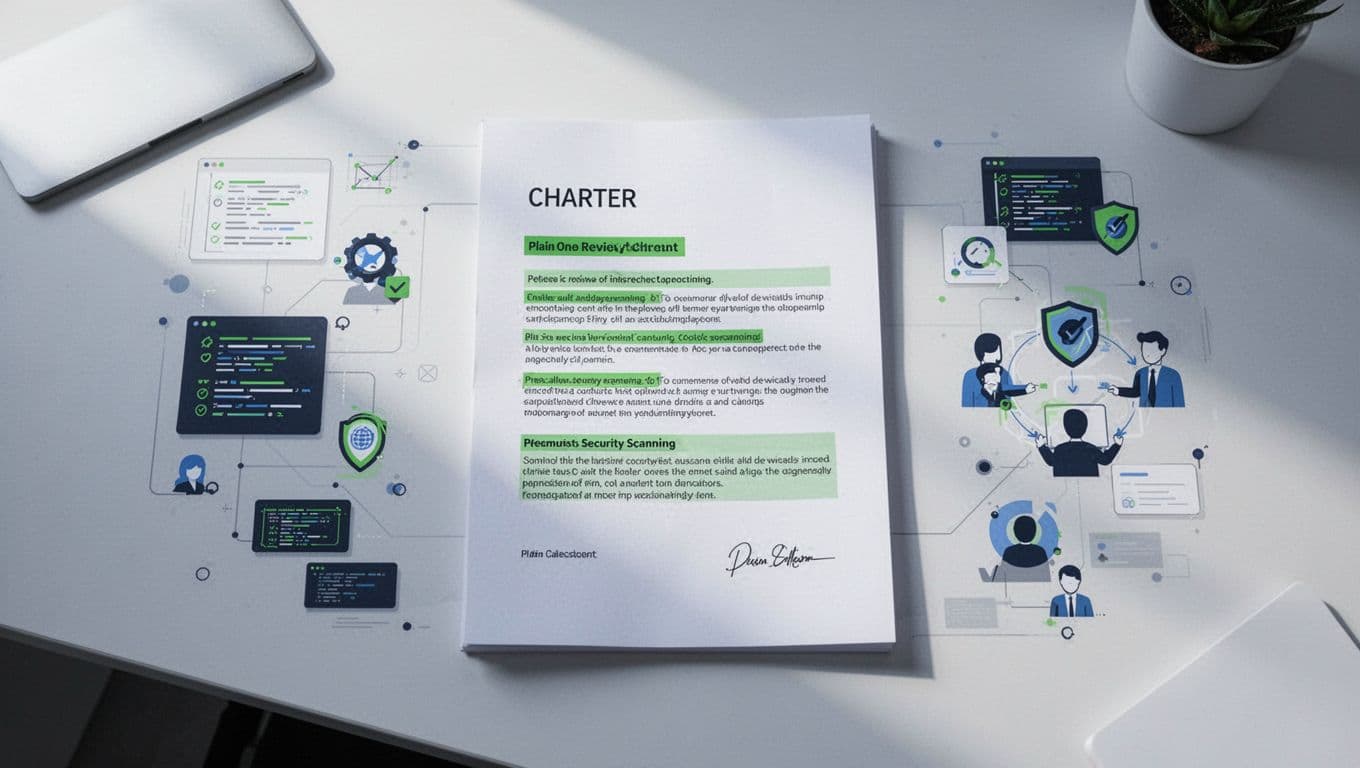
“Security champions help their team spot risk early, raise questions in design and code reviews, and route issues to AppSec when needed. They are not the backstop for every security decision.”
A simple charter template can read like this:
- The purpose statement says the program exists to reduce security friction and catch issues earlier.
- The scope statement says which teams, products, or services the charter covers.
- The champion responsibilities section says what the person does in reviews, design sessions, and vulnerability follow-up.
- The AppSec responsibilities section says what support the security team provides.
- The escalation section says when a champion should pull in AppSec, engineering management, or platform owners.
- The review section says the charter gets checked every six months, or after major org changes.
Keep the wording plain. If a new manager can read it in two minutes and know what to do, the charter is on the right track.
If your team needs help aligning the charter with people, process, and security ownership, Book a Discovery Call with Bud Consulting and pressure-test the draft against your delivery model.
Align the Charter with the SDLC
A charter gets value when it connects to the SDLC. That means champions need a place in design, build, release, and response work.

During design, champions can join threat modeling and flag risky trust boundaries. During build, they can spot weak input handling, missing auth checks, and unsafe defaults in code review.
During release, they can confirm that known vulnerabilities have owners and deadlines. During incident follow-up, they can feed lessons back into the team’s next design review.
That flow also needs a communication path. Many teams use a shared Slack channel, AppSec office hours, and a monthly review with engineering leads. For a broader view of how programs scale across teams, the Security Champions program scale guide is a useful reference.
Governance That Keeps the Charter Honest
A charter loses value when no one reviews it. That is why governance matters as much as the wording.
Start with a named owner, usually an AppSec lead or program manager. Then set a review cadence, a simple reporting line, and a few measures that show whether the program is helping.
A practical governance set looks like this:
- Review the charter twice a year.
- Track champion participation and team coverage.
- Measure time to triage and close security findings.
- Watch how many issues surface in design versus late-stage review.
Those numbers tell a story. If findings keep showing up at the end of the cycle, the charter is not reaching the right SDLC moments. If champions stop attending reviews, the role may be too broad or too vague.
A strong charter makes security work feel normal. It gives engineering teams a clear path for questions, decisions, and escalation. Most important, it turns security from a side task into a shared part of how software ships.