table of contents
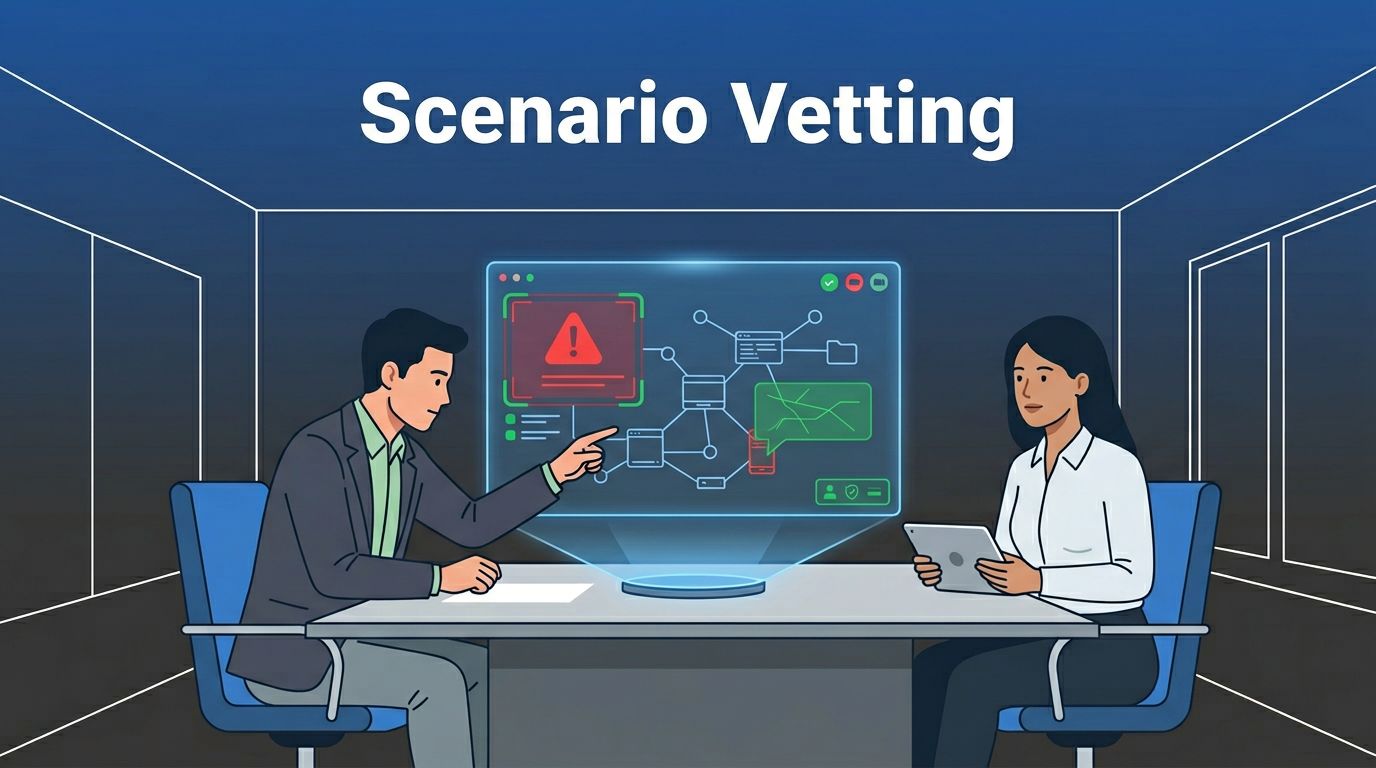
Hiring the right security talent feels like defusing a bomb in the dark. One wrong move, and your team misses critical threats. Security candidate vetting with real incident scenarios cuts through resumes and certs to reveal true skills.
You face tight deadlines and rising attacks, from AI-powered phishing to cloud breaches. Traditional questions often yield rehearsed answers. Scenarios test how candidates think under pressure, just like in your SOC.
This approach helps you spot performers fast. Let’s break down how to use them effectively.
Why Incident Scenarios Trump Trivia Quizzes
Resumes list certs, but they don’t show response speed. Incident scenarios mimic live alerts. Candidates walk through triage, containment, and recovery.
For example, a junior might freeze on a phishing alert. A senior spots lateral movement right away. This reveals gaps certifications hide.
Data backs it up. Hiring managers in 2026 prioritize hands-on proof over paper quals, as Dice.com reports on cybersecurity hiring trends. Scenarios align with that shift.
They also predict job fit. Someone who escalates wisely fits your team culture. Poor communicators stand out early.
Most importantly, scenarios save time. You assess multiple skills in one chat: tech knowledge, judgment, and teamwork.
Tailor Scenarios to Role Levels
Match complexity to experience. Juniors handle basics; seniors lead chaos. This keeps assessments fair and relevant.
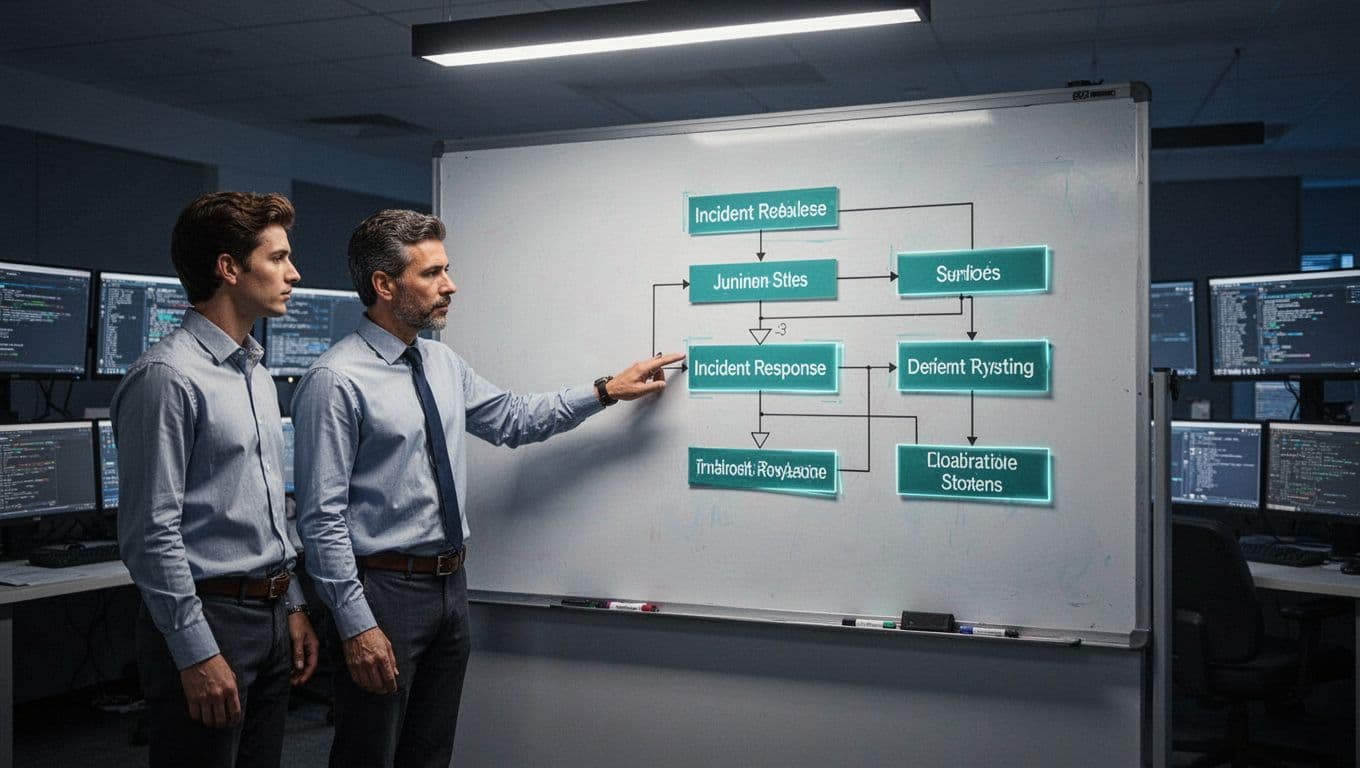
For Junior SOC Analysts
Give simple alerts. “You see high login failures from an unknown IP. Walk me through your first steps.”
Expect them to check logs, isolate the host, and notify seniors. They should know tools like Splunk basics. Don’t push policy debates; focus on process.
Mid-Level Responders
Add layers. “Ransomware hits a file server during business hours. Users panic. Contain it.”
Probe for segmentation, backups, and stakeholder updates. They must balance speed and accuracy. Look for EDR use and IOC hunting.
Senior Leaders or Architects
Scale up. “An AI-generated deepfake CEO email triggers wire fraud. Nation-state actors suspected. Coordinate response.”
Test strategy: IR playbook tweaks, legal alerts, C-suite briefs. They own cross-team orchestration and post-incident lessons.
Tailoring prevents overload. Juniors gain confidence; seniors shine in ambiguity.
Sample Incident Scenarios and Questions
Start with SOC bread-and-butter cases. Use these verbatim or tweak for your stack.

Cloud Breach Scenario (Mid-Level): “AWS S3 bucket exposed publicly with customer PII. Alerts fired two days ago. What now?”
Follow-ups: “How do you confirm exposure? Notify whom first? Mitigate forensics loss?” Good answers cite IAM audits, Glacier snapshots, and regs like GDPR.
Phishing to Ransomware (Junior): “Employee clicks phishing link. EDR flags Cobalt Strike beacon. Triage it.”
Probe: “Isolate how? Hunt siblings? Document chain of custody?” Rate on NIST steps: identify, protect, detect.
Supply Chain Attack (Senior): “Vendor API key compromised. Lateral movement to your crown jewels. Lead the IR.”
Ask: “Activate CSIRT? Comms plan? Root cause playbook?” From HiredPrep’s incident responder guide, expect threat intel integration.
Time them: 10-15 minutes per scenario. Note pauses; they signal uncertainty.
For SOC specifics, check CyberSapiens’ 50 SOC scenarios. Adapt to 2026 threats like AI maldocs.
Best Practices for Fair Assessments
Keep it ethical. Scenarios must tie to the job, not trivia traps.
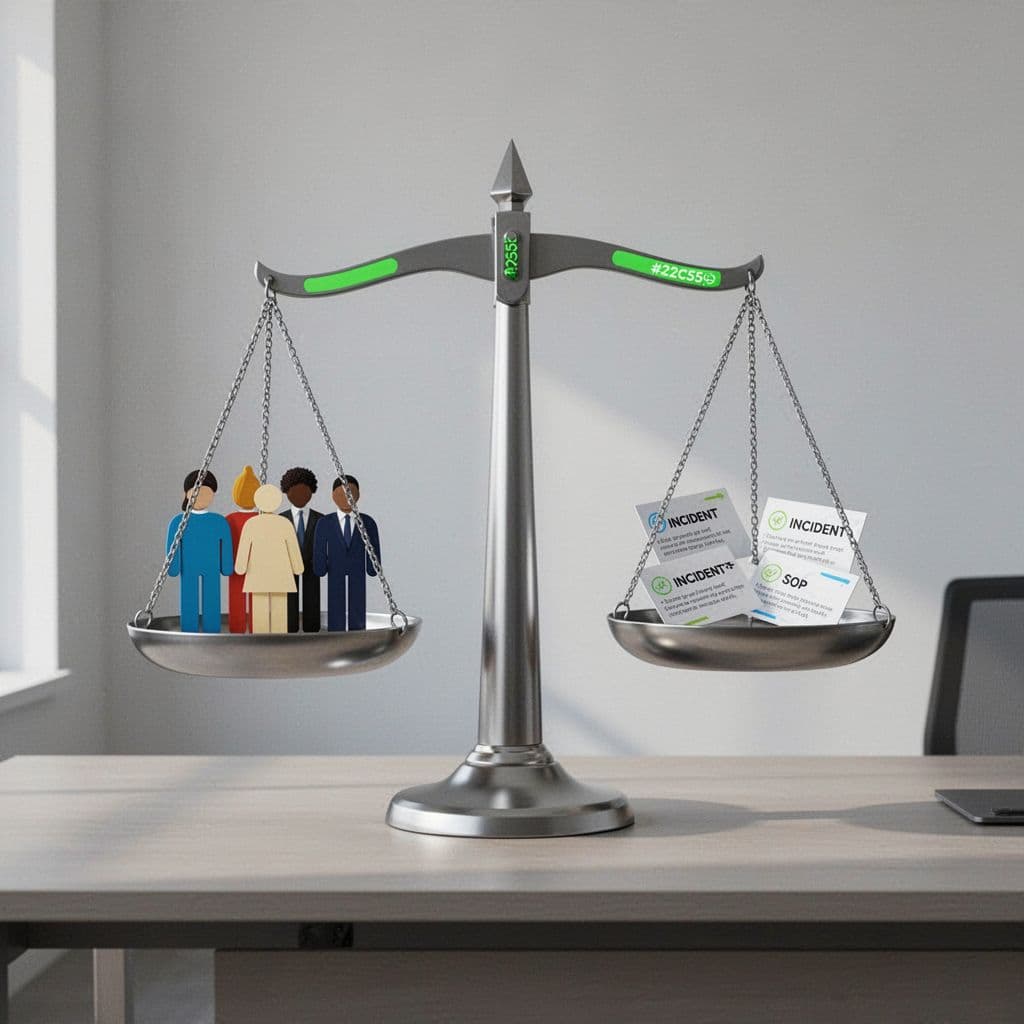
Standardize prompts. All candidates get the same scenario set. Rotate order to curb bias.
Score objectively. Use a rubric: 40% technical steps, 30% communication, 20% judgment, 10% creativity. Avoid gut feels.
Watch for pressure. Give think time; no rapid-fire. Diverse candidates thrive without overload.
Document everything. Share scores with stakeholders. This builds trust and defends choices.
As Salesforce outlines for CSIRT hiring, blend scenarios with behavioral questions for full pictures.
Key Evaluation Criteria and Follow-Ups
Rate on clear metrics. Does the candidate follow IR frameworks like NIST? Prioritize containment?
Strong Signals:
- Names tools (Wireshark, Volatility) without prompting.
- Escalates appropriately.
- Asks clarifying questions.
Red Flags:
- Jumps to eradication sans triage.
- Ignores people impacts.
- Memorizes without adapting.
Follow-ups sharpen insight: “What if execs demand quick fix?” Or “Tool unavailable; improvise.” These test adaptability.
Combine with take-homes for juniors, live sims for seniors. Track patterns across interviews.
You now have a toolkit for better hires.
Real scenarios expose fit fast. They separate doers from talkers in a field where stakes run high.
Teams built this way handle 2026’s AI threats and cloud sprawl. Start small; refine over hires.
Need help sourcing top talent? Book a Discovery Call with Bud Consulting to discuss your gaps.