table of contents
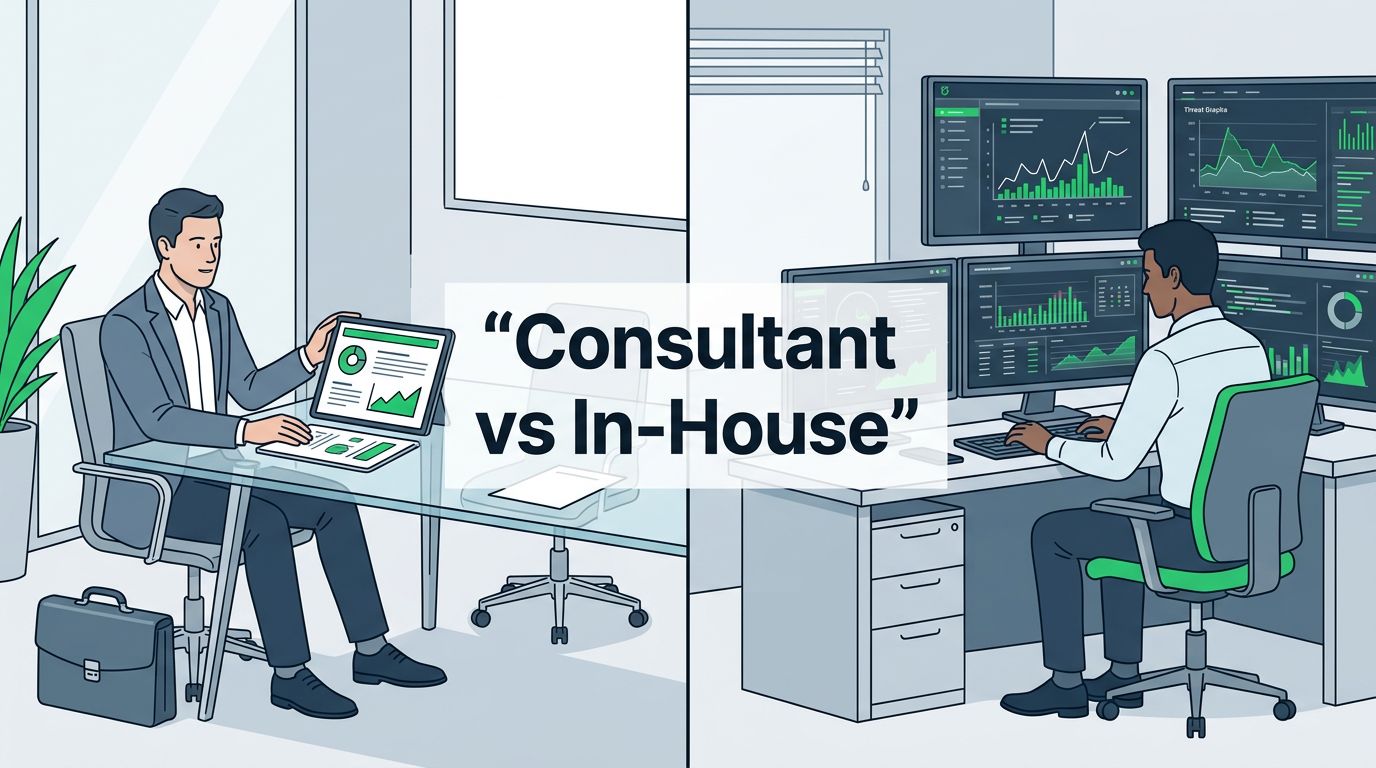
You’ve got a stack of resumes from Big Four consultants or boutique security firms. They promise broad expertise and polished skills. But will they thrive in your in-house role, owning operations day to day? Many hiring managers face this question. Consultants excel at advice, yet in-house work demands execution under constant pressure.
The gap between advisory gigs and operational reality trips up hires. You risk bringing in someone great at slide decks but weak on sustained defense. This guide covers what to check. It balances upsides with pitfalls so you spot the right fit fast.
Why Consultants Appeal for In-House Security Roles
Consultants bring fresh eyes. They spot gaps your team misses because they see patterns across clients. For example, a security consulting background often means exposure to diverse threats, from cloud misconfigs to insider risks.
They adapt quickly too. Projects force them to learn fast and communicate clearly. That helps when briefing boards or training devs. Plus, firms like Deloitte or Mandiant train them on standards such as NIST or ISO 27001.
Yet not all shine internally. Check if their wins came from short audits or long implementations. Hays Technology notes consultants handle varied threats but may lack your industry’s specifics.
Risks When Moving Consultants In-House
Advisory work differs from operations. Consultants recommend fixes; in-house pros implement and maintain them. A hire might struggle with 24/7 alerts or budget fights.
Staff augmentation risks overlap here. Short-term consultants prioritize deliverables over ownership. They leave before measuring impact. JUMPSEC outlines pros and cons of external vs internal setups. In-house needs sustained grit.
Burnout hits too. Consultants bill hours; your role demands results amid fires. Watch for those who chased billables over deep fixes. Poor culture fit adds pain. Polished presenters sometimes clash with hands-on teams.
Resume Red Flags and Green Flags
Start with the resume. Look beyond buzzwords. Does it show advisory only, or hands-on wins?
Green flags include metrics like “Led IAM rollout reducing access risks 40% over 18 months.” That signals ownership. Multiple clients prove adaptability. Roles with “implemented” beat “assessed.”
Red flags dominate vague claims: “Advised on compliance.” No outcomes? Pass. Frequent short stints suggest project-hoppers, not builders. Missing tools like SIEM tuning or EDR response? They advised, didn’t operate.
Distinguish experience types. Advisory lists audits; operational details integrations and monitoring.

Dice’s 2026 hiring insights stress real AI and cloud hands-on over certs alone.
Probing Interviews and Technical Assessments
Interviews reveal execution ability. Ask behavioral questions first. “Walk me through a detection gap you fixed end-to-end.” Listen for steps: triage, root cause, deploy, monitor.
Scenario tests separate talkers from doers. Give a mock incident: “Phishing hit; exfil in progress. What next?” Top answers cover IR playbooks, forensics, comms.
Technical deep dives matter. Can they config a WAF rule live? Or tune SOAR playbooks? Consultants shine in theory; probe for ops.
Distinguish advisory from operational. “Did clients own post-project?” Green if yes; red if they bounced.

iSecJobs hiring guide suggests similar probes for consultants.
Reference Checks Beyond the Obvious
References confirm claims. Skip listed ones; they cherry-pick. Contact former clients or internal project leads.
Ask pointed questions: “Did they own outcomes post-engagement?” “How did they handle escalations?” Green flags: specifics on sustained impact. Red: “Great advisor, but left mess.”
Chase operational refs. Advisory praise differs. Paul Reynolds’ consultant guide stresses verifying fixes stuck.
Quick Screening Checklist
Use this table to scan fast. It flags fits before deep dives.
| Check | What to Verify | Green Flag Example | Red Flag Example |
|---|---|---|---|
| Experience Depth | Advisory vs operational | “Implemented SIEM for 2 years” | “Assessed 10 clients” only |
| Metrics | Quantifiable impact | “Cut MTTR 50%” | No numbers |
| Tools/Tech | Hands-on proof | “Tuned EDR rules” | “Familiar with” |
| Duration | Project length | 12+ months per role | 3-6 months hops |
| Ownership | Post-project role | “Handed off running program” | “Recommended, left” |
This keeps screening objective. Tally greens; aim for 4+ to advance.

Leon Consulting’s talent tips echo skills-first checks.
Hires from consulting backgrounds boost teams when vetted right. They add breadth and rigor. But skip checks, and you get advisors in operator seats. Focus on ownership proof across resume, interviews, and refs. That builds lasting security.
Struggling with tough searches? Book a Discovery Call with Bud Consulting to source vetted talent.