table of contents
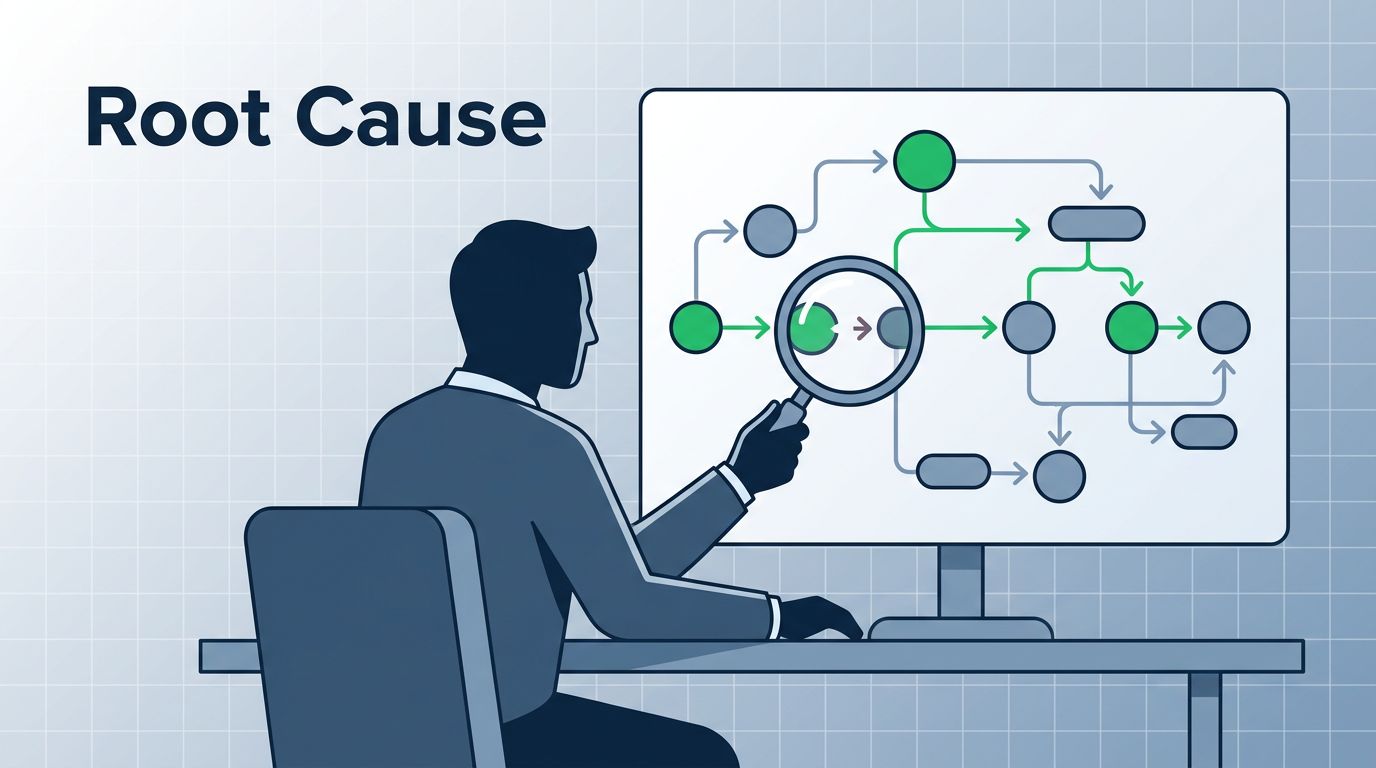
Security teams can fix the visible problem and still miss the reason it happened. That is why a root cause analysis interview matters so much for SOC analysts, incident responders, and security engineers. You need people who can sort noise from signal, test a theory, and explain the chain of events without guessing.
A strong candidate does more than recite incident response terms. They ask what evidence exists, what evidence is missing, and how the answer changes if the timeline shifts. That is the difference between someone who remembers a framework and someone who can use it under pressure.
What strong root cause analysis looks like in security hiring
In security hiring, root cause analysis usually comes down to three things: framing the problem, proving the sequence, and naming the control gap. Candidates who can do that think in steps, not slogans. For a quick refresher on common interview phrasing, top root cause analysis interview questions is a useful reference.
Strong answers sound precise. A candidate might say, “First I would confirm the initial alert, then I would pull identity logs, endpoint events, and any change records that line up with the time window.” That answer shows structure and a sense of evidence.
Weak answers jump to the fix. They say, “We would reset the password and patch the box.” That may be part of the response, but it does not explain why the issue happened or what prevented detection.
A candidate who says, “I need more evidence,” is often stronger than one who answers too fast.
Ask questions that separate real thinking from memorized answers
Good interview prompts force the candidate to build the investigation in real time. For broader question ideas, Yardstick’s guide to behavioral interview questions for root cause analysis can help you shape your own loop.
“Walk me through the first 30 minutes”
This prompt shows how the candidate handles uncertainty. Listen for triage, data gathering, and prioritization. A strong response starts with scope, then adds logs, owners, and likely blast radius.
A weak response begins with a canned incident response list and no context. That usually means the person knows the textbook, not the tradeoffs.
“What would make you change your mind?”
This one reveals analytical discipline. Good analysts state a hypothesis, then name the evidence that could disprove it. They are comfortable being wrong early if the data says so.
Poor candidates defend the first theory they mention. They keep searching for facts that support it, which is a bad habit in incident work.
“Which control failed first?”
This question helps you see whether the candidate can separate the trigger from the deeper cause. A strong answer might point to missing MFA, weak segmentation, poor alert coverage, or a bad change process, then explain how each one fits the timeline.
A weak answer blames a person and stops there. That is a red flag, because security incidents usually involve a chain of failures.
Hands-on assessments for root cause skills
A live case or short take-home tells you far more than a polished answer. Use a realistic incident packet with a timeline, a few alerts, and one or two false leads. Then ask the candidate to explain what they would do next and why.

A simple exercise can look like this:
- Live review: Give the candidate five minutes to read the incident summary, then ask for the next three questions they would ask.
- Mini postmortem: Ask for a one-page write-up with timeline, root cause, contributing factors, and prevention steps.
- False lead test: Add one misleading alert and see whether they verify it before building a theory.
Strong candidates slow down in the right places. They do not chase the loudest alert first. Instead, they explain why one data source matters more than another, then they move the investigation forward.
Weak candidates often skip straight to remediation. That can look confident, but it hides shallow thinking. If they cannot explain how they reached the answer, the answer does not help you.
Build a simple scorecard
A scorecard keeps the interview fair across candidates. It also stops the loudest voice in the room from dominating the decision.

Use a 1 to 5 scale for each area, then write one short note per category.
| Criterion | Strong evidence | Weak evidence |
|---|---|---|
| Problem framing | Defines scope, timeline, and impact early | Jumps into fixes with no structure |
| Evidence use | Uses logs, tickets, and change records | Relies on guesswork or opinion |
| Hypothesis discipline | Names alternatives and tests them | Clings to the first theory |
| Communication | Explains the logic clearly and briefly | Uses jargon, then skips the reasoning |
That table gives you a practical filter. The best candidates make their process easy to follow, even when the incident is messy.
Common hiring mistakes that hide weak analysts
The first mistake is overvaluing confidence. Smooth delivery can mask thin reasoning. Ask for the evidence behind every conclusion.
The second mistake is using trivia-heavy questions. Knowing tool names is fine, but it says little about analytical skill. A candidate can talk about SIEMs and still fail to trace a cause.
The third mistake is giving an unrealistically neat scenario. Real incidents have missing logs, partial data, and conflicting signals. If your exercise is too clean, you will not see how the candidate deals with ambiguity.
The fourth mistake is ignoring communication. A strong analyst must brief non-technical leaders, so clear writing and clear speech matter. If the candidate cannot explain the root cause without jargon, that gap will show up later.
If you need help sharpening your interview process or vetting senior security talent, Book a Discovery Call with Bud Consulting.
Conclusion
A good root cause analysis interview is not a memory test. It is a way to see how a candidate thinks when the answer is not obvious.
Focus on evidence, sequence, and judgment. When you score those areas consistently, you will spot the people who can explain a security failure and help stop the next one.