table of contents
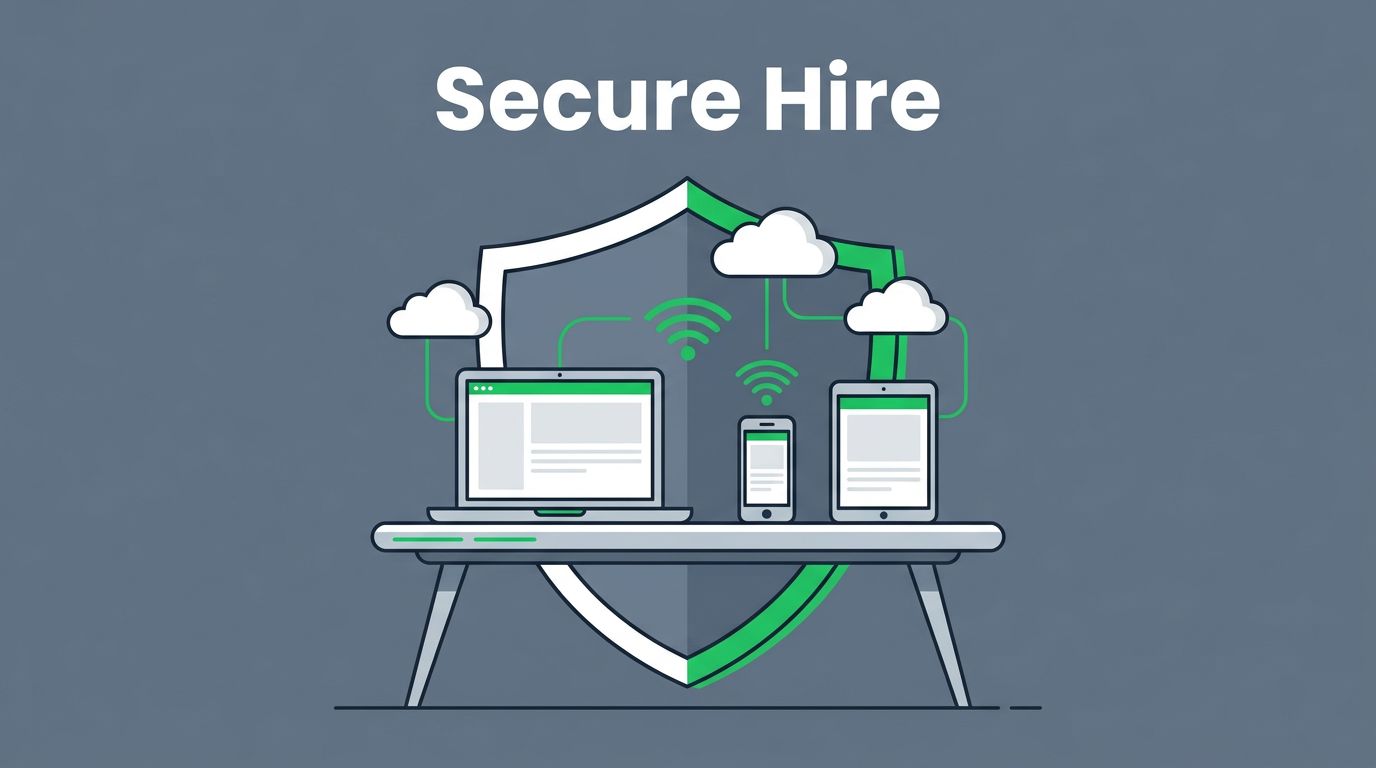
Hybrid work changes the hiring brief. Your endpoint security engineer has to protect laptops, phones, and cloud-managed devices that move between home, office, and coffee shop Wi-Fi every week.
That means endpoint security engineer hiring in 2026 is less about narrow tool knowledge and more about judgment. You need someone who can reduce risk, keep devices compliant, and explain tradeoffs to leaders who do not live in the console all day.
Define the role for your hybrid setup
Start by writing down what this person owns. If the scope is vague, the search will drift toward generalists who know a few vendor names but cannot run a real program.
For a hybrid workforce, the role usually includes device policy, endpoint detection and response, patching, and incident support. If you use Microsoft Defender for Endpoint, CrowdStrike Falcon, or SentinelOne, say so in the job brief and ask how the candidate has tuned similar platforms. For a useful market view, review these 2026 endpoint security platform comparisons before you finalize the posting.
A strong job description might include work like this:
- Tune EDR alerts so security teams get fewer false positives.
- Manage device compliance in Intune, Jamf, or a similar MDM platform.
- Isolate risky endpoints during an incident and document the response.
- Automate patch and policy checks across Windows and macOS fleets.
- Work with identity teams on MFA, device trust, and least privilege.
If your environment includes BYOD, contractors, or a lot of Macs, say that up front. Cloud-managed device environments need someone who understands policy drift, encryption status, and remote support friction. A hybrid role should solve those problems, not just watch them.
Must-have qualifications for 2026
A long list of tool names does not help much. You want proof that the candidate has handled mixed devices, messy alerts, and impatient users.
Look for outcomes first, then tools.
Use this checklist as your baseline:
- Endpoint tooling: Hands-on experience with EDR or XDR platforms, plus real tuning work.
- Operating systems: Solid support for Windows and macOS, with some Linux exposure if your fleet needs it.
- Cloud-managed device control: Familiarity with Intune, Jamf, Workspace ONE, or similar tools.
- Automation: Scripting in PowerShell, Bash, or Python to reduce manual work.
- Identity and access: Comfort working with MFA, device trust, and least privilege.
- Incident response: Experience containing endpoint events and writing clear post-incident notes.
- Communication: Ability to explain risk to IT, leadership, and non-technical managers.
Research from ISC2 on cybersecurity hiring backs a simple idea, baseline proof matters more than a crowded wish list. Certifications can help, but they should support experience, not replace it.
A good candidate can answer practical questions like, “How did you cut alert noise?” or “What changed after you rolled out a new device policy?” If they only talk in product terms, keep looking.

Interview for real-world judgment
Technical interviews should sound like the job. Ask for decisions, not definitions.
A strong interview set might include a scenario where a remote laptop shows ransomware-like behavior. Another could involve a fleet of Macs missing encryption settings after an MDM update. A third could test how the candidate would replace VPN-heavy access with a more modern ZTNA model while keeping support requests under control.
Push for a step-by-step answer. Good candidates will tell you what they would check first, who they would notify, and what they would measure after the fix. They should also explain how they would balance speed with user impact.
A short work sample can help a lot. Give the candidate a noisy alert summary and ask for a 90-minute response plan. You will learn more from that exercise than from a stack of theory questions.
The strongest answers are calm, specific, and measurable.
For a hiring process that stays focused on actual security work, the structure in how to hire security engineers in 2026 is a solid reference point.

Sample scorecard for evaluating candidates
A scorecard keeps opinions from taking over. It also makes it easier to compare candidates who are strong in different ways.
| Criteria | Weight | Strong signals | Red flags |
|---|---|---|---|
| Endpoint platform depth | 25% | Has tuned EDR or XDR policies and improved alert quality | Talks only about vendor names |
| Hybrid device management | 20% | Has managed MDM, patching, and compliance across mixed fleets | Needs help with every device issue |
| Incident response | 20% | Can explain containment, escalation, and post-incident follow-up | Describes theory without action |
| Automation | 15% | Uses scripts or workflows to cut manual work | Has no examples of automation |
| Communication | 20% | Explains risk clearly to IT and business leaders | Struggles to make impact clear |
Score each area from 1 to 5, then multiply by weight. That gives you a cleaner view than a simple gut check. If two candidates tie, pick the one who shows better judgment under pressure.
Common hiring mistakes that slow the search
The biggest mistake is asking for a unicorn. If you want deep EDR expertise, cloud-managed endpoint experience, strong communication, and hands-on automation, say that. If you also want app security, IAM, and SOC coverage, you are scoping a different role.
Another problem is ignoring your actual device mix. A team that runs mostly Microsoft should test for Defender, Intune, and Entra familiarity. A Mac-heavy group should ask about Jamf and remote support patterns. The tools matter, but the operating model matters more.
Budget and flexibility also shape your talent pool. Hybrid or partly remote roles usually attract stronger candidates than rigid on-site jobs, especially for niche security work. If you need help shaping the role or finding senior talent faster, Book a Discovery Call with Bud Consulting.
Conclusion
Hybrid work pushes the endpoint to the front line. The right engineer will keep devices compliant, cut noisy alerts, and respond fast when something goes wrong.
That is why strong hiring starts with a sharp role scope, clear proof of skill, and a scorecard tied to business outcomes. If you test for judgment instead of buzzwords, you will hire someone who can handle the realities of work that happens everywhere.