table of contents
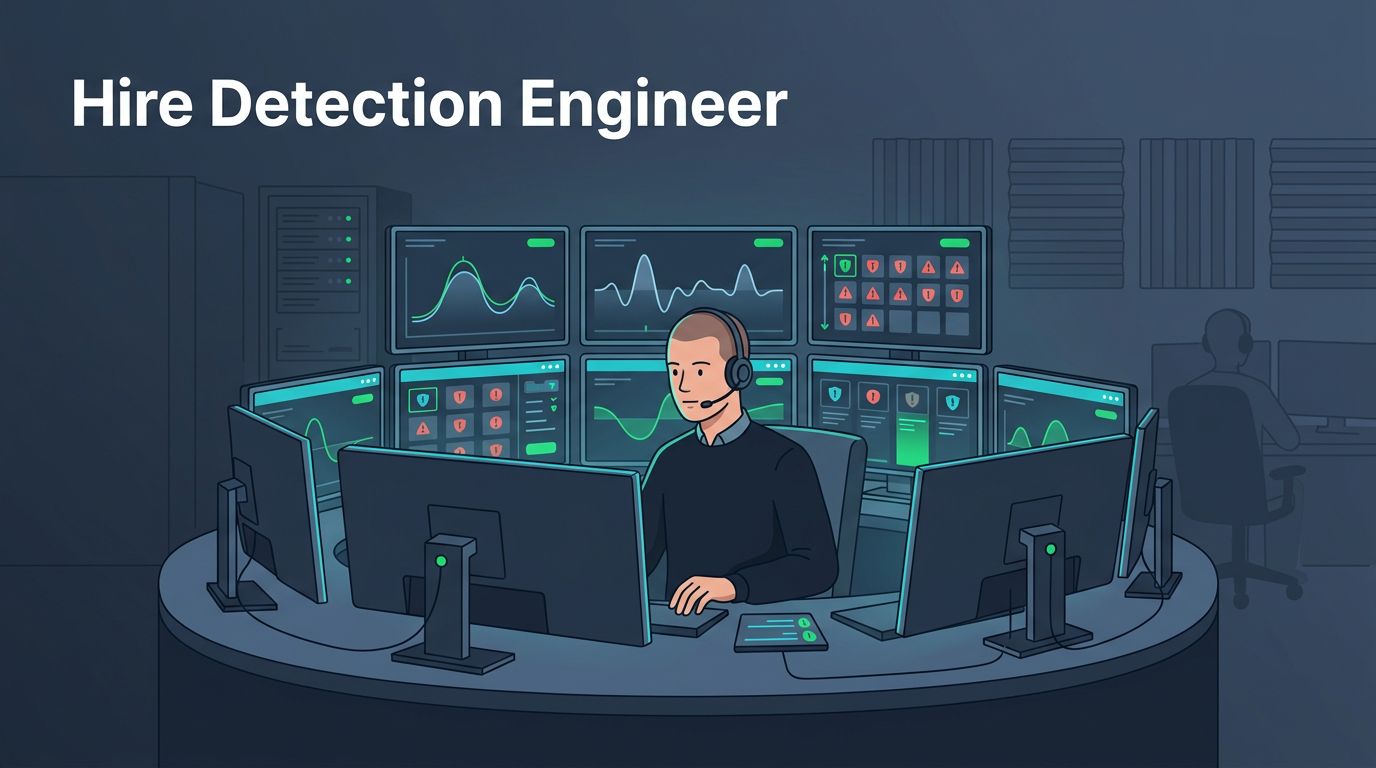
A noisy SOC does not need more alerts. It needs someone who can cut through bad signal and make analysts trust the queue again. That is where a strong detection engineer changes the workday.
Hire the wrong person, and you get clever rules that add to the mess. Hire the right one, and you get cleaner triage, better coverage, and fewer wasted hours.
Table of Contents
- How to Hire a Detection Engineer for a Noisy SOC
- What the role should own
- Skills that matter most
- Interview questions and a technical test that exposes real ability
- Common hiring mistakes when the SOC is loud
- Conclusion
- FAQ
How to Hire a Detection Engineer for a Noisy SOC
Start by deciding what problem you are solving. If your biggest pain is false positives, you need a builder who can tune, measure, and retire noisy detections. If your gap is coverage, you need someone who can map attacker behavior to the telemetry you already collect.
Recent U.S. market data puts detection engineer pay around $156,000 to $161,000 a year, so this is usually a senior search. That level matters because the job is part engineering, part SOC operations, and part detective work.
A clear role profile should name the systems they will touch, the log sources they can influence, and the teams they must work with. For a plain-language overview of the discipline, Wiz’s detection engineering guide is a helpful reference.
What the role should own in a noisy SOC
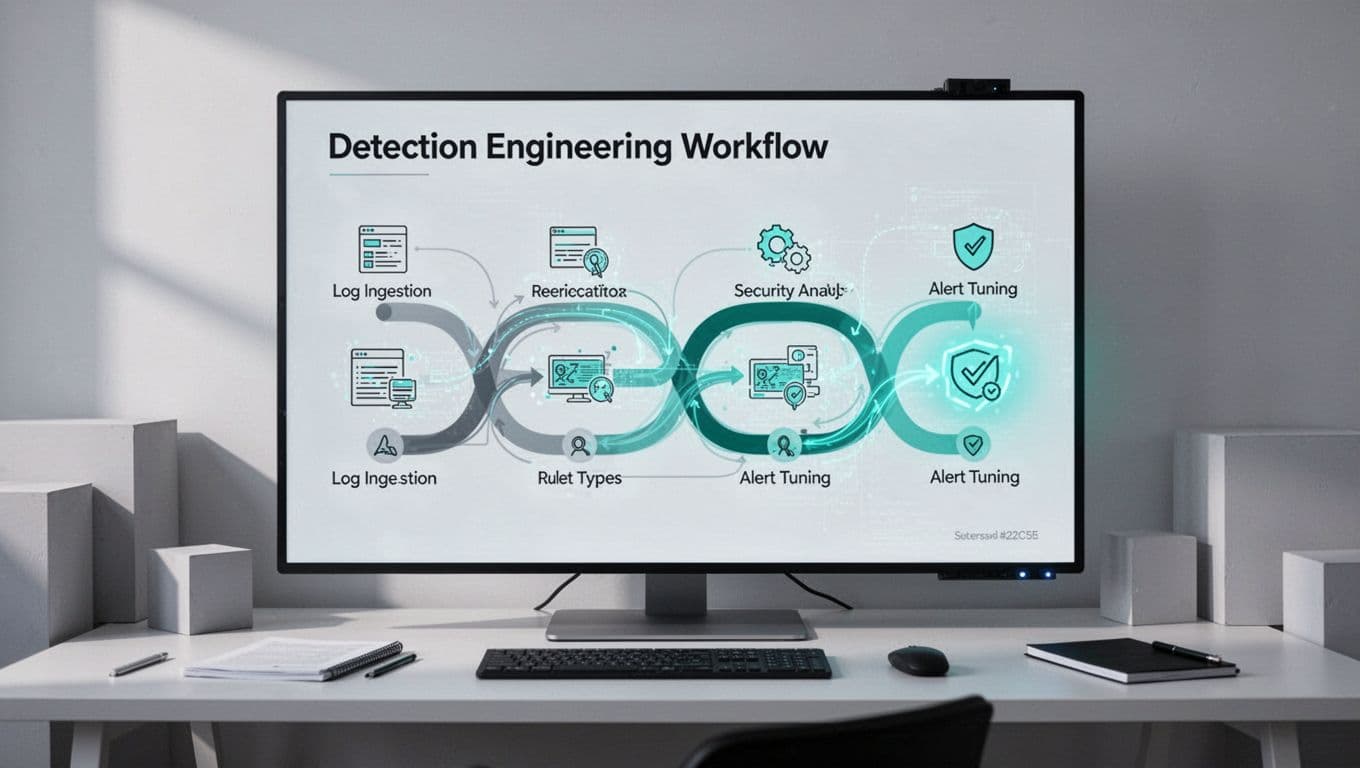
The best detection engineer owns the full life of a detection, not just the first draft. They should research the threat, write the logic, test it, tune it, and watch what happens after release.

In practice, that means three things. First, they improve alert quality by cutting obvious noise. Second, they protect coverage so the SOC does not become blind while tuning. Third, they work with analysts, threat intel, and incident response to turn real investigations into better rules.
A weak job description says, “write detections.” A stronger one says:
- Tune noisy alerts without breaking coverage.
- Build and maintain detections across endpoint, identity, cloud, and network logs.
- Document logic so the SOC can trust and review it.
- Measure whether a rule helps analysts or just fills the queue.
That last part matters. A noisy SOC punishes bad content fast, and detection engineering in an AI-driven SOC depends on tight feedback loops.
Skills that matter most
The best candidates know SIEMs, but they are not married to one tool. They can work in Splunk, Sentinel, QRadar, or another stack because they understand the logic behind the query.
They also need strong instincts about telemetry. If a candidate cannot explain what logs they need before writing a rule, they will struggle in a real SOC. That includes identity logs, endpoint events, cloud audit data, and network telemetry.
Look for these skills:
- Detection tuning, because false positives cost analyst time.
- Threat behavior mapping, because good detections start with attacker methods, not tool clicks.
- Detection-as-code habits, because versioning and review keep rules from rotting.
- Communication, because the SOC has to understand why a rule exists.
- Change awareness, because log sources and platforms shift all the time.
A strong hire also stays calm when the queue is noisy. They do not panic when a rule fires too often. They ask what changed, what data is missing, and what a better signal looks like.
Interview questions and a technical test that exposes real ability
Good interviews test judgment, not memorized terms. Ask candidates to think through a messy rule, then explain the tradeoffs in plain language.
A useful starting point is LetsDefend’s detection engineer interview questions, but you should tailor the prompts to your environment.
Use a short table to compare signals:
| Assessment | Good signal | Weak signal |
|---|---|---|
| Tune a noisy alert | Asks for baseline volume, suppression logic, and data gaps | Jumps straight to broad exclusions |
| Build a new detection | Starts with attacker behavior and telemetry sources | Writes a query before mapping the threat |
| Explain a false positive | Balances risk, analyst time, and coverage | Treats every alert as equally important |
A practical exercise works better than a long take-home. Give the candidate a noisy detection, a small sample of events, and a goal. Then ask for a revised rule, a short explanation, and the test they would run before production.
You can also ask:
- “How would you reduce false positives on a rule that fires thousands of times a day?”
- “What logs do you need before you write the first version?”
- “How would you prove the detection still works after a platform change?”
- “When would you retire a rule instead of tuning it again?”
If the candidate can explain their reasoning without hiding behind jargon, you are on the right track.
Common hiring mistakes when the SOC is loud
The biggest mistake is hiring for tool familiarity alone. A person who knows the vendor console is not automatically a good detection engineer.
Another mistake is overvaluing hunting and undercutting maintenance. A noisy SOC needs someone who will revisit old rules, not just build shiny new ones. It also needs someone who can work with analysts instead of writing detections in a silo.
A noisy SOC does not need more rules. It needs fewer rules that analysts trust.
Teams also miss the cost of a poor brief. If you do not define which logs exist, who owns tuning, and what “good” looks like, the search gets messy fast. If the role still feels unclear, Book a Discovery Call with Bud Consulting and tighten the profile before you open interviews.
Conclusion
A noisy SOC makes hiring harder, because the best detection engineer is part analyst, part builder, and part editor. They reduce noise, protect coverage, and give your team rules they can trust.
When you write the job, focus on outcomes, not buzzwords. When you interview, test tuning, judgment, and communication. That is how you find the person who can turn alert fatigue into better signal.
FAQ
How senior should this role be?
In most mid-market and enterprise SOCs, this should be a mid-senior or senior hire. The person needs enough experience to tune detections, talk to analysts, and make tradeoffs without hand-holding.
Do I need a candidate with one specific SIEM?
No. Tool depth helps, but the stronger signal is whether they understand detection logic and telemetry. A good hire can move across platforms if the thinking is solid.
Should the assessment include coding?
Only if coding is part of the job. Many detection engineers need enough scripting to automate tests, manage rules, or parse data, but the bigger test is whether they can build useful detections.
What is the fastest way to spot a weak candidate?
Watch for vague answers about false positives, weak examples of tuning, and no clear process for testing rules. If they cannot explain how they improved a noisy alert, they may not fit a busy SOC.