table of contents
Hiring a vulnerability management lead for a small team is hard because one person has to connect several moving parts at once. They need to find assets, judge risk, push fixes, and explain progress in a way leaders can use.
A scanner can produce findings. A real lead turns those findings into a working process.
That difference matters when you do not have a large security team or a deep bench of engineers. The right hire reduces noise, builds order, and keeps remediation moving without turning into a bottleneck.
Define the role as a program owner, not a scanner operator
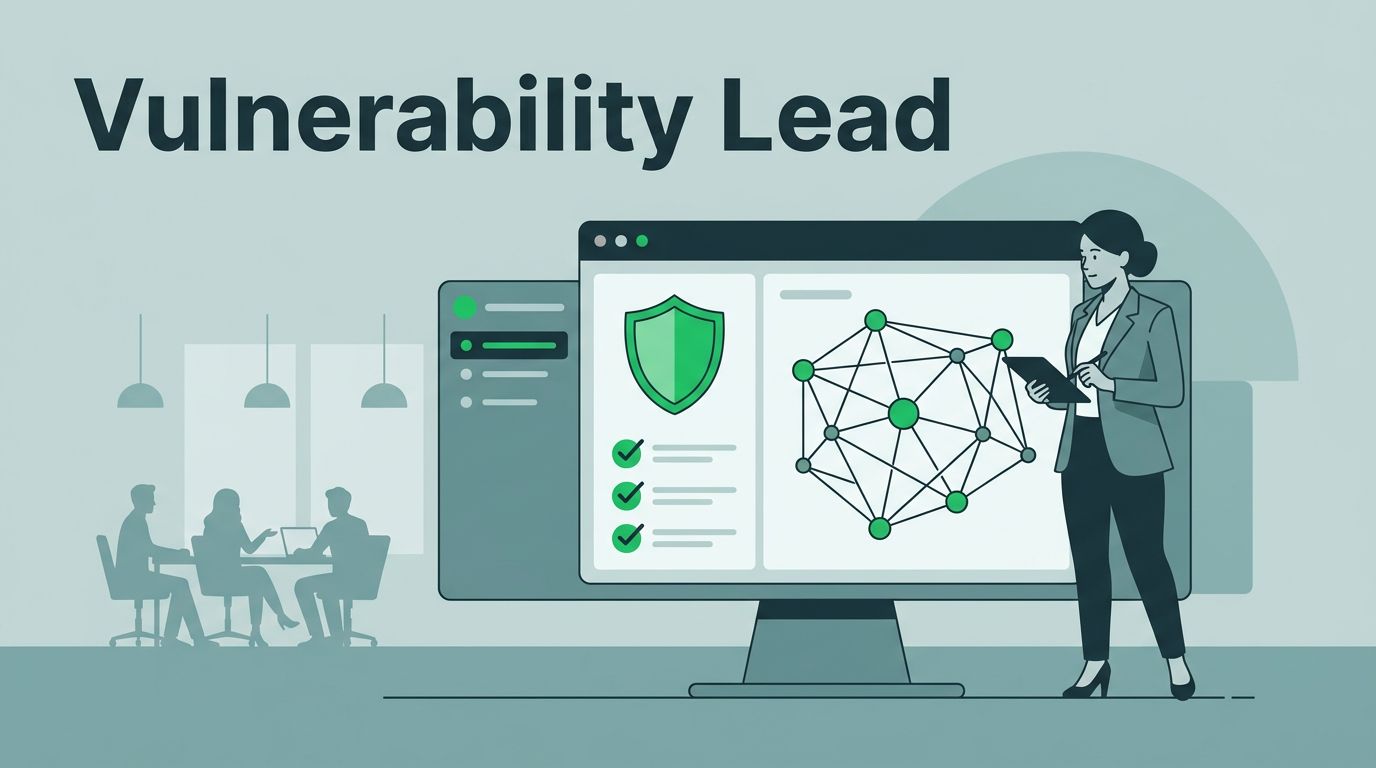
A strong vulnerability management lead owns the whole lifecycle. They know how to discover assets, separate urgent issues from background noise, coordinate fixes, and report on what changed.
On a lean team, that means they need more than tool knowledge. They should understand ticket flow, patch windows, ownership models, exception handling, and executive reporting. In other words, they must be able to run the program, not only run scans.
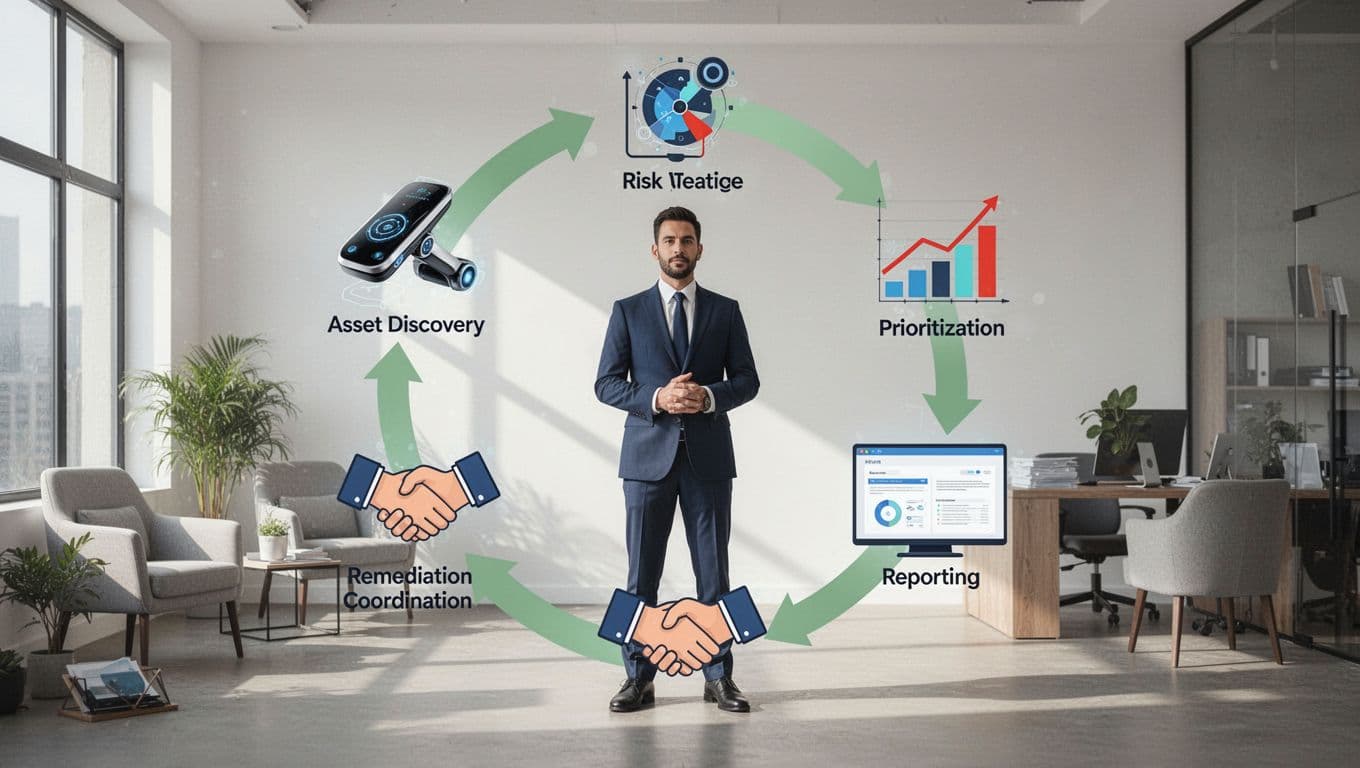
For context, a useful reference is SME vulnerability management best practices. The common thread is simple: discovery, prioritization, remediation, and reporting need to work as one loop. If a candidate cannot explain how they would move from unknown assets to closed fixes, they are not ready for this role.
If they only talk about scanners, you probably have an analyst, not a lead.
Build a hiring scorecard that fits a lean team
Before interviews start, decide what success looks like in your environment. A small business with 300 endpoints, a few cloud services, and one infrastructure team needs a different hire than a company with a full security operations staff.
Use a scorecard so you compare candidates on the same business needs. Here is a practical version you can adapt.
| Hiring area | Weight | What strong looks like |
|---|---|---|
| Asset discovery and scope | 20% | Can explain how to find unmanaged systems and keep inventory current |
| Risk prioritization | 25% | Uses business impact, exposure, and exploit signals, not CVSS alone |
| Remediation coordination | 20% | Works with IT and engineering, assigns owners, and follows through |
| Reporting | 15% | Turns findings into clear trends, SLAs, and executive updates |
| Communication and influence | 20% | Gets busy teams moving without constant escalation |
Use the scorecard to cut through polished resumes. A candidate who scores well across the table can probably build your program. A candidate who only scores high on tool depth may struggle to get fixes done.
For example, if your team has weak asset visibility, the best hire may not be the deepest scanner administrator. It may be the person who can clean up ownership, set a weekly triage rhythm, and automate ticket creation.
An image can help the hiring panel stay aligned. Use it during the review meeting, not after the decision is made.

Interview for influence, not just tool knowledge
A lean team needs someone who can move across security, IT, and business teams. That means the interview should test judgment, follow-through, and communication under pressure.
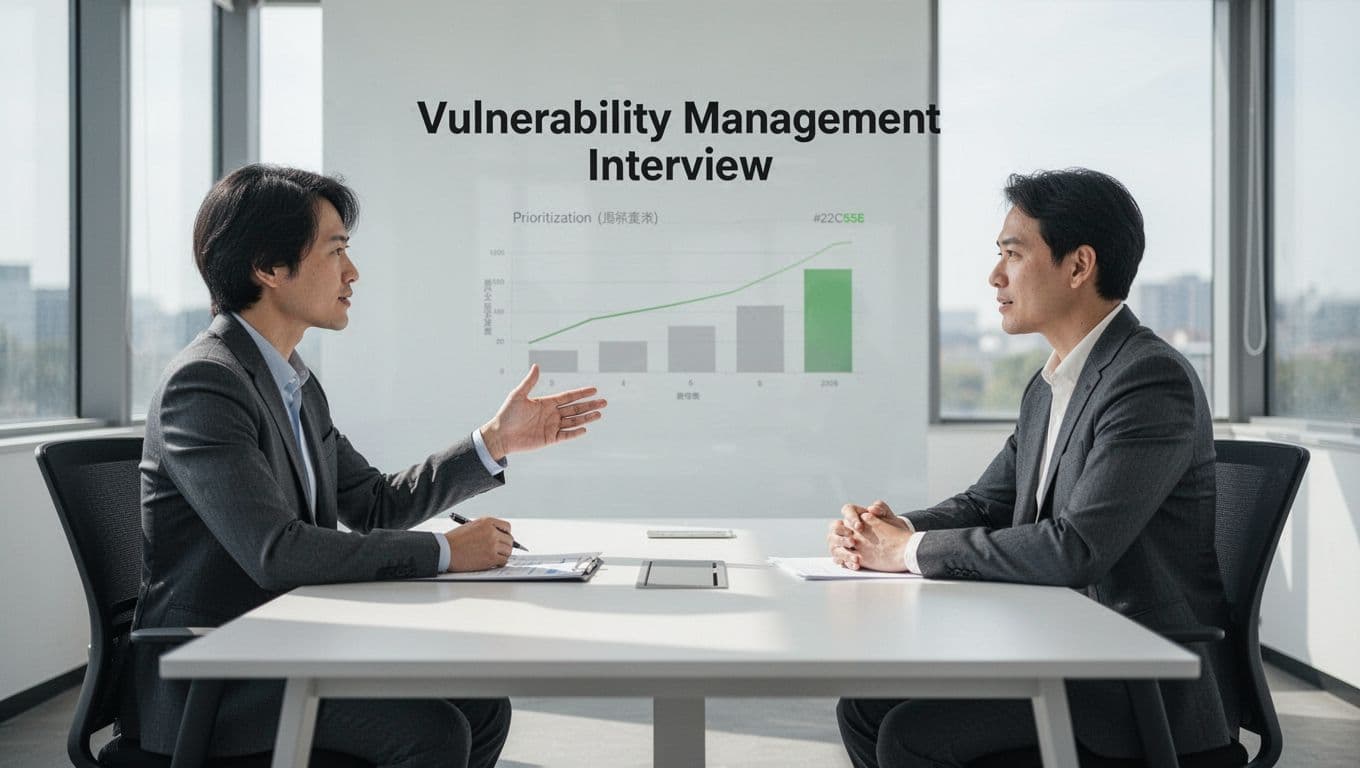
If you want a longer question bank, vulnerability management interview questions is a helpful starting point. The goal, though, is not to quiz someone on definitions. The goal is to hear how they think.
Try questions like these:
- How would you find unmanaged assets in your first 30 days?
- What would you use to rank 200 critical findings across different teams?
- How do you get fix owners to act when they do not report to you?
- What would your weekly and monthly reports look like?
- Which tasks would you automate first, and why?
Use follow-up questions. Ask for a real example, a metric, or a specific tool flow. Good answers mention owners, deadlines, validation, and escalation paths. Weak answers stay at the scanner level.
A strong candidate should also sound comfortable with trade-offs. Sometimes a patch waits for testing. Sometimes a fix needs a risk exception with an expiry date. The lead you want can explain that clearly and keep trust intact.
Set the first 90 days before the hire starts
The best hires do better when the target is clear. Before the offer goes out, define the first outcomes you expect.
A practical first-quarter plan should cover asset inventory cleanup, severity tiers, weekly triage, remediation ownership, and monthly reporting. It should also name the teams that must take part. That gives the new lead a path to build rhythm fast.
A useful benchmark is vulnerability management best practices, because it keeps the process tied to discovery, validation, and reporting. For a lean team, the trick is consistency. A simple weekly cadence that gets followed is better than a complex model nobody uses.
If the role is still fuzzy, or if you need help finding someone who can do more than run scans, Book a Discovery Call with Bud Consulting. A clear brief makes the search faster and the shortlist stronger.
Conclusion
A lean team does not need a hero who stares at dashboards all day. It needs a vulnerability management lead who can build a repeatable process and keep people moving.
Hire for lifecycle ownership, clear communication, and steady follow-through. If the person can turn findings into fixes and report the results cleanly, you have found the right fit.
The best hire leaves behind a program that still works when the quarter gets busy.