table of contents
Your hybrid setup mixes on-premises servers with AWS or Azure clouds. Data flows between them every day. One wrong firewall rule or weak access control exposes everything to breaches.
Hiring the right cloud network security engineer fixes that. They bridge old and new networks while blocking threats. This guide walks you through the process, from skills to interviews.
You need one now if migrations stall or compliance audits fail. Let’s start with timing.
Know When You Need This Hire
Hybrid environments grow fast. Teams push apps to the cloud, but legacy systems stay put. Security gaps widen as traffic crosses boundaries.
Hire when on-premises firewalls clash with cloud security groups. Or if visibility into east-west traffic drops. Common signs include repeated VPN outages or failed zero-trust pilots.
In 2026, demand spikes because threats target hybrid weak spots. Average salary hits $140,000 to $167,000 base plus bonuses, per recent data. Senior roles top $250,000 in tech hubs.
Delay costs more. A breach averages millions. Act if your current network team lacks cloud depth.
Check job boards for benchmarks. For example, TM Floyd’s Cloud Network Security Engineer role stresses Palo Alto firewalls in AWS and Azure hybrids.
Role Differences: Cloud Network vs. Others
A cloud network security engineer focuses on traffic flows across hybrid setups. They configure VPC peering, Transit Gateways, and on-prem integrations like Direct Connect.
Cloud security engineers handle broader app and data protection. They secure S3 buckets or Lambda functions, not routing tables. Network security engineers stick to physical switches and firewalls. They rarely touch cloud-native tools like Network ACLs.
DevSecOps engineers embed security in CI/CD pipelines. They scan code for vulns, but skip firewall policies or hybrid VPNs.
| Role | Focus Area | Hybrid Strength |
|---|---|---|
| Cloud Network Security Engineer | Network segmentation, firewalls, connectivity | High: Bridges on-prem and cloud |
| Cloud Security Engineer | Workloads, encryption, compliance | Medium: App-centric |
| Network Security Engineer | On-prem hardware, IDS/IPS | Low: Limited cloud |
| DevSecOps Engineer | Pipelines, container security | Low: Development-focused |
This table shows why hybrids demand the network specialist. Overlaps exist, but get the hybrid expert first.
Key Skills for Hybrid Environments
Top performers master hybrid networking. They set up secure VPCs, subnets, and routing. Tools like AWS PrivateLink or Azure ExpressRoute keep data private.
Identity and access management tops the list. Zero trust verifies every request with IAM roles, MFA, and just-in-time access. Federate identities across environments using SAML or OIDC.
Monitoring unites logs from CloudTrail, Azure Monitor, and on-prem SIEMs. Spot anomalies in flow logs fast.
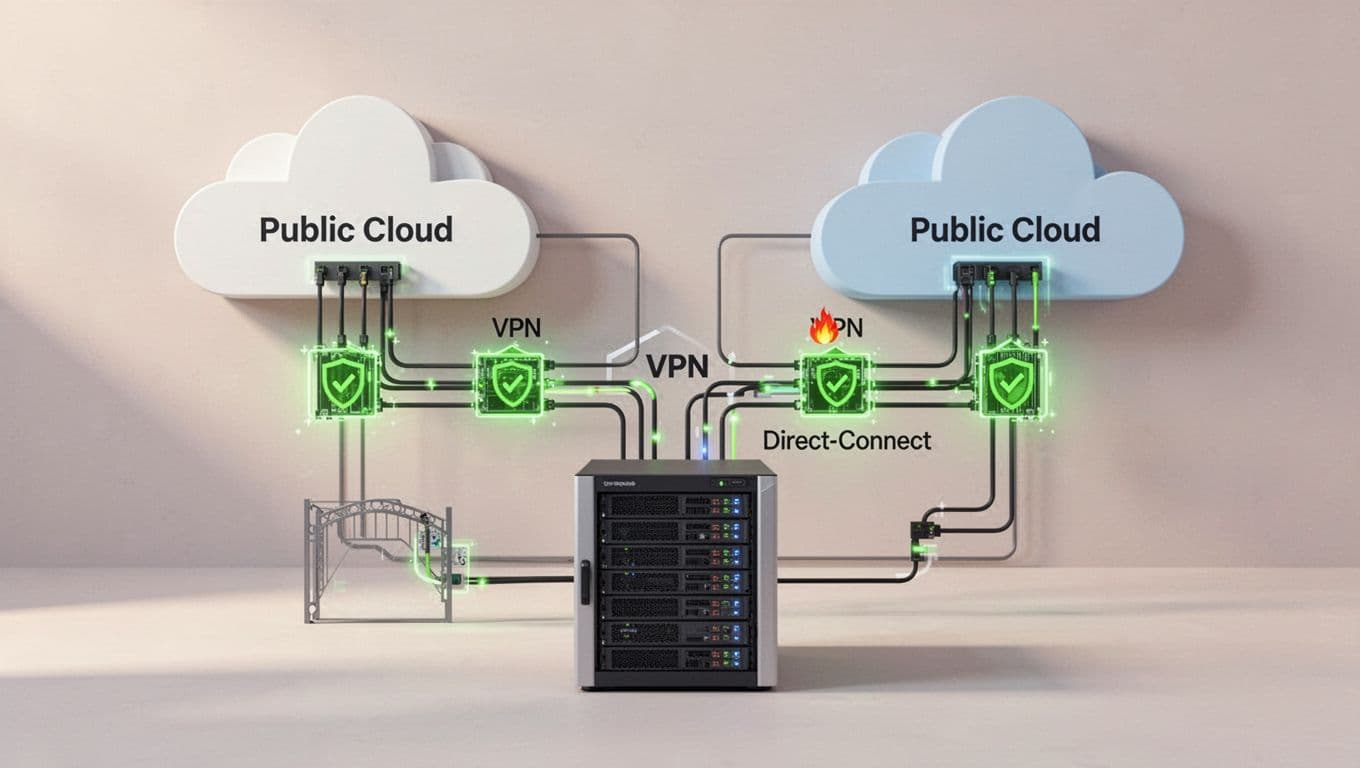
Firewall policy management spans Palo Alto VMs in clouds and Cisco on-site. Encrypt traffic end-to-end. Compliance skills cover SOC 2 or HIPAA audits.
Automation via Terraform or CloudFormation deploys consistent configs. Incident response isolates breaches quickly.
Hands-on experience matters most. Probe for real projects in interviews.
Must-Have vs. Nice-to-Have Skills
Separate essentials from extras to filter resumes.
Must-haves:
- 5+ years in AWS/Azure networking with hybrid links (VPN, Direct Connect).
- Firewall expertise (Palo Alto, Cisco) across environments.
- IAM/zero trust implementation.
- Monitoring and logging integration.
- IaC tools like Terraform.
Nice-to-haves:
- Multi-cloud (GCP added).
- Kubernetes network policies.
- Advanced threat hunting.
- Compliance certifications (CCSP, CISSP).

Use this split in your ATS filters. Must-haves screen 80% out. Nice-to-haves differentiate stars.
Build Your Job Description
Keep it concise. Lead with the hybrid challenge: “Secure our AWS-Azure-on-prem network against evolving threats.”
List must-haves first. Add salary range for trust: “$150,000-$180,000 base.”
Sample duties:
- Design VPC segmentation and firewall rules.
- Integrate monitoring for full visibility.
- Automate secure deployments.
Require proof: “Share a hybrid project portfolio.” Post on Dice or LinkedIn. See Perceptyx’s Senior Cloud Network Engineer posting for a model.
Run the Interview Process
Screen resumes for hybrid keywords. Phone chat: 15 minutes on a past breach fix.
Technical round: Live demo. Ask them to diagram a hub-spoke VPC with zero trust. Or script a Terraform module for firewall rules.
Panel with your CISO and network lead. Probe cross-environment visibility.

Assessments:
- Build a secure hybrid VPN in a sandbox.
- Analyze logs for an anomaly.
- Review a misconfigured policy.
Reference checks confirm hands-on wins. Offer within a week.
Avoid Common Hiring Mistakes
Don’t hire generalists. Pure cloud folks miss on-prem quirks.
Skip cert-heavy resumes without projects. CCSP is great, but demand GitHub links.
Overlook culture fit. They join small teams, so test collaboration.
Rush without assessments. Theory fails in hybrids.
Budget low. Top talent costs, but saves breaches.
Conclusion
Pick a cloud network security engineer who owns hybrid flows from day one. Focus on must-have skills like firewalls and IAM. Run hands-on interviews to prove it.
Your network stays safe. Teams move faster. If gaps persist, Book a Discovery Call with Bud Consulting to source vetted experts.
Strong hires build secure futures. Start today.