table of contents
Red team operators walk away too often. You know the drill: a key player nails a tough simulation, then jumps ship to a rival firm. In May 2026, only 34% of cybersecurity pros plan to stay put, according to the IANS and Artico Search report. Red team roles face even steeper odds because of burnout from endless threat evolutions and AI-driven attacks.
Leaders lose ground when talent leaves. Enterprises, consultancies, and government teams compete for these rare skills in offensive security. Poaching hits 59% of exits, while stress claims 45%. You can turn this around with targeted fixes.
These strategies draw from current trends. They focus on what keeps operators engaged amid rising demands.
Understand the 2026 Red Team Talent Crunch
Red team work shifted in 2026. Teams now simulate full attack chains, not just breaches. They tie exercises to real-time detection, as noted at the Rapid7 Global Cybersecurity Summit. Operators must master AI tools for threats and defenses. This ups the pressure.
Turnover stats paint a clear picture. Half of recruiters fear losses, up from prior years. Layoffs hit 25% of teams, with 38% freezing hires. Finance and tech sectors suffer most, with 67% understaffed.
Operators quit for specific reasons. Pay lags at 48% of cases. But 47% want better growth paths. Burnout from high-stakes ops and constant upskilling drives 45% away. One common mistake? Ignoring hybrid setups. Most prefer 1-2 office days for balance.

Empty ops centers tell the story. A lone operator grinds through nights. This isolation worsens churn. Leaders who spot these signs act first. They track exit interviews for patterns, like weak mentorship.
Competition heats up across sectors. Vendors offer premiums, consultancies promise variety, governments stress mission impact. Enterprises lag if they treat red teams as cost centers. Fix this by benchmarking pay against public data. Then build from there.
Foster a High-Impact Team Culture
Culture binds red teams. Operators thrive in groups that value wins and failures alike. Start with clear rituals. Weekly debriefs turn losses into lessons. This cuts isolation, a top burnout trigger.
Make space for collaboration. Hybrid models work best: core office days for sims, remote for research. One firm cut exits 20% by capping sim weeks at three per quarter. They added “recharge” time for side projects.
Avoid the trap of siloed stars. Pair juniors with seniors for ops. This builds bonds and skills. Leaders who coach directly see loyalty rise. Data shows mentorship drops burnout.

Bright team huddles beat dark solo grinds. Operators share attack maps. Ideas flow. Such setups foster trust.
Tackle stress head-on. Track workloads with simple tools. If one op runs long, rotate leads. Recognize efforts publicly. A shoutout after a tough purple team exercise goes far.
Common pitfall: overlooking blue team ties. Integrate joint exercises. Red operators gain context; blues improve detections. This makes work meaningful. Teams with strong cultures retain 15-20% more talent.
Set Competitive Compensation Without Breaking the Bank
Pay grabs headlines, but smart packages retain. Base salaries trail 18-20% above average in 2026, per recent studies. Public firms pay 24% premiums. Match market data from Dice or Programs.com.
Go beyond base. Bonuses tied to sim outcomes motivate. One consultancy links 20% of pay to client feedback on reports. This aligns effort with results.
Benefits seal deals. Offer unlimited PTO, but enforce it. Mental health days matter; 45% cite stress. Stock options appeal to vendors. For government roles, emphasize stability and clearances.
Watch pitfalls. Annual reviews alone fail. Do quarterly check-ins. Adjust for inflation and skill gains. A manager who delayed a raise lost two seniors to poachers.
Layer in perks. Gym stipends, home office upgrades, conference budgets. These cost less than rehiring. At $250K per replacement, retention pays.
Drive Growth Through Targeted Upskilling
Operators crave paths forward. Flat structures kill morale; 47% leave for this. Map careers early. Junior to lead op in 18 months, then principal.
Upskill for 2026 demands. AI fluency tops lists. Train on prompt engineering for attack sims. Secure coding bridges red-blue gaps. SANS reports certs boost hires 69%, but internals retain better.
Fund external courses. OSCP refreshes, plus AI-specific tracks. Rotate through app sec or cloud ops. One team sent pairs to Black Hat; both stayed two extra years.
Mistake: generic training. Tailor to threats. Use internal “hack weeks” for new tools. Track progress in reviews.
Promotions follow proof. Lead a multi-week engagement? Bump title and pay. This shows commitment.
Leverage AI Tools to Fight Burnout
AI changes red team ops. It automates recon, generates payloads. But oversight causes “AI brain fry,” per 2026 studies. 14% report mental fog; 34% consider quitting.
Smart use cuts load. Tools like agentic SOCs triage alerts. Red teams focus on creative breaches. Integrate for continuous testing, beyond point audits.
Example: One firm uses AI for attack paths. Operators validate, not build from scratch. Burnout drops; output rises 30%.
Avoid overload. Train on one tool at a time. Start with MITRE ATT&CK emulations. Pair with human judgment.
This keeps teams ahead. Elixirr notes AI defense skills demand surges. Upskill here; retain pros who master it.
Your Red Team Retention Framework
Pull it together in a cycle. Growth, culture, comp, and AI interconnect.
Assess quarterly: Survey burnout, track sim loads. Adjust pay bands yearly.
| Element | Action | Metric |
|---|---|---|
| Growth | Map paths, fund certs | Promotion rate >20% yearly |
| Culture | Hybrid rituals, mentorship | Exit interviews score 4/5+ |
| Comp | Market benchmarks, bonuses | Turnover <15% |
| AI Tools | Integrate for efficiency | Sim time cut 25% |
This table guides you. Review after each cycle.
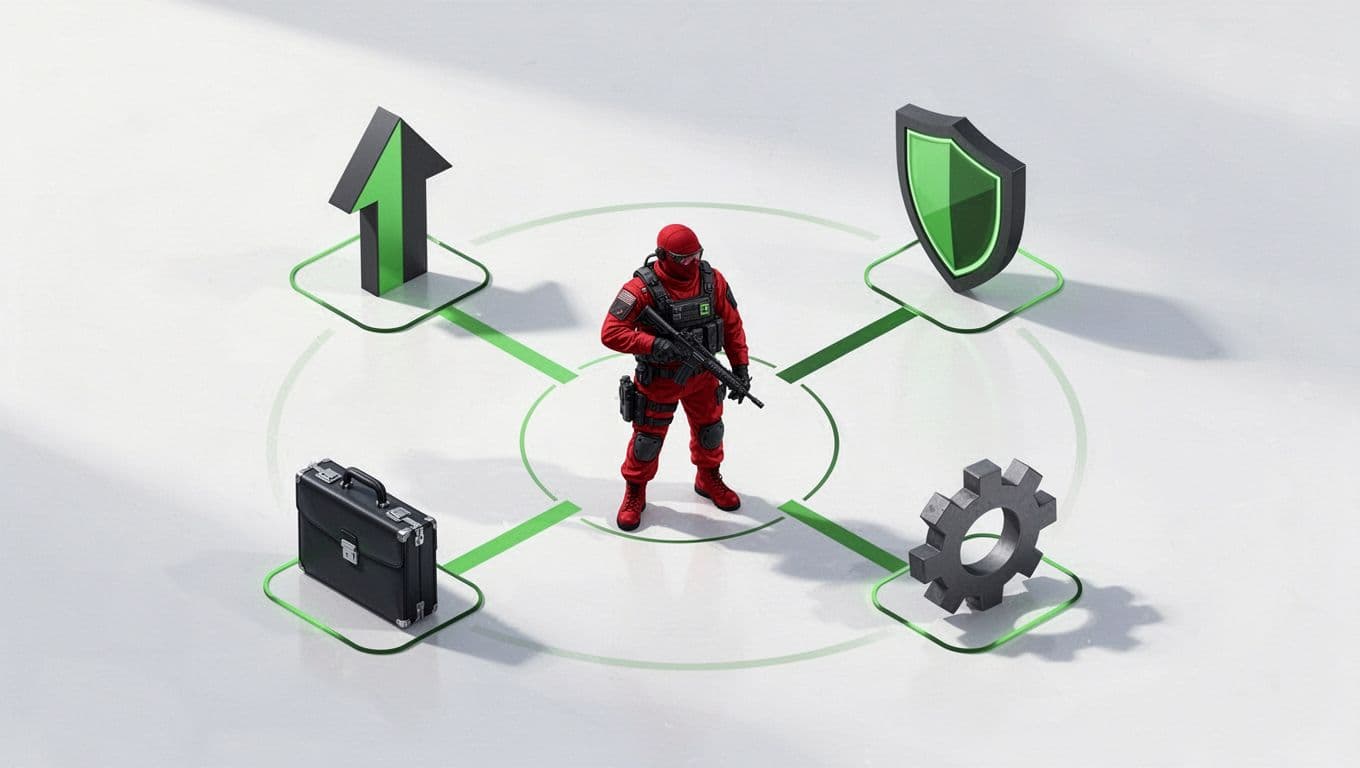
Visualize the loop. Operator at center; elements connect.
Test it. Pilot on one team. Scale what works.
Key Takeaways for Lasting Red Team Retention
Red team retention boils down to balance. Address crunch with culture, growth, pay, and AI. Operators stay when work fits life and skills grow.
Talent wars rage, but evidence wins. Hybrid cultures and targeted tools cut churn. Start small; measure results.
Leaders who act now hold their edge. Book a Discovery Call with Bud Consulting to benchmark your team.
(Word count: 1487)