


Hiring outside help is a major step when your internal team faces a skills gap or a sudden threat. Knowing what to expect during a cybersecurity consulting process keeps your organization on track and prevents costly delays. Consultants bring specialized talent, but success depends heavily on structured planning, clear timelines, and active stakeholder involvement from day one.
Key Takeaways
- Understand that a formal cybersecurity consulting process requires clear timelines, executive buy-in, and strict access requirements to succeed.
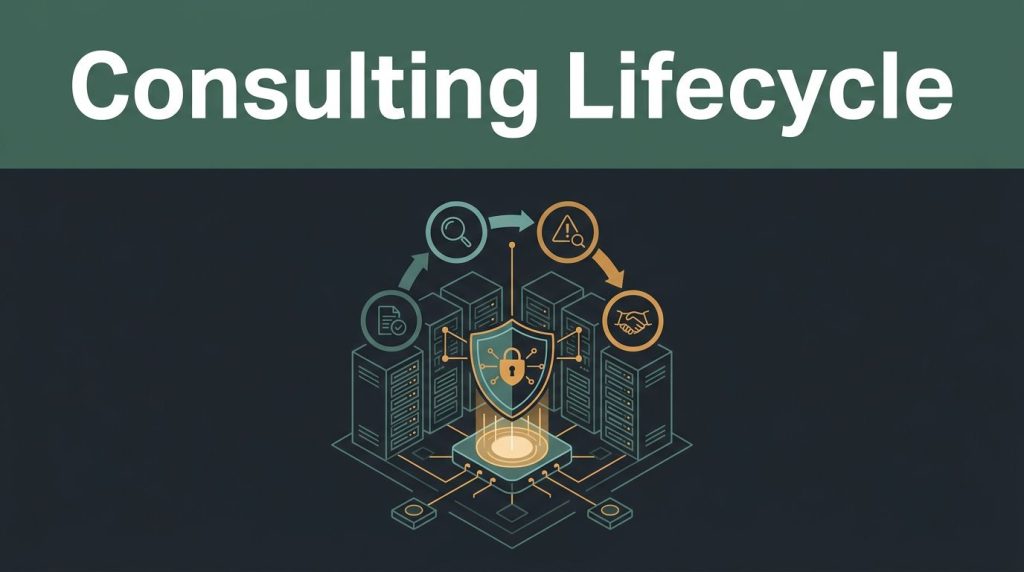
- Establish baseline expectations early by mapping out discovery, risk assessment, remediation, and final handover phases.
- Prepare internal stakeholders by defining technical roles and granting necessary environment access before consultants arrive on site.
- Evaluate potential partners using targeted selection criteria to ensure they match your risk appetite and operational goals.
Preparing for Discovery and Scoping
The initial phase of any professional engagement sets the rules for the entire project. Discovery and scoping determine what systems are in scope, which personnel need interviews, and how deep the technical analysis will go. Business owners often assume an audit takes a few days, but thorough evaluations require mapping every external endpoint and internal subnet. For official guidance on structuring risk reviews, you can consult resources such as the NIST Cybersecurity Framework implementation guide.
Stakeholder involvement starts here. IT leaders must provide network diagrams, asset inventories, and historical incident logs before consultants write the first line of code or run a scan. If your team delays these handoffs, the schedule slips and project costs rise. Setting realistic timelines during scoping avoids rushed assessments and ensures that every critical application receives proper scrutiny.


Executing the Risk Assessment and Technical Audit
Once scoping concludes, the operational work begins. A proper cybersecurity consulting process relies on objective data gathered through automated discovery tools, vulnerability scans, and manual penetration testing. Consultants examine your cloud environments, identity providers, and software pipelines to uncover hidden gaps.
Technical terms like attack-surface discovery or privilege escalation often sound complex, but they simply mean finding open doors and checking who holds the keys. Consultants need administrative access to specific staging environments or test domains to simulate real attacker behavior. Organizations must balance security controls with the need to let testers do their jobs effectively. Reviewing foundational security documentation, such as the NIST Cybersecurity Framework version 2.0, helps internal teams understand the scope of these technical audits.
Remediation planning follows the assessment phase immediately. Consultants don’t just hand over a raw list of vulnerabilities and walk away. They rank findings by severity, business impact, and exploitability. This prioritization helps your security managers fix critical remote code execution flaws before addressing minor configuration issues.
Managing Stakeholder Communication and Timelines
Clear communication keeps the engagement on schedule. Weekly status updates prevent surprises and keep executive sponsors informed about newly discovered risks or access bottlenecks. If consultants uncover an active compromise during testing, emergency notification protocols take over immediately.
Timelines depend on organization size and technology complexity. A mid-sized cloud environment takes weeks to evaluate thoroughly, while a massive enterprise network requires a phased multi-month approach. Security managers should allocate internal engineering time to help consultants validate findings and test patches. Without dedicated internal support, remediation stalls and the engagement loses momentum.
Organizations preparing for a major security overhaul can Book A Call With Us to discuss how specialized talent sourcing and continuous threat management fit into their operational roadmap.
Evaluating Providers Before the Engagement Begins
Choosing the right consulting partner requires careful vetting. Procurement stakeholders and IT leaders should ask targeted questions before signing a contract. You need to verify past performance, technical specializations, and familiarity with your industry regulations.
Organizations should ask potential consulting firms several baseline questions before making a final selection:
- What specific certifications and hands-on experience do your lead engineers hold in our exact technology stack?
- How do you handle sensitive credentials, data privacy, and secure storage during and after the project?
- Can you provide verifiable references from past clients who faced similar risk profiles and scale?
- What exact deliverables, reports, and debrief sessions are included in the standard service fee?
- How do you measure the long-term effectiveness of your recommendations after the contract ends?
Asking these questions upfront prevents misaligned expectations. A transparent consulting firm explains their methodology, outlines exact deliverables, and refuses to promise silver bullets or absolute compliance guarantees.
Handover, Knowledge Transfer, and Continuous Improvement
The final phase of the engagement focuses on knowledge transfer and long-term sustainability. Consultants deliver executive summaries, technical reports, and remediation roadmaps. Your internal team must review these documents thoroughly and take ownership of the corrective actions.
A successful cybersecurity consulting process doesn’t end with a static report. It leaves your organization with better operational habits, updated monitoring tools, and a clear path toward continuous threat management. Internal security managers must integrate consultant recommendations into daily engineering workflows to maintain a strong defense long after the external team packs up.