


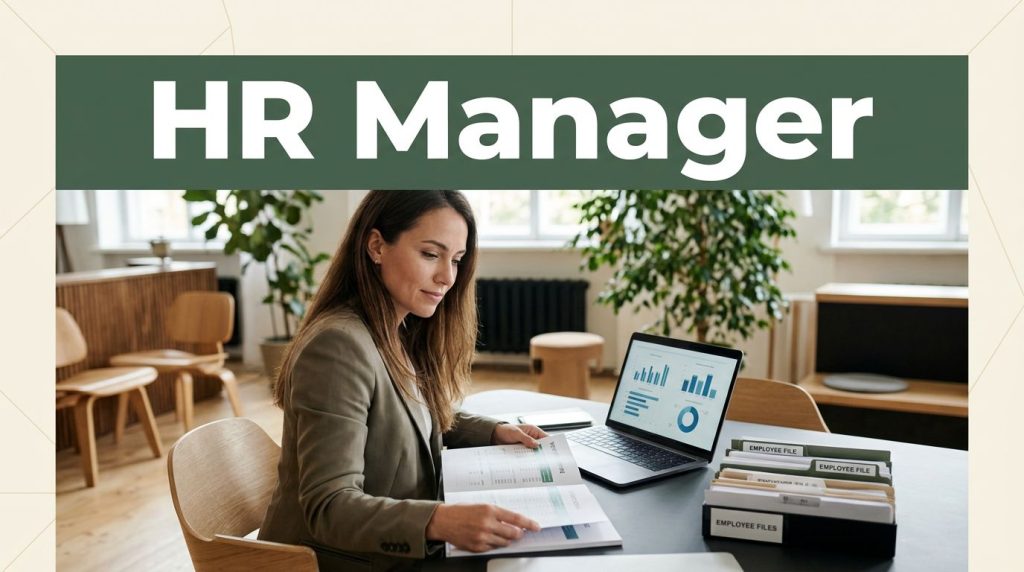
People problems can stop hiring, slow delivery, and create legal or security risk. An HR manager helps prevent those problems by managing how an organization hires, supports, develops, and exits employees.
For an aspiring HR professional, the role can look like recruitment one day and a sensitive employee investigation the next. For a small-business owner, it can be the person who turns informal people decisions into consistent processes. The job is broad, but its purpose is clear: connect workforce needs with practical HR controls.
What Is an HR Manager?
An HR manager leads the people function for an organization, department, or location. The work covers the employee life cycle, including workforce planning, recruitment, onboarding, performance, pay, training, employee relations, and offboarding.
The manager may supervise HR coordinators, recruiters, payroll staff, or generalists. In a small business, one HR manager may handle most of these activities directly. In a larger company, the role may focus on policy, managers, risk, and coordination across specialist teams.
The position is both operational and advisory. Employees may ask about leave, pay, workplace conduct, or benefits. Managers may ask for help with hiring, performance issues, team structure, or an exit. Senior leaders may need workforce data before they approve a budget or change an operating model.
SHRM’s Human Resource Manager job description includes hiring, interviewing, pay administration, and employee relations. The title indicates the level of accountability, but the workload depends on the company’s size and structure.
The HR manager is usually the point where people policy becomes daily action. That requires judgment. A policy that looks clear on paper still needs a consistent process, trained managers, and accurate records.
What Does an HR Manager Do Every Day?
Most days are mixed. The manager may review an open role in the morning, handle an employee concern before lunch, and meet a department leader about staffing later in the day.


Common work includes:
- Reviewing applications, interviews, offers, and onboarding tasks.
- Advising managers on performance, conduct, attendance, and workplace concerns.
- Checking payroll, benefits, leave records, and employee data.
- Updating policies and tracking required training or documentation.
- Preparing reports on headcount, turnover, vacancies, absence, and hiring progress.
The work changes with business needs. A growing company may place recruitment and onboarding first. A business with high turnover may focus on retention, manager quality, and employee relations. A company preparing for an audit may spend more time checking records and policy controls.
Confidentiality is part of the daily job. HR managers handle compensation data, medical information, complaints, disciplinary records, and personal identity details. Access must be limited, records must be accurate, and conversations must stay professional.
A hiring process is only consistent when selection criteria are set before candidates are compared.
The manager also creates a bridge between employees and leadership. That doesn’t mean agreeing with every side. It means applying policy fairly, recording decisions, and giving leaders clear information before they act.
Core Responsibilities of an HR Manager
The role has several connected responsibilities. Poor hiring creates onboarding pressure. Weak management creates employee relations work. Missing records create compliance risk.

Workforce planning and recruitment
An HR manager works with leaders to identify the people a business needs. That can include new roles, replacement hires, succession needs, contractors, and changes to team structure.
Recruitment involves more than posting a vacancy. The manager may define the job, agree selection criteria, coordinate interviews, review offers, and check that the process is consistent. Strong processes reduce confusion for candidates and help hiring teams assess people against the same requirements.
The role also includes onboarding. New employees need contracts, system access, training, introductions, and clear expectations. In a security-sensitive business, onboarding should connect HR records with access approvals. The right person should receive the right access at the right time.
Employee relations and workplace standards
Employee relations covers the issues that affect trust and conduct at work. An HR manager may handle complaints, conflict, attendance concerns, disciplinary processes, grievances, and investigations.
The manager doesn’t decide every issue alone. Legal counsel, senior leaders, security teams, or external investigators may be involved. The HR responsibility is to follow a documented process, protect confidentiality, avoid retaliation, and keep decisions based on evidence.
Policies also need regular review. A practical HR policy must tell people what is expected, who makes decisions, and what happens when a rule is broken. SHRM’s job description resources provide templates for structuring responsibilities, although each organization needs policies suited to its location and workforce.
Performance, pay, and development
HR managers help managers set expectations and address performance issues. They may coordinate reviews, improvement plans, promotions, training, and development programs.
They also support pay and benefits administration. This may include salary reviews, payroll checks, leave, benefits enrollment, and compensation records. Pay problems affect trust and can create legal exposure.
Training can cover manager skills, workplace conduct, privacy, health and safety, or security awareness. Training works best when it is tied to a real business risk, not treated as a box to tick.
Skills an HR Manager Needs
A strong HR manager combines people judgment with operational discipline. Communication matters, but communication alone isn’t enough. The manager must also understand records, process ownership, employment rules, and business priorities.
Key skills include:
- Clear writing for policies, job descriptions, reports, and employee communications.
- Active listening during concerns, interviews, and difficult conversations.
- Sound judgment when facts are incomplete or accounts conflict.
- Basic data analysis using headcount, turnover, absence, time-to-hire, and retention information.
- Process management across recruitment, onboarding, pay, performance, and offboarding.
- Confidence with an HRIS, applicant tracking system, payroll tools, and access-controlled records.
Employment law knowledge depends on the country, state, and sector. Managers don’t need to act as lawyers. They do need to recognize when an issue requires legal advice.
The role also requires boundaries. An HR manager can support an employee without promising a specific outcome. The manager can advise a leader without becoming the leader’s shield against accountability.
How to Become an HR Manager
Most people build toward the role through progressive HR experience. Common starting points include HR assistant, HR coordinator, recruiter, payroll administrator, and HR generalist positions.
A degree in human resources, business, psychology, or a related subject can help. It isn’t the only route. Employers also value experience with employee records, recruitment, HR systems, workplace policies, and manager support.
A practical path usually looks like this:
- Learn the basics of employment practices, recruitment, payroll, benefits, and employee relations.
- Build experience in a role that gives you ownership of repeatable HR processes.
- Take responsibility for projects such as onboarding, a policy update, an HRIS rollout, or manager training.
- Consider a professional credential, such as SHRM-CP, SHRM-SCP, PHR, or SPHR, after checking eligibility rules.
- Move into an HR generalist, HR business partner, or specialist role with wider business exposure.
Job descriptions help you compare your current experience with manager-level expectations. The ACBSP human resources manager outline covers recruitment, onboarding, performance management, and offboarding.
Career progression isn’t identical in every company. Some managers grow through recruitment or employee relations. Others move through payroll, learning and development, people operations, or HR technology. The useful question isn’t whether your first title says “HR.” It is whether your work gives you ownership, judgment, and contact with business leaders.
HR Manager vs HR Director
The difference is usually scope, not a fixed rule. An HR manager often runs HR activity for a team, site, business unit, or small organization. An HR director usually owns a wider function, manages multiple HR teams, and advises senior leadership on workforce strategy.
| Area | HR manager | HR director |
|---|---|---|
| Main focus | Daily HR operations and manager support | Organization-wide people strategy |
| Typical scope | Team, site, department, or smaller business | Multiple teams, regions, or business units |
| Leadership | May manage HR staff or vendors | Usually leads HR managers and specialists |
| Seniority | Operational and tactical with some planning | Strategic, executive-facing, and cross-functional |
Titles vary. A small company may call its only HR professional a director, while a large company may have several managers under one director. Read the responsibilities, reporting line, and decision rights rather than relying on the title alone.
Why the Role Matters in Small Businesses and Cybersecurity
Small businesses often reach a point where informal people processes stop working. Hiring happens without consistent criteria. New starters receive access before records are complete. Departing employees keep accounts open because nobody owns the handoff.
An HR manager gives these activities a clear owner. The role can connect recruitment, contracts, onboarding, training, performance, and offboarding. That reduces gaps between what the business expects and what employees experience.
Cybersecurity teams have an additional concern: human risk. HR doesn’t own every security control, but HR information often supports them. Joiner, mover, and leaver processes need coordination between HR, IT, identity teams, and security leadership. Security awareness also needs to match the threats employees face.
An HR manager can help security leaders recruit scarce specialists, define role requirements, maintain training records, and remove access when employment ends. A CISO still owns the security program. HR supports the people processes that make that program work.
If your organization needs support hiring security professionals or building clearer people controls, you can Book A Call With Us.
Conclusion
An HR manager owns the processes that help a business hire, support, develop, and manage its employees. The role combines recruitment, employee relations, pay, performance, policy, records, and business advice.
For aspiring professionals, the strongest preparation is practical experience across the employee life cycle. For small-business owners and security leaders, the main takeaway is direct: people processes are business controls. When HR, IT, managers, and security work from clear responsibilities, fewer gaps are left to chance.