


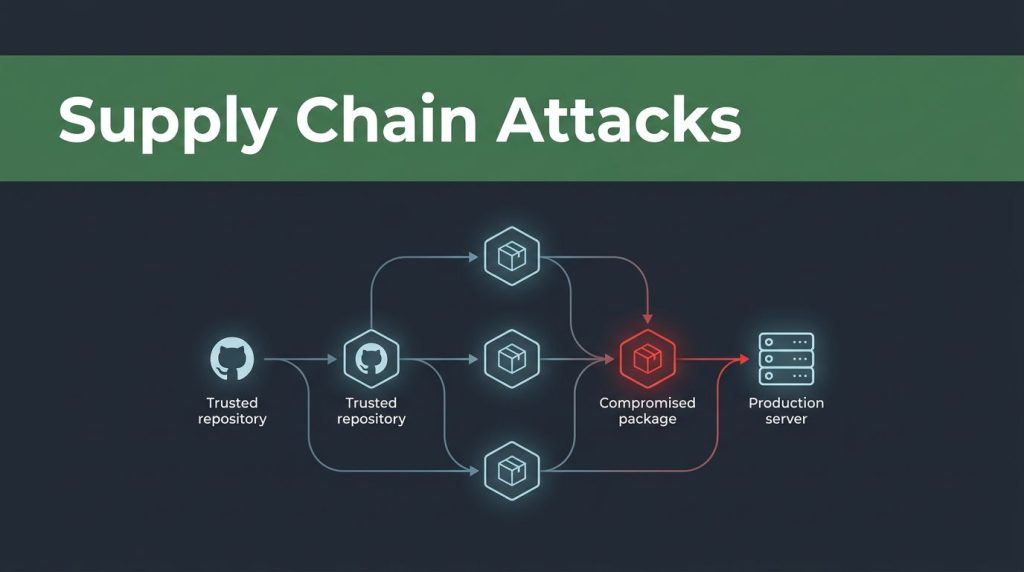
Modern software supply chain attacks bypass traditional network perimeters by compromising trusted developer tooling, repositories, and third-party vendor systems. Attackers target package managers, extension marketplaces, and CI/CD pipelines to inject malicious code into production environments without triggering standard security alerts.
Security teams face growing operational risks as adversaries scale their campaigns across open-source ecosystems. Organizations need clear visibility into third-party dependencies and developer workflows to prevent unauthorized access and credential theft.
Key Takeaways
- CISA added multiple developer-tooling flaws to the Known Exploited Vulnerabilities catalog in 2026, including supply chain vectors tied to Nx Console and TanStack.
- Attack campaigns such as Megalodon compromised thousands of open-source repositories by exploiting weak branch protection and injecting malicious GitHub Actions.
- Federal Civilian Executive Branch agencies faced strict remediation deadlines under Binding Operational Directive 22-01 to mitigate these risks.
- Actionable defense requires rigorous monitoring of CI/CD pipeline logs, automated contributor activity audits, and strict secret rotation protocols.

Anatomy of Recent Developer Tooling Exploits
Adversaries target the exact software tools developers trust every day. Malicious actors poisoned the Nx Console extension inside the Visual Studio Marketplace to compromise developer workstations and corporate networks. That specific malicious version remained accessible for a short window before detection and removal. Threat groups also targeted package ecosystems like npm through vulnerable dependencies and compromised maintainer accounts.
When a trusted extension or package registry falls, the malicious code inherits high privileges within the local environment. It quietly harvests cloud credentials, API tokens, and SSH keys stored on developer machines. Organizations can review broader industry trends in the 2026 Supply Chain Vulnerability Report by Black Kite.
The Megalodon Campaign and Repository Compromise
The Megalodon campaign demonstrated how quickly automated attacks can scale across open-source platforms. Threat actors injected malicious GitHub Action workflows into thousands of public repositories in a single coordinated wave. Repositories featuring weak branch protection settings served as primary targets for unauthorized code injection.
These injected workflows extracted sensitive environment variables and production secrets directly from build pipelines. To understand how organizations evaluate these exposure points, review the framework outlined in the Software Supply Chain Security Report. Developers must audit workflow files immediately following any suspected repository tampering.
CISA Directives and Federal Remediation Mandates
Federal oversight agencies responded to these supply-chain incidents with strict enforcement timelines. CISA updated the Known Exploited Vulnerabilities catalog to mandate prompt patching or removal of affected enterprise software. Federal Civilian Executive Branch agencies faced tight deadlines under Binding Operational Directive 22-01 to verify their asset inventories.
Compliance teams track these mandatory disclosures closely to align internal patching schedules with federal standards. For comprehensive background on active advisories, consult the CISA Known Exploited Vulnerabilities Catalog. Private sector organizations often adopt these exact federal timelines as baseline operational requirements.
Actionable Mitigation Strategies for Security Teams
Securing modern deployment pipelines requires direct visibility into every phase of software assembly. Security administrators must enforce strict multi-factor authentication across all code repositories and development platforms. Reviewing CI/CD audit logs regularly helps detect unusual pull requests or unauthorized direct commits from automated service accounts.
Teams should also implement automated secret scanning to prevent hardcoded API keys from entering source control. When organizations need expert guidance to identify vulnerabilities and build stronger defense frameworks, they can Book A Call With Us to discuss tailored security solutions.
Conclusion
Securing software supply chains demands constant vigilance against evolving developer-tooling exploits and repository compromises. Organizations must audit their CI/CD workflows and rotate exposed credentials immediately after an incident occurs. Proactive defense protects production systems from unauthorized access.