table of contents
One candidate answer can sound excellent to one panelist and weak to another. That gap gets expensive when you’re hiring a senior security engineer, security architect, or security manager.
Security interviewer calibration closes that gap by giving the panel one yardstick. It keeps the interview focused on evidence, not style.
Before anyone meets a candidate, the team needs to agree on what good looks like, how to score it, and which signals matter most. Then the interview loop gets sharper, faster, and easier to defend.
Start With a Shared Scorecard
A scorecard should fit the role, not the resume. Senior security hiring needs a short list of competencies with clear anchors, because vague traits invite guesswork.
Google’s structured interviewing guide and NIST’s cybersecurity hiring rubric PDF both push the same idea: use consistent questions, written notes, and behavior-based scoring. That matters even more for senior roles, where polished delivery can hide shallow judgment.
| Competency | Strong evidence looks like | Weak signal |
|---|---|---|
| Security and technical depth | Breaks down threat models, control gaps, tradeoffs, and failure modes | Names tools without explaining design choices |
| Business judgment | Balances risk, delivery speed, legal exposure, and budget | Treats every risk as a blocker |
| Leadership | Mentions how they set direction, coached peers, or handled conflict | Talks only about individual tasks |
| Cross-functional influence | Shows they can work with product, legal, infrastructure, and ops | Assumes authority will solve resistance |
A good rubric makes each level visible. For example, “meets bar” for a security architect might mean they can design controls and explain the cost of each option. “Exceeds bar” might mean they can influence roadmaps across teams without formal power.
Write anchors as behavior, not adjectives. “Designs guardrails with a clear exception path” is much better than “shows good judgment.”
If two interviewers read the same answer and describe different strengths, the rubric is too loose. Tighten the anchors before the next loop.
Run Calibration Sessions Before Interviews

Run calibration before live interviews start. Pick three to five anonymized sample answers or past transcripts, then have each interviewer score them alone first. After that, compare scores and ask why the numbers differ.
Use this sequence:
- Score independently, without discussion.
- Share ratings and evidence, not opinions.
- Discuss any gap larger than one point.
- Rewrite the rubric anchor if the team keeps arguing about the same answer.
That last step matters. If people keep fighting over the wording, the problem is usually the rubric, not the interviewers.
A calibration session should expose disagreement early. If the debate starts after a candidate leaves, the loop is already too loose.
This is where false signal shows up. A charismatic candidate can sound strategic while skipping details. Another candidate may sound reserved but give clear tradeoffs, strong risk framing, and practical follow-through. Calibration helps the panel spot the difference.
For a useful example of how teams build scorecards, see Ashby’s interviewer scorecard approach. It shows why a smaller, well-calibrated panel often works better than a larger inconsistent one.
Use Role-Based Questions That Test Real Seniority
Senior security interviews should test decisions, not trivia. The best questions force the candidate to explain how they think, how they influence others, and where they draw the line.
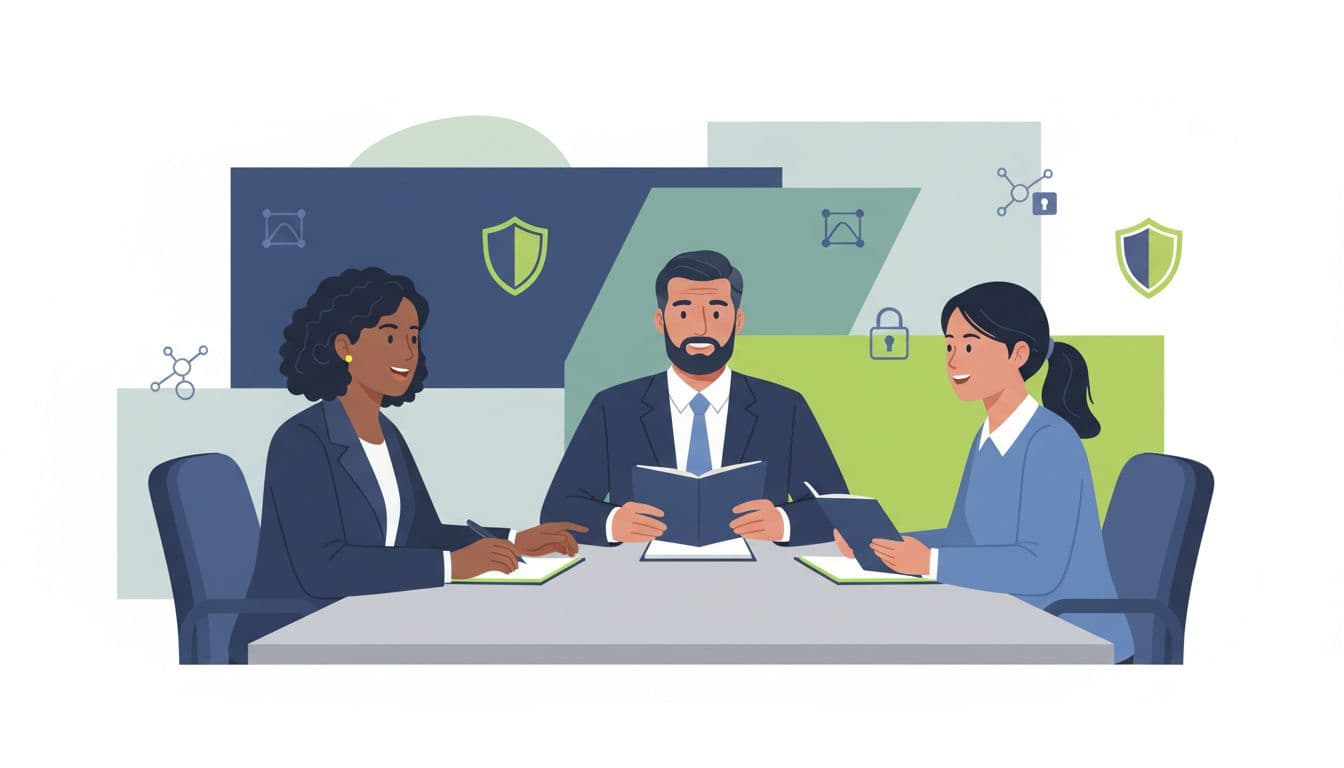
A simple way to keep the panel aligned is to assign one interviewer to each competency. One person can focus on architecture, another on business judgment, and another on leadership or influence. That prevents overlap and keeps each conversation sharp.
| Role | Sample interviewer question | What a strong answer includes |
|---|---|---|
| Senior security engineer | “You find a control that slows releases but doesn’t reduce risk much. What do you do?” | Clear triage, evidence, and a plan that improves both security and delivery |
| Staff or principal security engineer | “How would you build guardrails for cloud access across many teams?” | Scalable design, automation, exceptions, and ownership boundaries |
| Security architect | “How do you choose between a strong technical control and an easier policy fix?” | Tradeoff logic, threat context, and long-term maintainability |
| Security manager | “A product leader wants a deadline exception. How do you handle it?” | Risk framing, escalation path, documented decision, and follow-up |
Good probes matter as much as the first question. Ask for a real example, then ask what they measured, who they influenced, and what changed afterward. If the answer stays high-level, the signal is weak.
Holloway’s training interviewers guide is useful here because it treats interviewer skill as a repeatable discipline. That is the right mindset for security hiring, where one weak panelist can distort the entire loop.
Keep Calibration Alive After the Panel
Security interviewer calibration isn’t a one-time meeting. Scores drift when teams hire under pressure, new interviewers join, or the market gets noisy. A short post-loop review helps catch that drift.
Look at three things after each hiring cycle. First, compare score spread across interviewers. Second, check which questions produced the least useful notes. Third, review later outcomes, such as onboarding feedback or early performance, to see which signals held up.
If one interviewer always scores high or low, don’t ignore it. Coach that person with side-by-side reviews and a few shadow interviews. If the rubric still produces odd results, tighten the anchors again.
When the process needs a reset, a small external review can save weeks of debate. If your panel needs help shaping a senior security hiring process, Book a Discovery Call with Bud Consulting.
Conclusion
Senior security hiring gets cleaner when interviewers use the same yardstick. That means clear scorecards, practice scoring, and role-specific questions that pull out real judgment.
When the panel is calibrated, the conversation changes. The team stops arguing about personality and starts comparing evidence. That is how you reduce bias and false signal in senior security hiring.