table of contents
Sensitive documents in Notion can spread faster than most teams expect. One public link, one old guest, or one broad teamspace can open a page far beyond its intended audience.
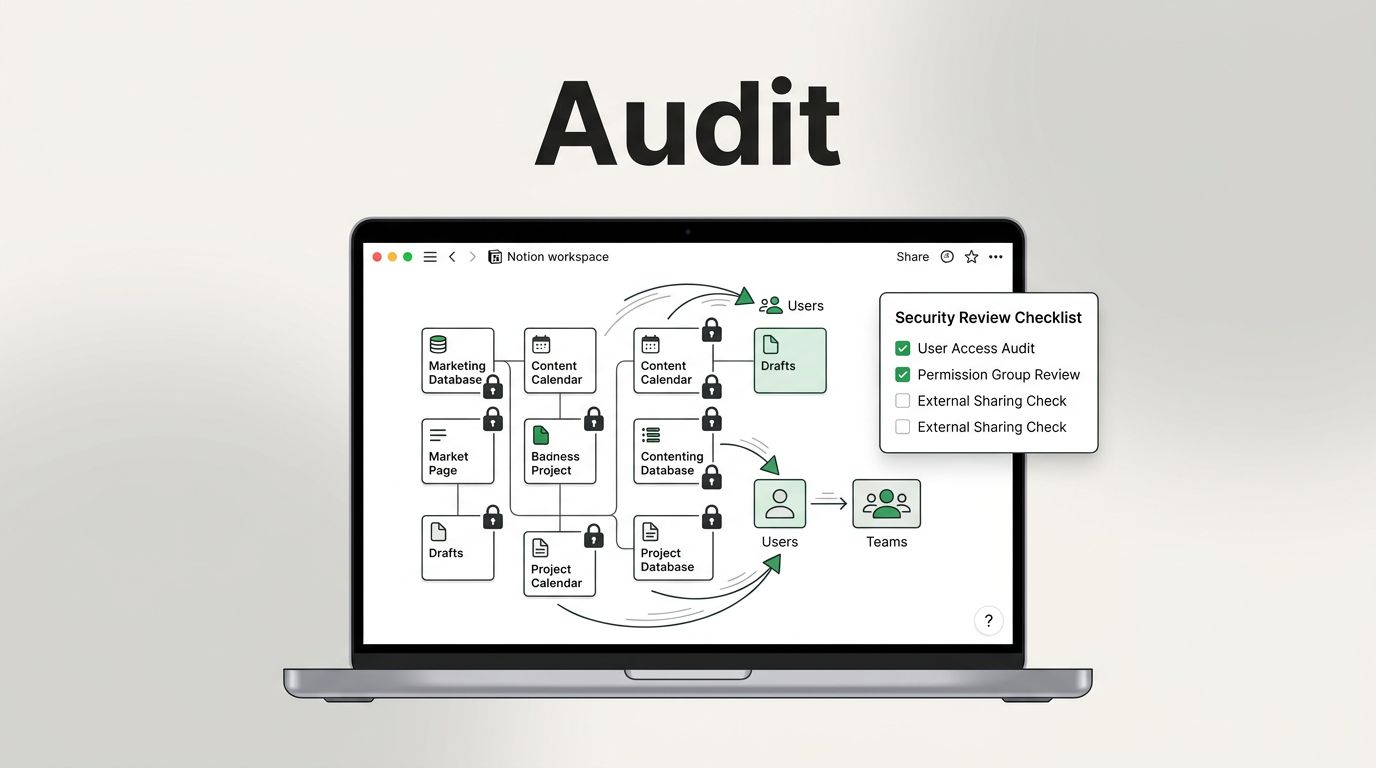
A Notion workspace sharing audit helps you find those paths before they become a problem. The process is simple when you break it into page access, guest access, teamspace rules, and database permissions.
Table of contents
- Start with the sharing paths that create the biggest risk
- Run a page-by-page Notion workspace sharing audit
- Review teamspaces, groups, and guests
- Document findings and fix them in a repeatable format
- Build a recurring sharing review
- FAQs
Start with the sharing paths that create the biggest risk
A Notion page can look private and still reach more people than you want. The main risk paths are public links, workspace-wide access, guest sharing, teamspace defaults, and source databases that feed many views at once.
| Sharing setting | Why it can expose sensitive docs | Safer move |
|---|---|---|
| Anyone with the link | The page can spread outside the workspace without a clear trail | Use private access or specific people |
| Everyone at workspace | A broad internal audience can see a page that should stay limited | Restrict it to a small group or named users |
| Guest access | Old contractors and partners often keep access after the job ends | Review guests on a schedule and remove stale accounts |
| Source database sharing | One database can shape access across many related pages | Check the source database, not only the linked view |
If a page uses more than one of these settings, treat it as exposed until you confirm the business need. A private page with a public database is still risky, and a narrow page can still leak through a stale guest account.
If no one can explain why a person has access, that access is already too broad.
Notion’s security and privacy help page is a good place to confirm the platform’s baseline controls. For a broader read on common failure points, Metomic’s guide to Notion security risks lines up well with the review process you should already be running.

Once you know the risky settings, review each sensitive page one by one.
Run a page-by-page Notion workspace sharing audit
Start with pages that hold legal, HR, finance, security, client, or executive material. These pages need a tighter review than team notes or planning docs.
- List the pages and databases that matter most.
Pull them from your top-level teamspaces first. Then include any linked databases that store or surface sensitive records. - Open each page’s Share menu.
Write down every person, guest, group, and workspace-wide setting you see. Check the permission level too, since “can edit” is far broader than “can view”. - Check for public access.
Remove “Anyone with the link” from sensitive pages unless you have a clear business reason. If a page is meant for a small audience, link sharing is usually too loose. - Review linked databases and source databases.
A linked view can hide the real control point. Open the source database and confirm its permissions before you call the page safe. - Compare page access with business need.
Ask a simple question, who needs this page to do their job today? If the answer is fuzzy, the access is probably too wide. - Record every change as you go.
Note the original setting, the new setting, and the owner who approved the fix. That record helps with follow-up and with audits later.
If you run an Enterprise workspace, pair the review with the admin audit log. Notion’s Enterprise security provisions explain the controls that support tighter oversight.

The goal is not to audit every page with equal weight. The goal is to find the pages that can hurt you if they leak, then remove all extra access.
Review teamspaces, groups, and guests
Teamspaces often create the default pattern for who sees what, so review them before you trust page-level sharing. A teamspace that is too open can make every new page a potential leak.
Guests deserve the closest look. They are common in agency work, client projects, and short-term cross-functional work, and they often stay long after the project ends. Check who invited them, what they can access, and whether they still need a place in the workspace at all.
Group permissions need the same treatment. A group called “Operations” can hide a wide mix of users, so the label alone tells you nothing. Open the group, inspect the members, and compare the group’s access with the kind of content it touches.
A few risky settings show up again and again:
- A client page shared with a whole teamspace instead of two named people.
- An HR note shared with a broad internal group.
- A guest who has edit rights to a finance page.
- A database with open access while the linked dashboard looks private.
If a teamspace does not need guests, turn that option off. If it does need guests, keep the list short and review it often. When you grant guest access, set a review date at the same time so it does not drift.
A follow-up article on guest access cleanup and another on database permission reviews would fit neatly beside this guide.
For deeper reference on how Notion handles access controls, the platform’s security and privacy help page is useful when you need to compare policy with settings in your workspace.
Document findings and fix them in a repeatable format
Use a simple tracker so the review does not disappear into chat threads or loose notes. One row per page or database is enough.
| Page or database | Finding | Risk level | Owner | Fix | Due date |
|---|---|---|---|---|---|
| Example: HR policy page | Shared with a broad group | High | People Ops | Limit to HR only | Friday |
Keep the format plain. A good tracker makes it easy to assign work, confirm closure, and prove what changed.
Write the finding in one sentence. Then write the fix in one sentence. That keeps the log useful when someone else has to pick it up later.
A clean remediation note should answer three things, what was exposed, who can see it now, and who approved the change.
Prioritize the pages that hold client data, employee records, legal drafts, and incident notes. Those pages deserve the fastest cleanup because they create the most harm if they leak.
When the fix is done, reopen the page and confirm the change. Do not assume the first edit took. Permissions often stick in more places than people expect, especially when databases and teamspaces are involved.
If a page needs permanent broad access, document why that risk is accepted and who owns it. That makes the review defensible later, and it keeps exceptions from turning into habits.
Build a recurring sharing review
A Notion workspace sharing audit works best when it repeats. Monthly checks fit sensitive spaces. Quarterly checks are enough for lower-risk internal notes.
Set one owner for the review, then keep the scope fixed. That makes trends easier to spot. Compare the current access list with the last one, because sudden growth usually means the process is slipping.
Use a short rule for every new sensitive page: private first, share only on need, and review again after the project ends. That rule cuts down on drift, which is the quiet way access grows.
Access review should be routine, not a scramble after someone notices a problem.
If your team wants a second set of eyes on Notion sharing and document access, Book a Discovery Call with Bud Consulting.
FAQs
How often should you audit Notion sharing?
Review sensitive pages every month. For lower-risk internal notes, a quarterly pass is usually enough. After a major project ends, run another review right away.
What is the biggest red flag in Notion sharing?
“Anyone with the link” on a sensitive page is the most obvious red flag. Broad workspace access on HR, finance, legal, or client docs is another.
Do linked database views need a separate review?
Yes. A linked view can look harmless while the source database carries broader access. Always inspect the source database before you sign off on the page.
Can Enterprise admins track sharing changes?
Yes. The admin audit log helps track permission and sharing changes, and content search can help you find private pages that need review.
What should you do after you find a risky page?
Tighten the access first, then document the change in your tracker. If the page needs broad access for a real business reason, record the owner and the exception date.