table of contents
Suggested URL slug: crm-export-security-training
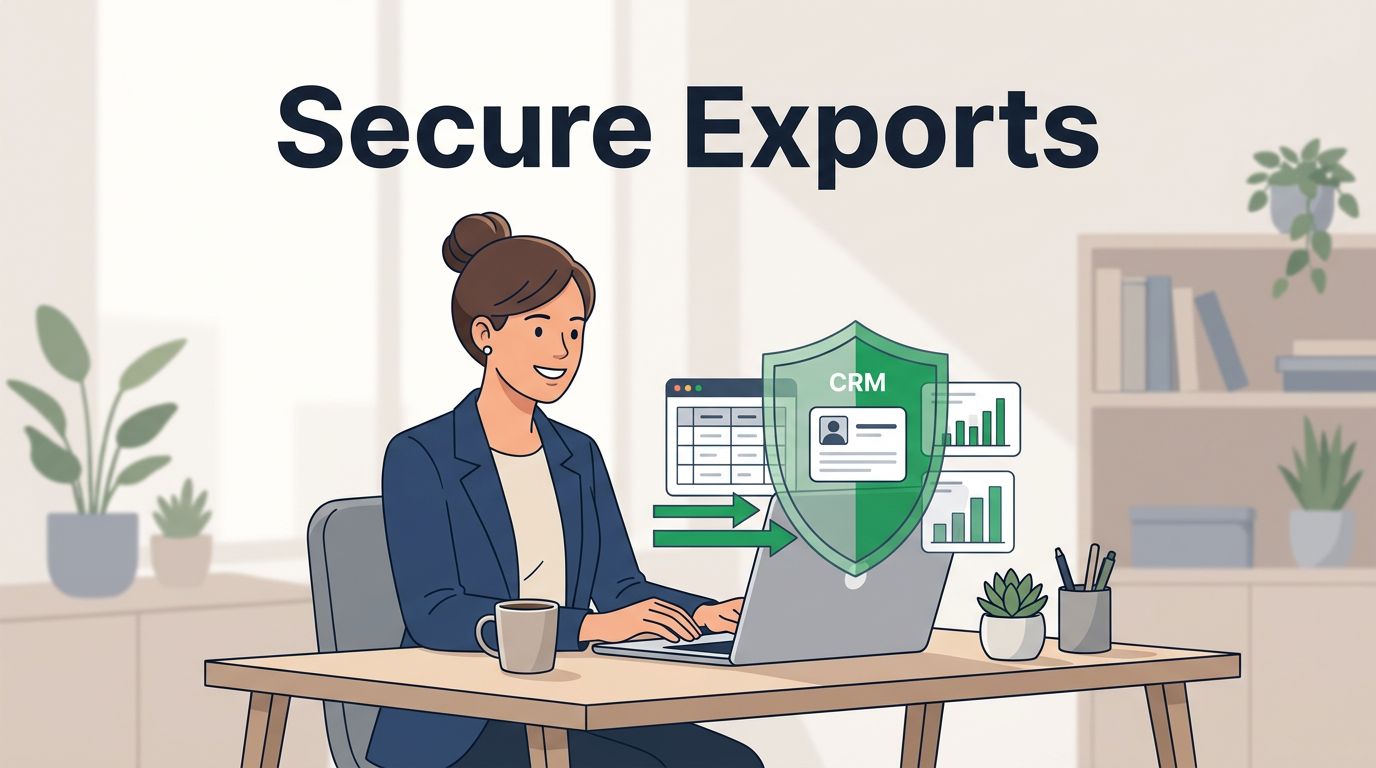
Most CRM leaks do not start with hackers. They start with a normal export.
Whether your team manages data within HubSpot, Dynamics 365, or other enterprise platforms, the ability to pull reports, build lead lists, or sync data to third party tools is a core part of the job. However, these same functions also create a path for oversharing. That risk grows significantly when staff members feel rushed, system permissions are overly broad, or security training is thin.
Strengthening your data governance strategy requires teaching sound judgment, rather than relying solely on restrictive settings. The following sections provide a framework to help your team learn how to protect CRM exports and build security habits into their daily workflows.
Key Takeaways
- Shift from restrictive settings to educated habits: Effective data governance relies on teaching RevOps teams to exercise sound judgment, ensuring security is treated as a core operational skill rather than a purely technical barrier.
- Establish clear rules and justifications: Reduce ambiguity by formalizing who can export data, defining which sensitive fields are off-limits, and requiring a documented business reason for any one-off export request.
- Implement consistent oversight: Build accountability into daily workflows by turning off default export access for standard users, maintaining regular audit trails of export logs, and conducting quarterly reviews of user permissions.
- Focus on routine visibility: Train staff to identify and mitigate risky behaviors—such as saving files to local or personal drives—by emphasizing that security risks often appear as normal, everyday tasks rather than dramatic breaches.
Table of contents
- Key Takeaways
- Why CRM export training matters more than settings alone
- Set clear CRM export rules before training begins
- Teach teams to spot risky export behavior
- Build approval, logging, and review into the daily routine
- A 30-day training plan for RevOps teams
- Internal article ideas that support this training
- FAQs
- Conclusion
Why CRM export training matters more than settings alone
Exports are not always a problem. RevOps teams rely on them for forecasting, audits, data cleanups, and ad hoc analysis. The challenge is that a file can leave the CRM faster than any team can monitor it. Once a record is triggered for an export to Excel, it can easily land in email, Slack, or a personal drive. The issue is a complete loss of visibility; once the information is extracted, the original access rules within your system no longer apply.
A robust platform helps, but effective training closes the gap between what a tool allows and what users should do. While many leaders focus on external hackers, RevOps must also account for internal threats that arise when employees handle sensitive information improperly. Protecting offline data, such as files saved to local drives or personal cloud accounts, is a critical component of this strategy. The Staysafeonline guide to protecting your CRM data provides a strong foundation for layered controls. RevOps leaders should use these principles to frame the conversation around export risk, rather than focusing solely on system hygiene.
If everyone can explain why an export is needed, the team is less likely to treat data like a free download.
Set clear CRM export rules before training begins
Training is most effective when the rules are plain. Start by defining your official data protection policy to ensure everyone understands the formal expectations. By establishing clear guidelines for who can export data, what fields are off-limits, and which requests require approval, you remove ambiguity. If policies shift based on a manager’s mood, the team will quickly stop taking them seriously.
A simple rule set keeps things honest:
- Export rights should be restricted through specific user permissions and security roles, typically limited to managers, analysts, or admins.
- Sensitive fields such as personal email, phone numbers, compensation data, and contract notes must be protected using field level security to ensure they stay locked down.
- One-off requests need a named approver and a documented business justification.
- Temporary access must have a clear expiration date, especially after specific projects or audits conclude.
- Offboarding processes should automatically remove export rights the same day an employee leaves the company.
If your CRM team handles messy records, the CRM data management guide from monday.com helps show why clean fields matter before anyone exports them. Bad data turns small exports into bigger cleanup jobs, and bigger exports increase the likelihood of a security mistake.
Teach teams to spot risky export behavior
People usually assume that risky exports look like dramatic security breaches. In reality, they often look ordinary, which is exactly how data theft can go unnoticed. A rep downloads a full account list for a quick check, or an analyst sends a spreadsheet to a private inbox. When employees ignore unusual patterns, they open the door to significant security gaps. Managers often keep old files on a laptop long after a project ends, unaware that this creates a permanent vulnerability.

Use examples like these in training sessions and tabletop drills to help staff recognize the risks.
| Situation | Risky habit | Safer habit |
|---|---|---|
| Weekly reporting | Bulk downloads sent to email | Limited fields, shared dashboard |
| Client cleanup | Ad hoc spreadsheet on desktop | Temporary file in approved storage |
| Sales handoff | Broad account dump of sensitive data | Narrow export with only needed records |
| Offboarding | Old export stays in personal drive | Delete or transfer before access ends |
The goal is not to make people afraid of data. The goal is to make them pause before they move it. The ZoomInfo CRM security best practices page reinforces the same basics: role-based access, MFA, logging, and tighter vendor oversight.
Build approval, logging, and review into the daily routine
Good training sticks when the process is easy to follow. Your team should know exactly what happens before an export, what happens after it, and who is responsible for checking for potential mistakes. By consistently monitoring data exports, you create a culture of accountability that keeps your CRM environment secure.
A simple control set works well:
- Turn exports off by default for standard users.
- Require export approvals for all exceptions.
- Ask for a specific business reason, not just a name.
- Maintain audit trails by reviewing export logs every week.
- Have your CRM administrator review access levels every quarter.
- Revoke access immediately based on updated security roles after personnel changes.
- Watch for exports from new devices or unusual locations.
That last point matters because stolen credentials can still look normal during a busy work week. Multi-factor authentication is also a vital layer of protection. If a password is leaked, the account still requires a second factor to verify the user.
When the process feels predictable, people use it. When it feels random, they look for ways to work around it. By integrating these checks into your daily routine, you ensure that security remains a seamless part of the workflow rather than a hurdle.
A 30-day training plan for RevOps teams
A short rollout beats a long policy that nobody reads. Use one month to set the baseline, train the team, and test the process. This approach is effective whether you are managing Salesforce, HubSpot, or Microsoft Dynamics CRM.
- Week 1, map every export path. List the reports, dashboards, roles, and integrations that can create files. Be sure to include custom tools like Power Apps where integrations might create hidden export paths.
- Week 2, separate routine work from exceptions. Decide what a normal export looks like and who can approve anything else. Remember that while SSL encryption protects data in transit, it does not stop authorized users from exporting sensitive data.
- Week 3, run a live scenario. Ask someone to request an export with sensitive fields and watch how the team responds.
- Week 4, review logs and retrain. Look for skipped approvals, old access, or exports that happened outside the policy. If you find gaps, use an Excel Tracker to log skipped approvals and identify patterns for retraining.
This is also a good time to connect export control with sales process training and security awareness. If your team needs help shaping that program, Book a Discovery Call with Bud Consulting and build a plan that fits your CRM setup.
Internal article ideas that support this training
- How to Build a CRM Access Review Cadence
- Why MFA Still Matters for Sales Operations
- Security Awareness Lessons for Revenue Teams
- Ensuring GDPR compliance for exported datasets
These pieces work well beside export training because they cover access, behavior, and follow-up. A reader who cares about one control usually needs the others too.
FAQs
Who should be allowed to export CRM data?
Access should be limited to the Super Admin or specific team members who require data for reporting, governance, or system cleanup. In most organizations, this means restricting privileges to a small group of authorized users rather than granting every sales representative the ability to export sensitive information.
Should every export need approval?
Routine, low-risk actions like a standard Export to Excel for daily reporting can often follow a set of automated rules. However, any sensitive data requests or full-record exports should require the oversight of a named approver to ensure security protocols are met.
How often should export access be reviewed?
Quarterly reviews work well for most teams. Regularly monitoring data exports is essential for maintaining visibility into how information moves throughout the organization, and you should perform these checks sooner if you experience role changes, vendor transitions, or potential security incidents.
What should happen after a risky export?
Contain the file immediately, remove shared copies, and check your system logs. Once the situation is managed, retrain the user and adjust the specific rule or permission setting that failed to prevent the incident.
Conclusion
Most CRM export problems start with routine work, not bad intent. That is why training matters. It gives people a clear path when they need data and a hard stop when they encounter sensitive data that should not be moved outside the system.
If your team can explain the rules, spot risky habits, and follow the approval path, you already have a stronger control model. Whether your organization relies on Dynamics 365 or another robust platform, these habits ensure the CRM stays useful without becoming a leak point. By teaching your team how to properly manage an Export to Excel request, you turn a potential security risk into a standard, secure process.
Protecting CRM exports is less about fear and more about repeatable habits. Once those habits stick, the system becomes quieter, safer, and easier to trust.