table of contents
Hiring your first security program manager can feel simple until you try to define the job. One team needs audit help, another wants vendor review, and a third needs someone who can keep engineers moving without adding friction.
For a growing company, the best hire turns scattered security work into a steady program. That fit depends on your stage, your risk, and how your teams work today.
Align the role to your company stage
A startup, a mid-market company, and a scaling enterprise need different kinds of help. If the role is too broad, you get chaos. If it’s too narrow, you hire someone who solves yesterday’s problems.
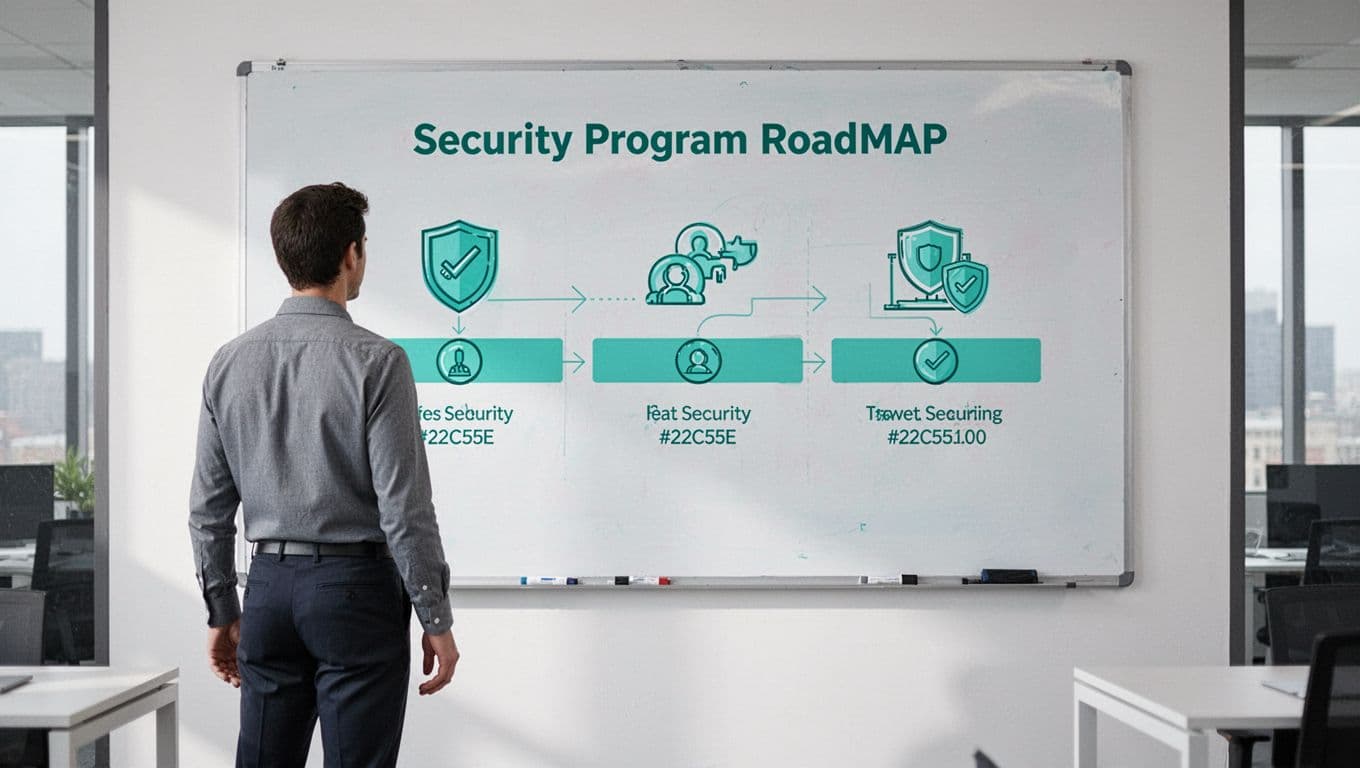
Start by naming the pain point. A seed-stage startup usually needs someone who can set basic controls, create simple policy, and get things done without a lot of process. A mid-market company needs repeatable workflows, vendor reviews, and better reporting. A scaling enterprise needs someone who can coordinate many owners and keep a larger risk list current.
Use the table below to match the job to the real workload.
| Company stage | What the role should own | What to avoid |
|---|---|---|
| Startup | Basic controls, policy setup, simple reporting, fast follow-up | Heavy process that slows the team down |
| Mid-market | Vendor reviews, metrics, policy updates, cross-team coordination | Pure project tracking with little security judgment |
| Scaling enterprise | Risk governance, compliance programs, executive updates, portfolio view | A manager who cannot influence without formal authority |
Do not write a job description for an imaginary company. If your team has no security ops function yet, the hire needs to build it. If you already have analysts, the hire should focus on program design and accountability.
If you’re still shaping the broader security org, Bessemer Venture Partners’ guide to building a cybersecurity team is a useful check. It shows why some companies need more program skill than deep technical depth, while others need the reverse.
Focus on the skills that make the role work
A strong security program manager is part translator, part organizer, part diplomat. They need enough technical context to earn trust, and enough business sense to keep work moving.

Look for candidates who can do these things well:
- They turn risk into plain language for founders, VPs, and team leads.
- They keep meetings, milestones, and follow-up on track.
- They handle vendor reviews, third-party risk, and policy changes without losing pace.
- They build trust with engineering, product, IT, legal, and HR.
- They understand cloud, identity, and outside AI tools well enough to set sensible guardrails.
The GitLab Security Program Manager handbook is a good model because it centers cross-functional priority setting, progress tracking, and accountability across teams.
That mix matters more in 2026. Many companies now want a manager who can help shape rules for internal AI use, review data exposure risks, and keep security from being bolted on late. Ask how candidates would handle employee use of outside AI tools, shared prompts, or sensitive customer data in new workflows.
Interview for judgment, communication, and ownership
A resume can tell you someone has managed programs. It can’t tell you whether they can keep a tense team aligned when a deadline slips.

Use scenario-based questions and ask for examples from real work. The best answers sound clear, specific, and grounded in outcomes.
| What to test | What strong looks like | What weak looks like |
|---|---|---|
| Program design | Turns goals into milestones, owners, and dates | Stays vague and high level |
| Stakeholder management | Explains how they handle conflict with product or legal | Waits for executive escalation |
| Risk judgment | Knows what to fix now and what can wait | Treats every issue the same |
| Governance | Can run exceptions, reviews, and reporting with discipline | Talks about tools, not follow-up |
| Communication | Gives short updates a busy leader can use | Uses jargon and long stories |
Ask for a 90-day plan. Good candidates will talk about intake, prioritization, reporting, and the first controls they would put in place. If they can’t describe the first month clearly, the role may be too senior or too vague.
The Velvet Jobs security program manager description is a useful reference here because it highlights measurable procedures, metrics, and scale. That gives you a simple filter for interviews, ask how they have measured progress, closed gaps, and kept owners accountable.
References matter too. Ask for examples of risk registers, executive updates, vendor review notes, or program plans. Those documents show real ownership better than a long list of certifications.
Set compensation and location expectations early
In 2026, remote and hybrid roles still show up often, but most teams want overlap with engineering and product. Put that expectation in the job post. Hidden location rules waste time for everyone.
For pay, frame the offer around scope, ownership, and decision rights. Startups often win with equity and broad responsibility. Mid-market firms tend to win with clearer process and a path to shape the function. Enterprises usually compete with scale and access to senior leaders. Keep the conversation tied to the work, not a single number.
If you need help sharpening the scope before you open the role, Book a Discovery Call with Bud Consulting is a practical next step.
Conclusion
A good hire here isn’t the loudest security voice in the room. It’s the person who can turn security goals into a program people follow.
When the role fits your stage and your day-to-day reality, the first 90 days get easier. That’s how a growing team builds a steadier security rhythm without adding noise.