table of contents
A security breach hits your team hard. You contain it, notify stakeholders, and declare victory. But weeks later, a similar gap lets attackers slip through again.
This cycle frustrates everyone. It wastes time and erodes trust. A solid security lessons learned review breaks the pattern. You turn raw experience into fixes that stick.
You need a process that pulls in the right people, stays blameless, and drives real change. Let’s walk through how to make it happen.
Prepare Your Team for Success
Start right after the incident ends. Schedule the review within a week. Fresh details stay sharp that way.
Pull in a cross-functional group. Include SOC analysts, IT ops, developers, and even legal if compliance played a role. Aim for 5 to 10 people. Too many voices drown out insights; too few miss angles.
Set blameless ground rules upfront. Remind everyone: no finger-pointing. Focus on systems and processes, not people. This builds trust. Teams share freely when they know careers won’t suffer.
Share prep materials 48 hours early. Send logs, timelines, and initial notes. Ask participants to jot personal takeaways. For example, did alerting work? Or did manual hunts fill gaps?
Preparation takes an hour or two per person. It pays off in focused discussions. You avoid rehashing basics.
Structure the Review Meeting
Keep meetings to 90 minutes. Use a facilitator if your IR lead feels too close to events. They keep things on track.
Open with a quick timeline recap. Walk through what happened, minute by minute. Use visuals like charts. This levels the playing field.
Then split time evenly: 30 minutes on what went well, 30 on gaps, and 30 on actions. Rotate speakers. Everyone contributes.

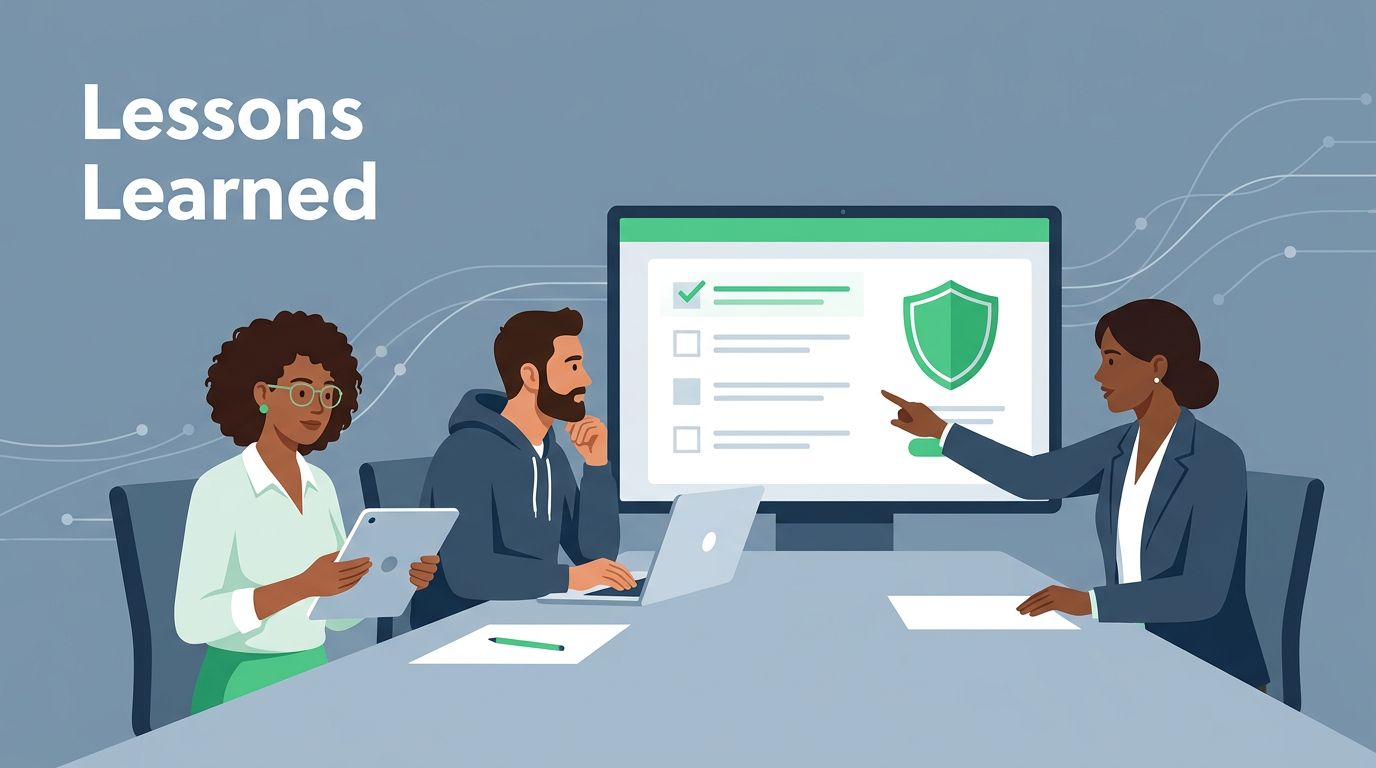
A relaxed setup like this fosters open talk. Notice how the group collaborates without tension.
End with wins first. Celebrate quick detections or smooth handoffs. Positivity encourages honesty later.
For deeper tips on structuring these sessions, check post-incident reviews that drive improvements.
Ask Targeted Questions to Uncover Insights
Questions guide the talk. They pull out specifics without blame.
What detected the incident first? How long did containment take? Did tools alert in time, or did a user tip you off?
Probe processes too. Which handoffs worked smoothly? Where did communication lag? For instance, did devs know about the vulnerable endpoint?
On the human side, ask: What assumptions proved wrong? Did fatigue slow responses? Training gaps show up here.
What held strong? Fast patching? Solid backups? Note those for replication.
Sample questions:
- Timeline: When did each phase start and end?
- Tech: Which controls failed or succeeded?
- People: What info was missing during response?
- Future: How could we spot this earlier?
These spark details. Record answers live. You capture nuances before they fade.
Document Findings with a Clear Template
Turn talk into records. Use a simple template. It keeps output consistent and actionable.
Here’s a concise sample:
| Section | Details | Owner | Priority | Due Date |
|---|---|---|---|---|
| Incident Summary | Phishing led to initial access on 3/15 | N/A | N/A | N/A |
| Successes | SIEM alerted in 15 min; backups restored data | SOC Team | N/A | N/A |
| Gaps | No MFA on admin portal; slow dev patch | IT Ops | High | 4/30 |
| Actions | Enforce MFA everywhere; test quarterly | DevSecOps Lead | Medium | 5/15 |
This format forces clarity. Every gap gets an owner, priority (high, medium, low), and date.
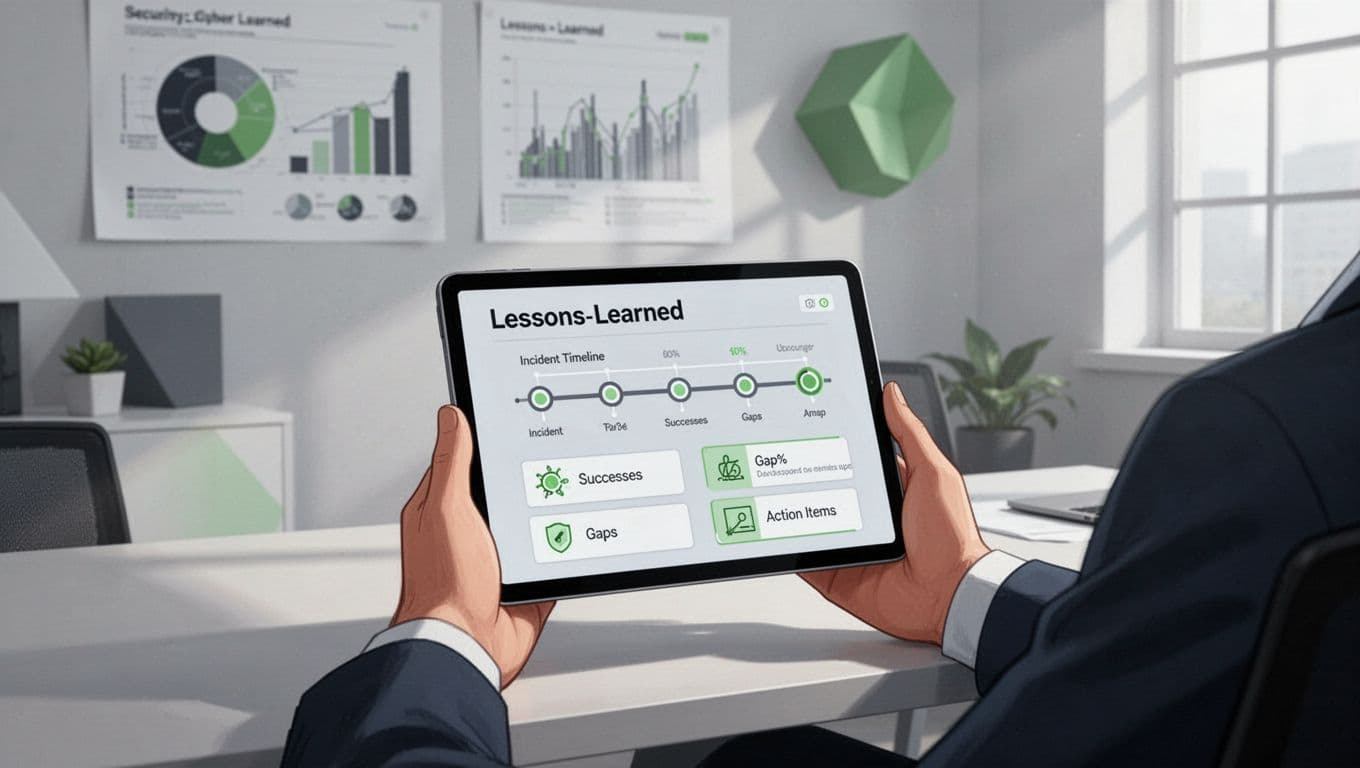
Reviewing a template like this solo refines your notes before sharing.
Share the doc right after. Version it in a tool like Confluence or Google Docs. For structured approaches, see how to conduct post-incident reviews.
Turn Insights into Assigned Actions
Insights die without follow-through. Assign tasks on the spot.
Match each gap to a fix. High priority if it blocks recurrence. Medium for enhancements; low for nice-to-haves.
Name owners clearly. “SOC team” works short-term; “Jane in SOC” sticks better. Set realistic dates, like two weeks for quick wins.
Track in your ticketing system. Link back to the lessons doc. Review progress weekly at first, then monthly.
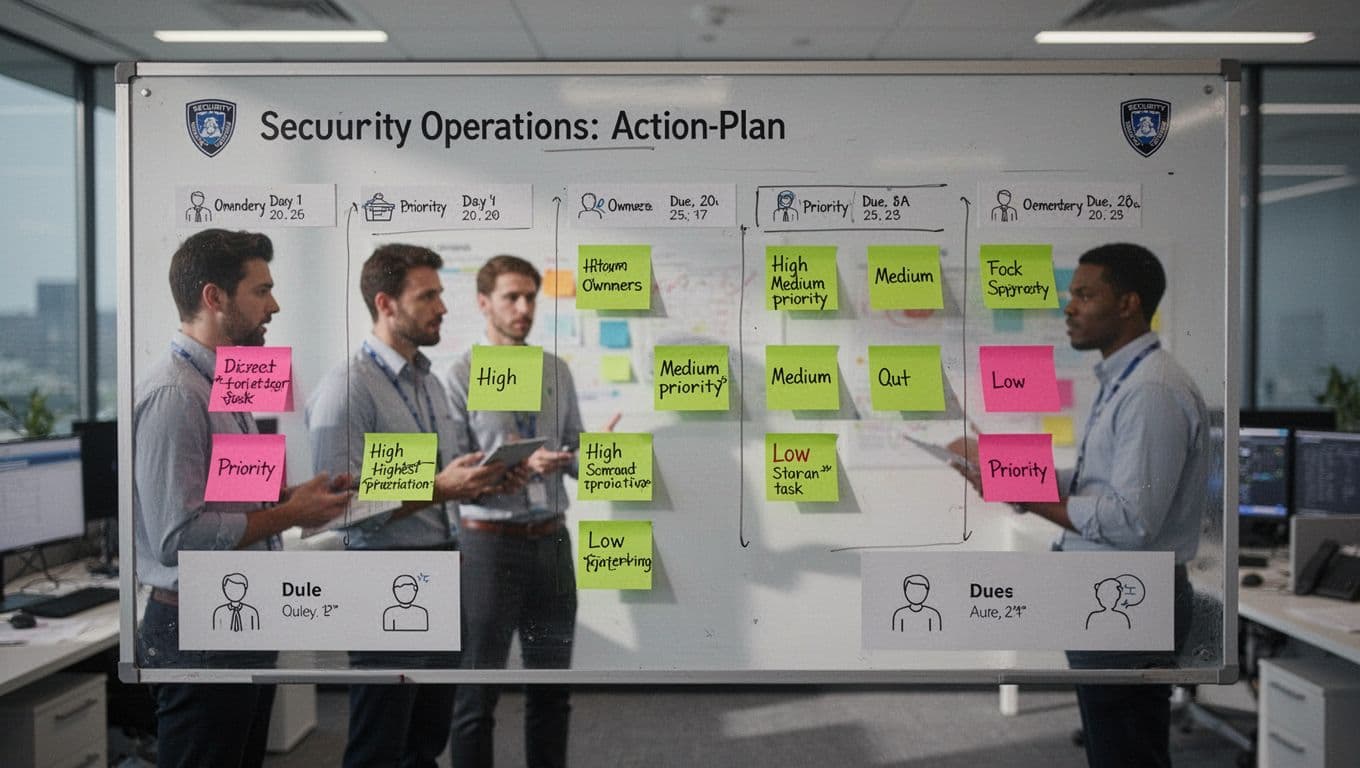
Boards like this make priorities visual and assignments clear.
Measure success. Close 80% of high-priority items in 30 days. Repeat reviews quarterly to build habits.
Sidestep Common Pitfalls
Rushed timing kills depth. Wait too long, and memories blur. Hit that one-week sweet spot.
Skip blame, but watch for it. If talk turns personal, facilitator redirects to processes.
Don’t overload on actions. Pick three to five per review. More scatters focus.
Finally, loop in leadership. Share summaries. They fund changes and reinforce culture.
For blameless practices in action, read this guide to incident post-mortems.
Key Takeaways
Security incidents offer raw data for growth. Run reviews that emphasize blameless input from all teams. Document gaps, assign owned tasks with dates, and track relentlessly.
You cut repeat risks this way. Teams get stronger. Culture shifts to continuous improvement.
Struggling to build these habits? Book a Discovery Call with Bud Consulting to strengthen your security operations.
(Word count: 982)