table of contents
Cyberattacks hit organizations every 39 seconds in 2026. You know the drill: breaches cost millions, downtime kills productivity, and boards demand answers. As a security leader, you juggle limited budgets and endless threats.
A solid security roadmap turns chaos into action. It aligns your efforts with business goals and tackles top risks head-on. Let’s walk through how to create one that fits your team’s maturity and resources.
Spot 2026’s Top Security Risks
Threats evolve fast this year. AI powers smarter attacks, ransomware strikes without warning, and cloud sprawl opens new doors for hackers. Identity weaknesses top the list because compromised accounts let attackers roam free.
Ransomware remains a top-five threat. Groups use automation for quick encryption and extortion. Supply chain flaws, like weak vendors, amplify the damage. Cloud and SaaS apps multiply risks with poor access controls and unmonitored APIs.
AI introduces fresh worries. Hackers craft deepfakes for phishing, while your own tools leak data if untrained users prompt carelessly. Third-party risks grow as partners share more data without checks.
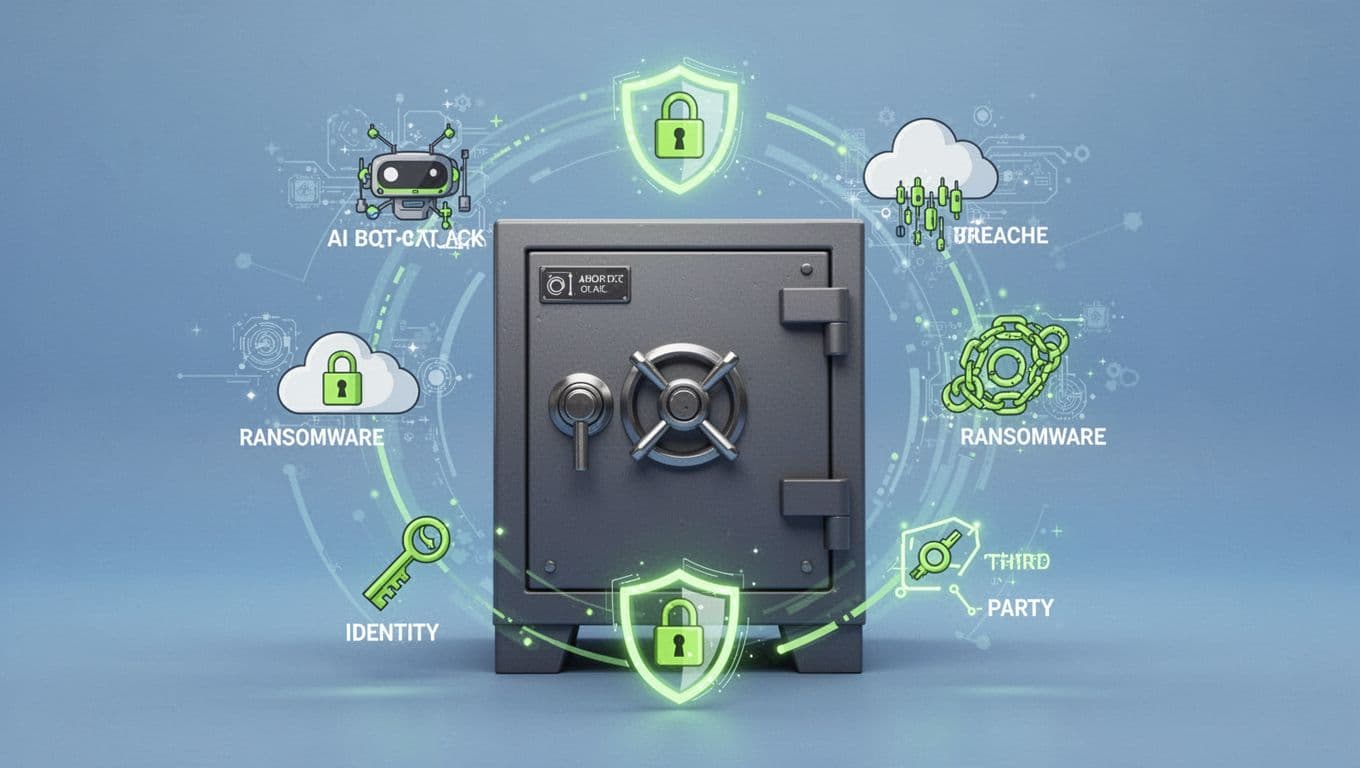
Start by mapping these to your setup. Run a quick scan of identities, cloud configs, and vendor contracts. Data from the World Economic Forum’s 2026 report shows zero trust cuts breach odds threefold. Focus here first.
Gauge Your Team’s Starting Point
Know where you stand before planning. Conduct a maturity assessment across key areas. Ask: Do you verify every login with behavior analytics? Are backups immutable against ransomware?
Use frameworks like NIST or your own checklist. Score identity management, cloud posture, and automation levels from 1 to 5. Low scores signal quick wins.
For example, if SaaS apps lack monitoring, that’s a gap. Resources matter too. Small teams prioritize automation over custom builds. Business value guides choices: protect revenue-critical systems first.
Tie this to risk appetite. Finance might tolerate brief outages, but customer data demands ironclad defense. Document gaps in a simple table for stakeholders.
| Area | Current Score | Key Gap |
|---|---|---|
| Identity Security | 2/5 | No continuous verification |
| Cloud/SaaS Risk | 3/5 | Weak API controls |
| Ransomware Prep | 1/5 | Untested backups |
This snapshot sets priorities. It also justifies budget asks.
Prioritize Based on Risk and Resources
Not all fixes equal. Rank initiatives by impact, effort, and your maturity. High-risk, low-effort items top the list.
Plot them on a matrix: impact versus effort. Shields for identity go in the high-impact, low-effort spot. AI governance might sit in high-effort because it needs new policies and tools.
Consider business alignment. Ransomware resilience protects cash flow. Third-party checks safeguard partnerships.
Factor in resources. Automation scales detection without headcount. Start with open-source UEBA tools for behavior analytics.
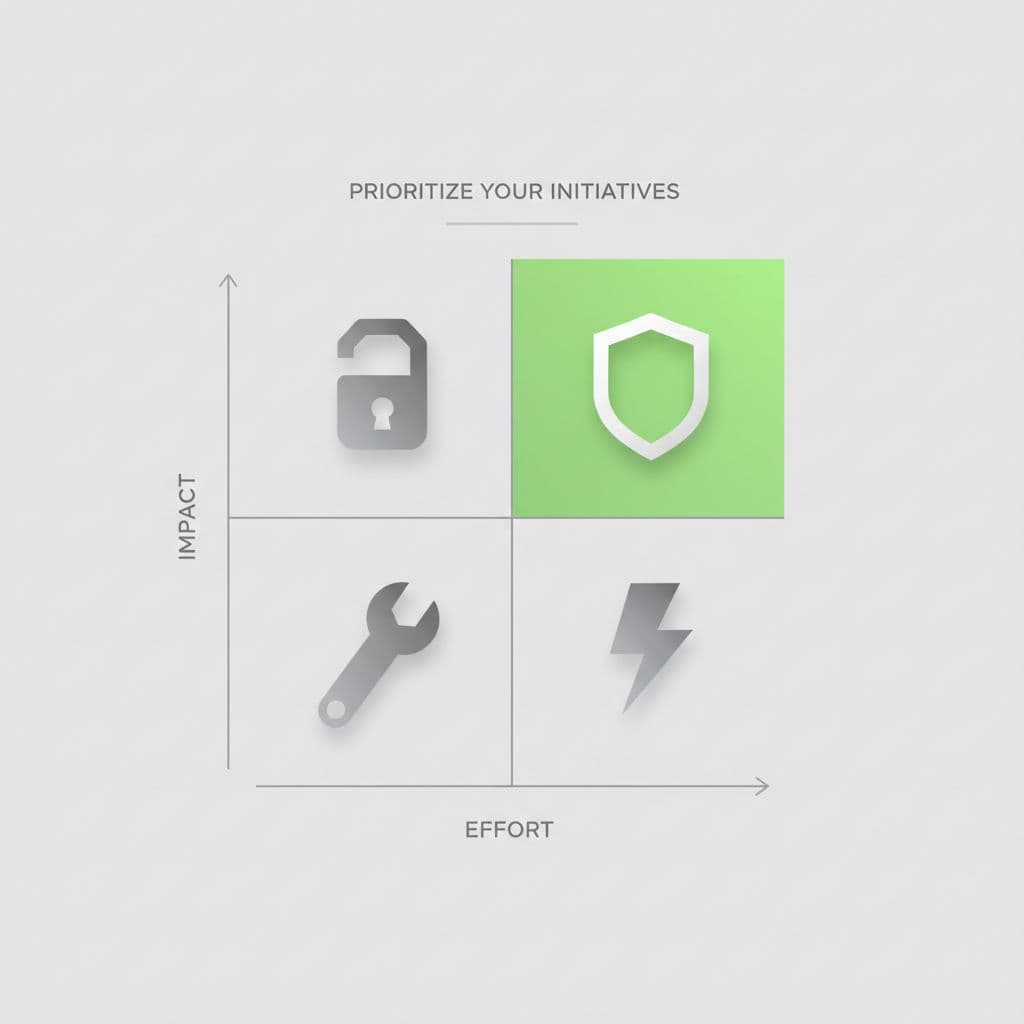
For details on prioritizing cyber risks, check this guide. Adjust for your scale: SMBs focus basics; mid-market adds AI defenses.
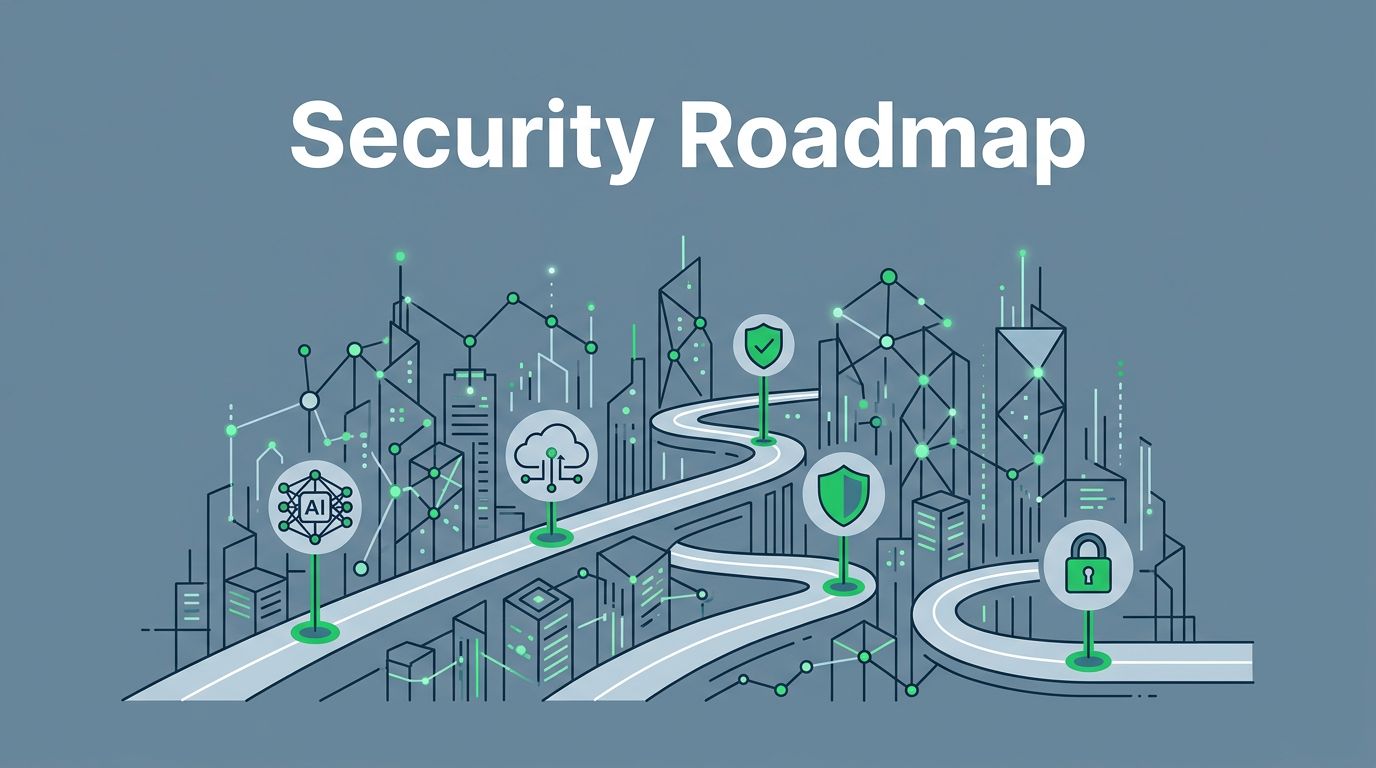
Map Out a Sample 12-Month Roadmap
Break the year into quarters for momentum. Build on priorities with measurable milestones.
Q1: Strengthen Identity Foundations
Roll out zero trust basics. Enforce MFA everywhere, add session timeouts, and monitor logins. Aim for 90% coverage by quarter end. Use tools like those in IAM best practices for 2026.
Q2: Tackle Cloud and Third-Party Risks
Audit SaaS apps and vendors. Demand SBOMs from partners and scan APIs weekly. Cut off risky access. Test with the CRF third-party risk model.
Q3: Boost Ransomware and Automation
Implement immutable backups and recovery drills. Deploy automation for threat hunting. Follow ransomware resilience steps.
Q4: Layer in AI Security and Review
Govern AI use with prompt filters and training. Run red-team exercises. Review the full year and adjust.
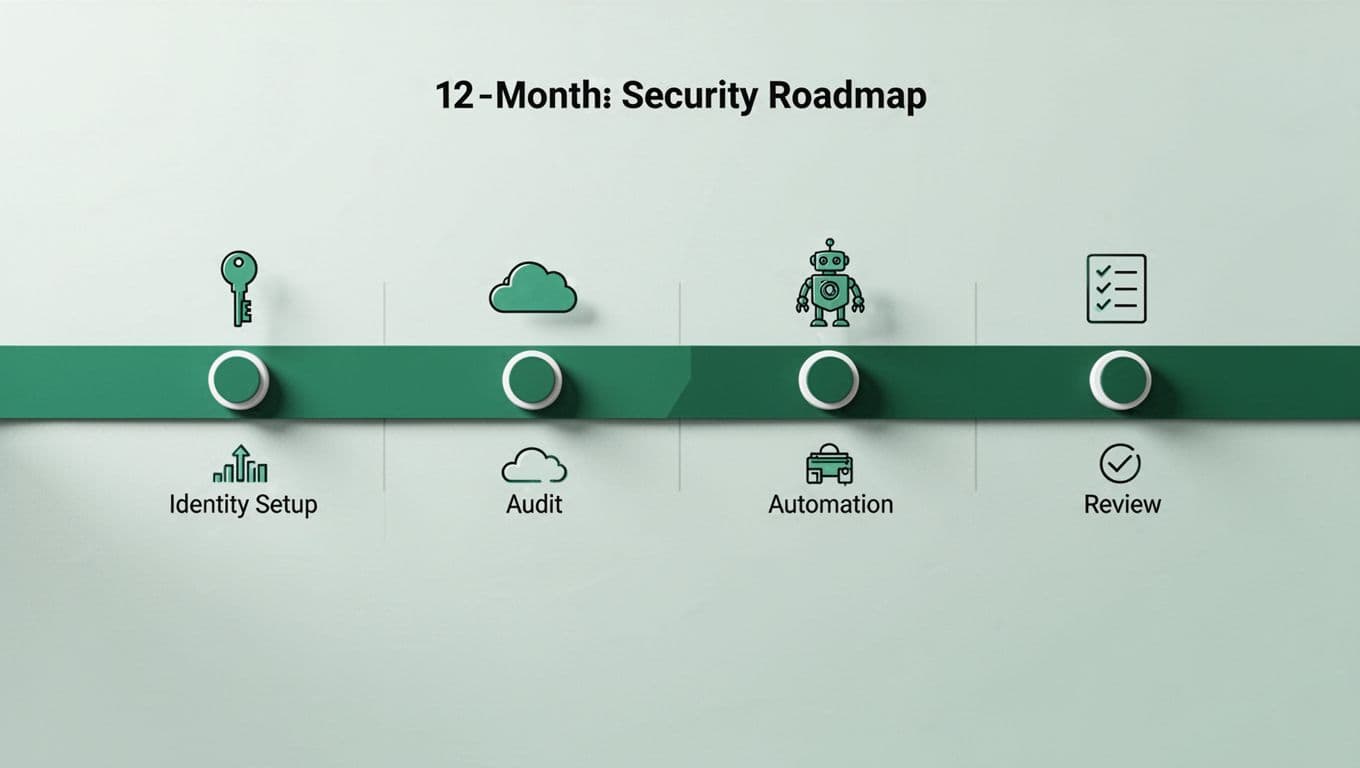
Track progress weekly. Assign owners and KPIs, like mean-time-to-detect under 30 minutes.
Dodge These Roadmap Pitfalls
Teams often chase shiny tech over basics. Don’t skip identity for AI gadgets. Overlook business input, and projects stall.
Common errors include no metrics, ignoring skills gaps, or rigid plans. Ransomware drills fail without realism. Vendor risks persist if contracts lack teeth.
Build flexibility. Quarterly reviews catch shifts, like new regs. Secure talent early; skills shortages hit 78% of firms per recent data.
Put Your Roadmap into Action
You now have a clear path: assess risks, gauge maturity, prioritize smartly, and quarter-by-quarter execution. This approach matches threats like AI attacks and ransomware to your resources.
Strong plans build resilience and board confidence. Start today with that gap table.
Need expertise to fill roles or refine strategy? Book a Discovery Call with Bud Consulting. Your team will thank you.