table of contents
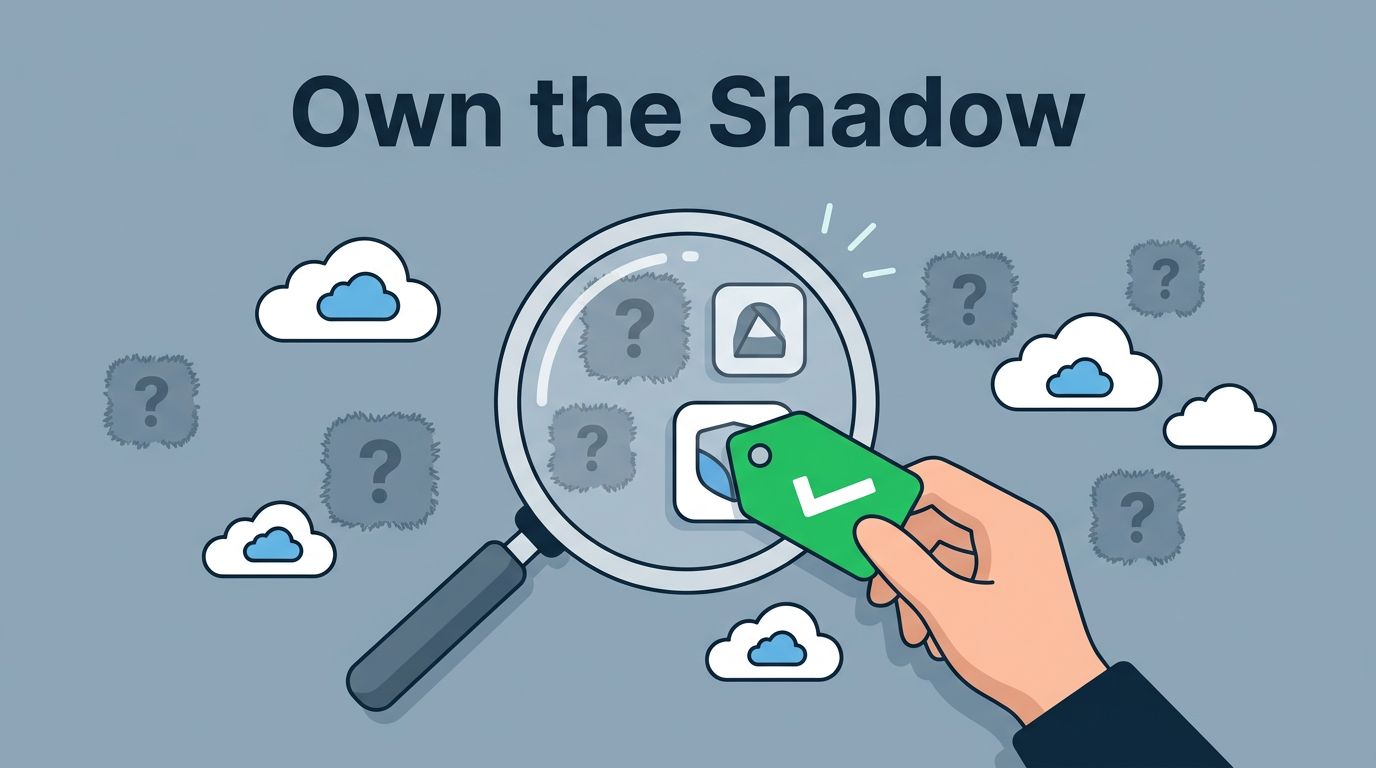
Unowned apps, hidden accounts, and mystery devices don’t stay harmless for long. They grow spend, widen access, and make cleanup harder every month.
That’s why shadow SaaS ownership matters. If no one owns a tool or asset, no one tracks risk, renewal dates, or offboarding.
The fix starts with evidence, then moves to clear accountability. Once that happens, the whole mess gets much easier to manage.
Start with discovery signals you can trust
Don’t begin with interviews alone. Start with the signals that show real use.
SSO logs tell you which apps people sign into. Finance data shows what the business is paying for. Browser history, endpoint telemetry, and app usage reports show what people open without approval. Contracts and purchase orders add vendor names, renewal dates, and buying teams. Security alerts can expose risky admin accounts, unexpected logins, or new software on endpoints.
A shadow app is often visible in at least two places. Maybe finance paid for it, and SSO logs show daily use. Maybe the tool sits outside SSO, but browser telemetry shows heavy activity. That is enough to open a record.
Unknown assets follow the same pattern. An untracked laptop, a rogue VM, or unsanctioned software on a managed endpoint still has an owner somewhere. The task is to find the best one.
Use evidence to pick the right owner
Once an asset is discovered, assign ownership from the strongest proof you have. If you need a simple source map, CloudNuro’s SaaS inventory fields are a useful reference for the data to capture.
| Evidence | What it tells you | Likely owner type |
|---|---|---|
| SSO logs | Who signs in and how often | Business owner or team lead |
| Finance data | Who paid and what budget carried it | Department owner or cost center head |
| Browser or app usage | Who actually relies on the tool | Primary user group leader |
| Contracts | Who approved the vendor and terms | Procurement contact or vendor manager |
| Admin accounts | Who controls the app | Technical owner or IT app owner |
| Cost center mapping | Which team funds the tool | Business owner |
| Security alerts | Who needs to fix risk fast | Technical owner, with security support |
The pattern is simple. If the app drives business work, name a primary owner from the business. If the app needs setup, integrations, or access control work, name a technical owner from IT or security. If the tool affects spend, risk, or a major process, add an executive sponsor.
That structure keeps blame out of the process. It also keeps cleanup moving when people change roles.
If an app has spend or sign-in activity, it needs a named owner before anyone argues about whether to keep it.
For most companies, the primary owner is the person who can say, “Yes, this tool matters,” or “No, we can retire it.” The technical owner handles identity, logs, integrations, and deprovisioning. The sponsor clears blockers when the app touches multiple teams.
A simple ownership model that works
A good model is small enough to use and clear enough to audit. Zylo’s guide to assigning SaaS ownership makes the same point, central visibility matters, but business teams still need room to manage the tools they use.
Use this three-part model:
- Primary owner: accountable for business value, renewals, and the final keep or kill decision.
- Technical owner: accountable for access, configuration, integrations, and offboarding.
- Executive sponsor: accountable when the app spans teams, budgets, or risk decisions.
This model works for shadow SaaS, but also for unknown software assets. A legacy CRM may have a business owner in sales and a technical owner in IT. A shared analytics tool may need a finance sponsor if several departments split the bill.
For orphaned admin accounts, the technical owner usually acts first. JumpCloud’s note on shadow SaaS accounts is a good reminder that accounts without owners create blind spots fast. The goal is to attach every high-risk account to a human name and a response path.
Handle edge cases before they stall cleanup
Some assets won’t fit neatly into one team. Shared tools, contractor-built systems, and subsidiary apps need extra care.
Shared tools should have one primary owner, even if many teams use them. Pick the team that pays for the core use case or controls the renewal. Then list the other teams as stakeholders, not owners.
Contractor-owned apps are trickier. If a contractor set up the tool, the company still needs an internal owner before the contract ends. Otherwise, the app becomes someone else’s problem on their last day.
Subsidiaries need local ownership plus corporate oversight. Local teams understand the process, but central IT or security should keep visibility into identity, data, and risk. Legacy apps need the same treatment. If nobody wants them, they still need a sunset owner who can drive retirement.
For a structured way to keep these cases moving, a SaaS discovery runbook checklist helps teams follow the same steps every time.
Turn assignment into a repeatable workflow
Owner assignment should not live in spreadsheets that go stale. Use a short workflow that closes the loop.
First, log the asset and attach the evidence. Next, assign the owner type, not just a name. Then send a task for validation. The owner confirms use, risk, and next action. After that, update the record in the system of truth and set the review date.
A simple cadence works well. Review high-risk apps monthly, shared tools quarterly, and low-risk assets at least twice a year. During each review, check for new admins, idle accounts, contract changes, and unknown usage. If the owner can’t be found, route the asset to security and IT together.
If the app needs cleanup, make the action clear. Consolidate duplicates, remove the free trial, or retire the orphaned account. If the app stays, tie it to access reviews and renewal planning.
Conclusion
Clear ownership is what turns a messy inventory into something you can manage. Discovery shows what exists. Evidence points to the right owner. A simple primary owner, technical owner, and sponsor model keeps each app tied to action.
When shadow SaaS, free trials, duplicate tools, and unknown assets all have named owners, the cleanup gets faster and the risk gets smaller. If your team needs help putting that process in place, Book a Discovery Call with Bud Consulting.