table of contents
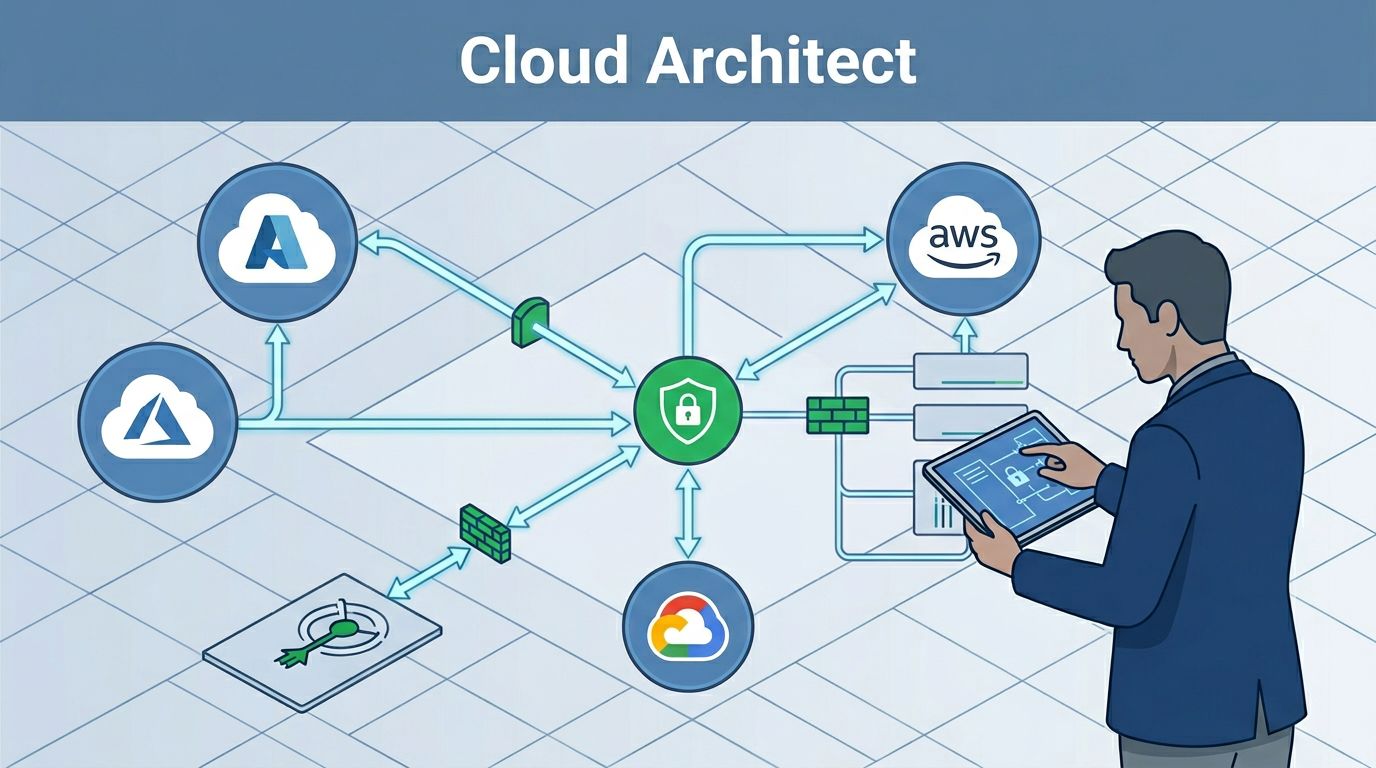
Multi-cloud setups across AWS, Azure, and Google Cloud expose companies to breaches like the UNC6361 crypto thefts this year. Attackers jumped providers using stolen identities and weak IAM. You face visibility gaps and policy mismatches that native tools miss.
As a CISO or IT director, you need an expert who designs consistent defenses. This role prevents costly pivots between clouds. Let’s break down how to find and vet that person fast.
Table of Contents
- Why Hire a Cloud Security Architect Now
- Key Qualifications to Look For
- Your Hiring Checklist
- Sample Interview Questions
- Red Flags to Watch Out For
- What to Budget for Salary
- Conclusion
- FAQ
Why Hire a Cloud Security Architect Now
Demand surges in April 2026. Over 24,000 US openings seek architects for AWS, Azure, and GCP. Companies mix clouds for resilience, but fragmentation creates risks. Each provider’s IAM and logging differs, so threats slip through.
Recent breaches highlight this. UNC4899 took over accounts via Cloud SQL proxies, then drained crypto across clouds. Misconfigs in S3 or Azure storage leaked 149 million credentials. You can’t patch these with single-cloud fixes.
Hire now because AI workloads add layers. Architects embed Zero Trust in DevSecOps pipelines. They automate scans for prompt injection in ML models. Without one, your team reacts instead of prevents. Roles at firms like EPAM demand multi-cloud hands-on experience.
Key Qualifications to Look For
Seek 8-10 years in cloud security, with 3+ across multiple providers. They must know AWS GuardDuty, Azure Sentinel, and GCP Chronicle. Hands-on with Prisma Cloud or Wiz helps unify views.
Certifications prove breadth. CCSP from ISC2 covers multi-cloud governance. GIAC Public Cloud Security validates AWS, Azure, GCP defenses. CISSP adds enterprise fundamentals.

Look for Zero Trust design skills. They architect segmentation and encryption that works everywhere. Experience with infrastructure-as-code reviews spots drifts early. Bonus: AI security, like securing Kubernetes clusters for ML.
They communicate well. Expect them to align engineers and execs on risks. Past POCs or migrations show real impact.
Your Hiring Checklist
Use this to screen resumes quick.
Must-haves:
- Built secure landing zones in two+ clouds (AWS Control Tower, Azure ALZ).
- Led threat modeling for hybrid apps.
- Automated IAM with Terraform or Bicep.
Nice-to-haves:
- Fixed breaches in production multi-cloud.
- Integrated SIEM across providers.
Post on Dice or LinkedIn with these. Filter for GIAC GPCS holders. Aim for 10-15 interviews from 100 applicants.
| Qualification | Why It Matters | Check Method |
|---|---|---|
| Multi-cloud IAM | Stops lateral moves | Ask for policy examples |
| CNAPP tools (Wiz, Orca) | Visibility across providers | Review portfolio |
| DevSecOps integration | Speeds secure releases | GitHub repos |
This table cuts weak candidates. Focus on proven builders, not theorists.
Sample Interview Questions
Test depth with scenarios. Start behavioral, then technical.
- Walk us through securing a workload that spans AWS S3 and Azure Blob. How do you enforce consistent encryption?
- Describe a multi-cloud identity federation you set up. What tools? Any pitfalls?
- How do you detect drift in Terraform deploys across GCP and Azure?
- Explain Zero Trust for AI agents in containers. Mitigate prompt injection how?
- A breach pivots from AWS to GCP via service accounts. Your response plan?
Probe follow-ups. Good answers reference tools like SentinelOne or Chronicle. They quantify impact, like “cut alerts 50%.”

Assign a take-home: Design a secure multi-cloud pipeline. Grade on automation and coverage.
Red Flags to Watch Out For
Single-cloud bias screams trouble. If they only know AWS, they’ll miss Azure NSG quirks.
Vague answers on breaches. They should cite specifics, not generics.
No automation experience. Manual configs fail at scale.
Over-reliance on certs without projects. CCSP is great, but prove it with migrations.

High turnover hints at poor fits. Check LinkedIn for short stints.
See multi-cloud challenges like these in action.
What to Budget for Salary
Expect $170,000 to $200,000 base in the US. Total comp hits $210,000+ with bonuses at tech firms. Seniors in California top $225,000.
Factors: 10+ years pushes to $200,000. CCSP adds 5-10%. Remote roles match coastal pay now.
Negotiate equity for startups. Offer clear growth to retain.
Conclusion
Pick an architect who unifies your AWS, Azure, and GCP defenses. Focus on multi-cloud proofs, not buzzwords. This hire slashes breach risks and speeds innovation.
Strong qualifications and smart questions get you there. Act fast; talent is scarce.
Need vetted candidates? Book a Discovery Call with Bud Consulting.
FAQ
What certifications matter most for multi-cloud architects?
CCSP and GIAC GPCS top the list. They cover AWS, Azure, GCP without vendor lock.
How long does hiring take?
4-6 weeks with a tight checklist. Use recruiters for speed.
Can juniors grow into this role?
Rarely. Need 5+ years hands-on first.
What’s the biggest multi-cloud risk?
IAM fragmentation. Attackers pivot easy without federation.
Remote or onsite?
Most roles hybrid now. Insist on US time zones for collab.