table of contents
Security teams face constant pressure. Gaps in expertise slow projects and expose risks. You need pros who deliver fast, but full-time hires take months and often flop.
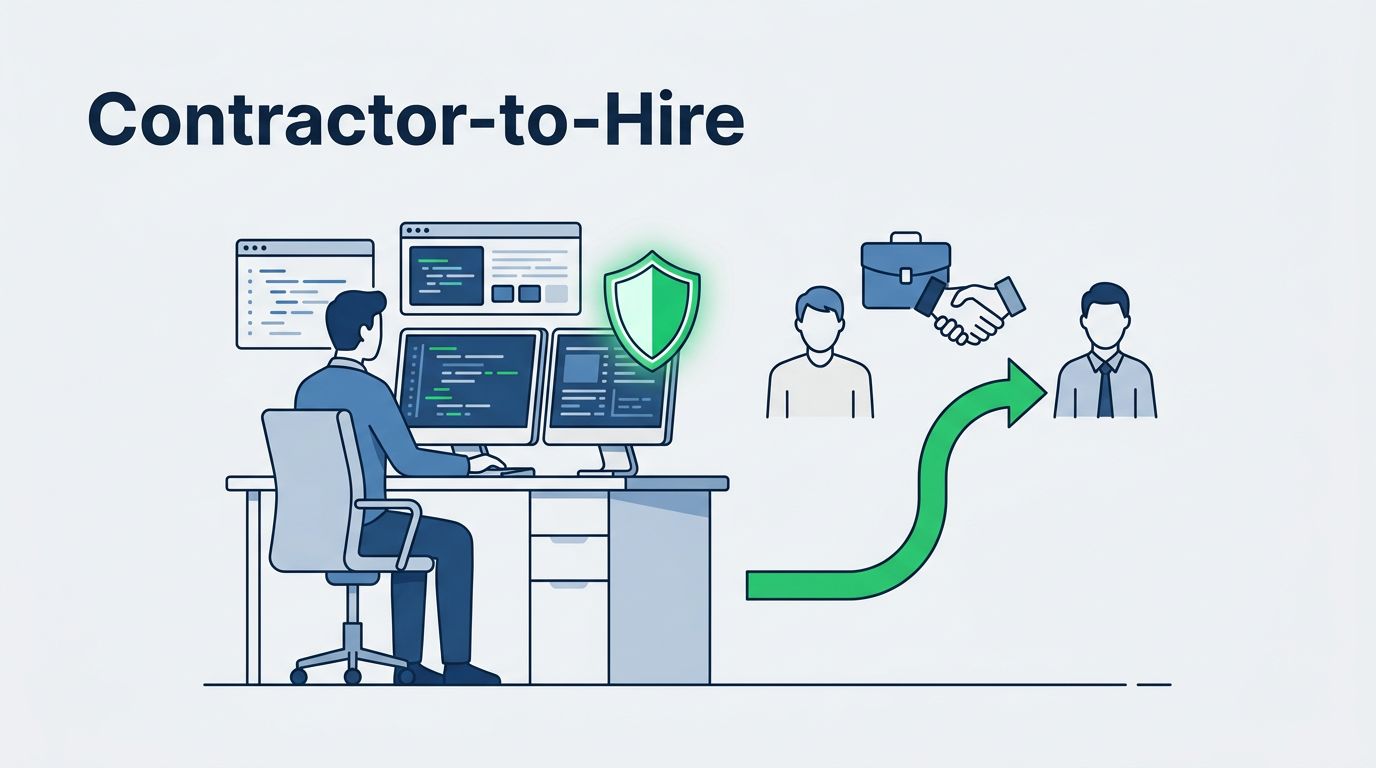
A contractor-to-hire path solves this. It lets you test security talent on the job before committing. Then you convert top performers to permanent roles. This approach cuts bad hires and speeds up your pipeline.
Organizations see 20 to 30 percent better retention with this model. Let’s walk through how to set it up step by step.
Why Contractor-to-Hire Fits Security Roles
Security roles demand proof of skills. Cybersecurity pros must handle live threats. Physical security experts need to spot real vulnerabilities. Interviews alone miss this.
Contract work shows true fit. A cloud security architect tackles your IAM gaps right away. You watch their code reviews and incident responses. No more guessing.
This model scales too. Bring in DevSecOps contractors for a sprint. If they shine, extend or convert. Data backs it: firms using contract-to-hire fill IT roles 40 percent faster than direct hires. Check contract-to-hire vs. direct hire comparisons for cybersecurity for details.
Physical security follows suit. Test a contractor on site assessments. Their patrol plans and access controls reveal readiness. Both fields benefit because stakes stay high.
You avoid overstaffing risks. Contracts end if needs shift. Yet conversions build loyalty. Contractors know your systems. They stick around.
Design Your Contractor-to-Hire Framework
Start with a clear structure. Define four stages: source candidates, onboard for trial, evaluate performance, and decide on hire.
This keeps everyone aligned. Set timelines upfront. Most paths run three to six months. Adjust based on role complexity.
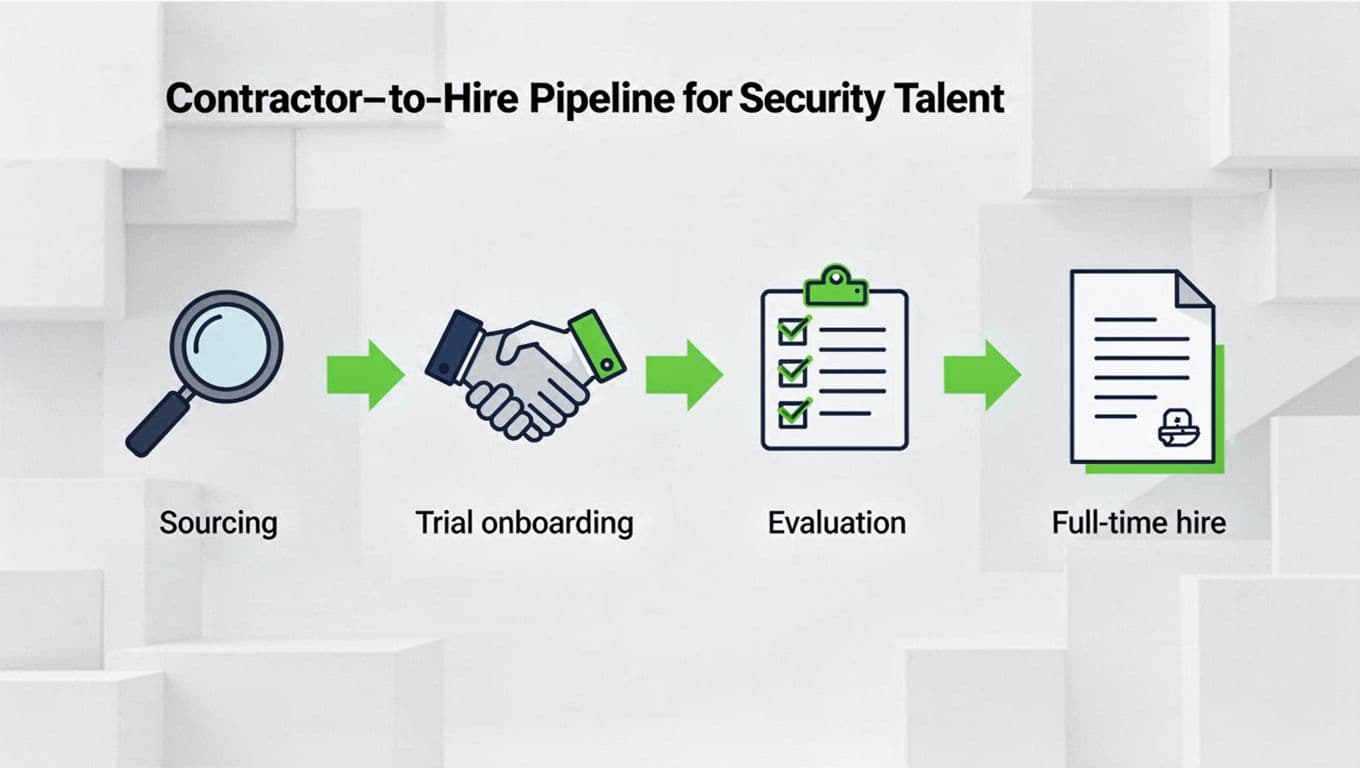
Your framework might look like this. Source via networks or agencies. Onboard with access and goals. Evaluate weekly. Convert at month four if metrics hit targets.
Tailor to your needs. For CISOs, focus on strategy alignment. Offensive security experts get pentest benchmarks. Make it a one-page doc. Share it with HR and managers.
Partners help here. Staffing firms with vetted pools speed sourcing. They handle compliance too. This framework turns hiring into a repeatable process.
Source Contractor Security Talent Effectively
Target active contractors first. Use LinkedIn, veteran networks, and niche boards. Search for “cybersecurity contractor” or “physical security consultant.”
Agencies specialize in cleared talent. They pre-vet for clearances and skills. In 2026, cleared cyber roles fill fastest through these channels. See playbooks for recruiting cleared cybersecurity talent.
Post specific gigs. “Contract SIEM implementation, three months, convert possible.” Rates run $100 to $150 per hour for seniors. Budget salary equivalent at 65 to 70 percent of contract gross.
Screen for conversion interest. Ask about full-time goals early. Mix cyber and physical sources. Cyber from ISC2 groups. Physical from ASIS chapters.
Build a pipeline now. Nurture 10 to 20 candidates. When gaps hit, deploy fast.
Set Clear Evaluation Criteria During the Contract Period
Define success metrics day one. Tie them to role outcomes. Don’t wait for surprises.
For cybersecurity: Track tickets resolved, threats blocked, code commits. Physical security: Incidents reduced, audits passed, training completed.
Sample criteria:
- 90 percent uptime on tools deployed.
- Zero missed SLAs.
- Positive peer feedback quarterly.
Review biweekly. Use dashboards for data. Adjust as needed.

Teams like this spot stars quick. One firm converted 70 percent of contractors after clear KPIs. Set conversion triggers too. Hit 85 percent on metrics? Offer full-time.
Involve the contractor. They track progress. This builds buy-in.
Navigate Legal and HR Essentials
Contracts need precision. Specify trial length, conversion terms, and pay. Include non-competes if standard.
HR flags risks. Classify as 1099 or W2 correctly. Missteps lead to fines. Consult your legal team.
Offer paths to benefits early. Discuss equity or bonuses. This boosts conversions.
For federal work, clearances matter. Use federal contracting staffing models as guides.
Document everything. Performance logs protect you. End contracts cleanly if no fit.
Monitor KPIs for Conversion Success
Track pipeline health. Aim for 50 percent conversion rates initially. Top firms hit 60 to 80 percent.
Key metrics:
- Time to source: Under two weeks.
- Contract completion rate: 75 percent.
- Retention at six months: 90 percent post-conversion.
Use simple sheets or HR tools. Review quarterly. Tweak sourcing if conversions lag.
Benchmark against peers. Cybersecurity hiring strategies show contract paths outperform posts.
Scale winners. Expand to more roles once proven.
Key Takeaways
A contractor-to-hire path delivers security talent that sticks. Source smart, evaluate rigorously, and track results. You cut risks and fill gaps faster.
Security leaders win with this. Conversions build stronger teams. Start small, one role, then grow.
Ready to build yours? Book a Discovery Call with Bud Consulting for tailored advice.