table of contents
Managers are the people who turn security policy into daily behavior. They approve access, spot suspicious messages, protect sensitive files, and set the tone for their teams. In 2026, that job matters even more because AI-made phishing, deepfake voice calls, and cyber-enabled fraud are aimed at leaders who can move money or data fast.
A broad training course for everyone won’t cover those decisions well. A security awareness program for managers needs role-based habits, simple rules, and clear metrics. Build it around the moments when managers can either slow risk down or make it worse.
Why managers need their own security awareness program
Managers sit at a useful but risky point in the business. They don’t just follow policy, they make calls that affect access, approvals, incident response, and team behavior.
A manager may approve a new system login, forward a suspicious email to security, or decide whether a file can live in a shared folder. If that person takes shortcuts, the whole team often follows. That is why manager training can’t be the same as general employee awareness.
It also has to deal with a different threat set. In 2026, attackers are using AI to write better phishing emails, fake executive voices, and push urgent payment requests through email or chat. A manager needs enough context to pause, verify, and escalate before a bad decision spreads.
Define what managers own
Start with a simple role charter. If managers know what they own, they make faster and safer calls.
A practical manager security awareness program should teach them to:
- Report suspicious emails, texts, calls, and file shares quickly.
- Approve access only when it matches job need and time frame.
- Protect sensitive data in shared drives, chats, and meeting notes.
- Back incident response by joining drills and staying calm under pressure.
- Model secure behavior by using MFA, locking screens, and verifying requests.
- Reinforce policy compliance in one-to-ones and team meetings.
If a manager can approve, share, or escalate, that manager needs a clear security rule for the task.
Keep the rules short and plain. Managers should not need to decode policy language during a busy week. Give them a one-page guide with “what to do” and “who to call” for common situations.
Teach the moments that matter
The best training uses real work scenarios. A manager learns more from a fake vendor invoice than from a long slide deck.
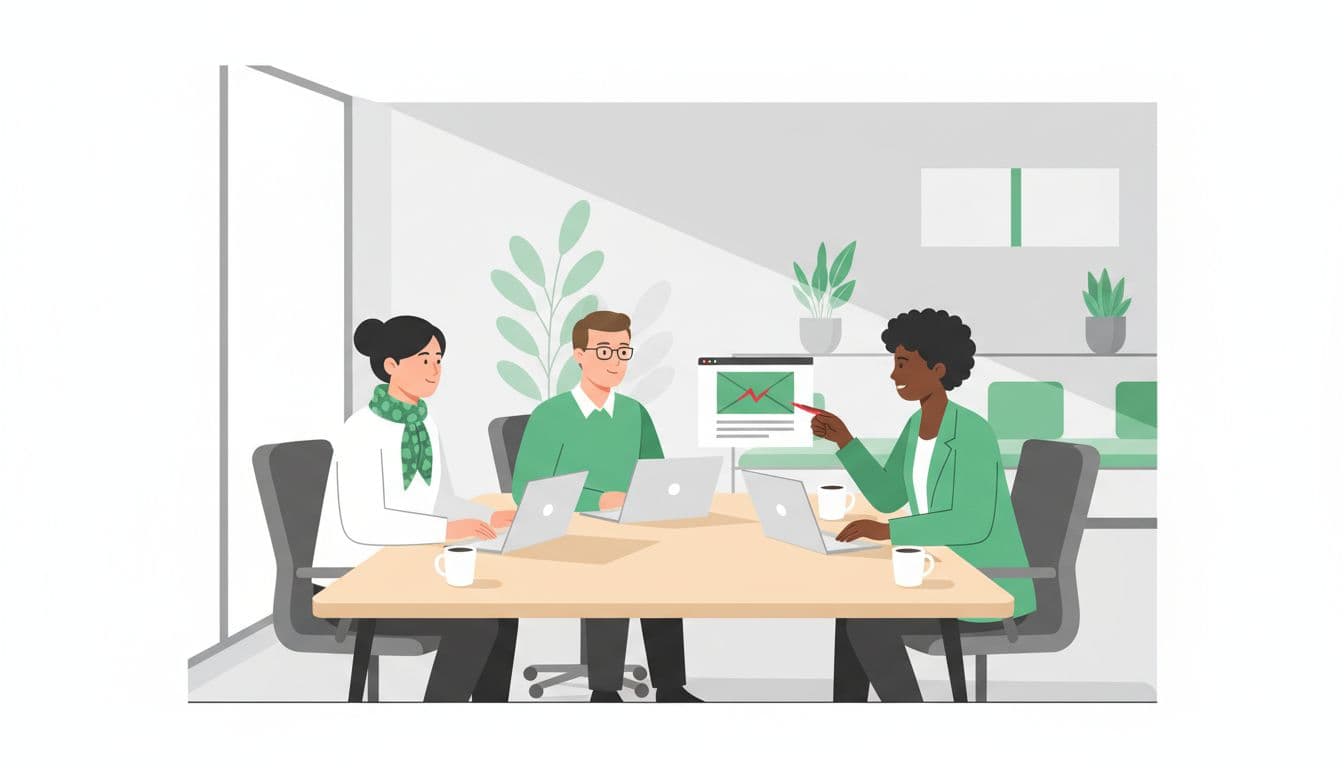
Use examples that match manager life:
- A deepfake voice call asking for an urgent payment.
- A message that appears to come from the CEO during a travel rush.
- A request to add a contractor to a shared folder “for today only”.
- A team member using an unapproved AI tool with sensitive data.
- An incident where the manager has to tell the team what to do next.
Short, repeated sessions work better than a once-a-year lecture. Guides like Security Awareness Training: What Works 2026 and The Ultimate Guide to Security Awareness Training Programs in 2026 both point to the same pattern, frequent practice beats one-time memory.
A good next step is a tabletop exercise. Give managers a 15-minute scenario, then ask what they would do in the first five minutes. That keeps the focus on action, not theory.
Set a training rhythm that fits the work year
A manager program works best when it follows the business calendar. Don’t add another heavy training burden. Add small, steady touchpoints.
- Run a baseline phishing simulation and a short manager survey.
- Hold one manager session each quarter, no longer than 20 minutes.
- Send one micro-lesson each month on topics like access approvals or data handling.
- Tie one tabletop exercise to a real business event, such as hiring, finance close, or a product launch.
That rhythm lines up with 10 best practices for building an effective security awareness program, which puts consistency and measurement ahead of big, one-off training events.
If your teams need help tailoring that plan, Book a Discovery Call with Bud Consulting.
Measure behavior with clear KPIs
If you can’t measure manager behavior, you can’t prove the program works. Track a few simple metrics, then compare them against a baseline.
| KPI | What it shows | How to use it |
|---|---|---|
| Phishing report rate | Whether managers escalate suspicious messages | Watch for steady improvement |
| Time to report | How fast managers act on a threat | Aim to shorten the gap |
| Access approval exceptions | Whether approvals are too loose | Review patterns by team |
| Policy follow-through | Whether managers reinforce required steps | Check completion and reminders |
| Tabletop participation | Whether managers can respond under pressure | Track attendance and response quality |
Focus on trends, not perfect numbers. A rising report rate can be good if it means people spot and share threats faster. A falling exception rate often means managers are taking access reviews more seriously.
Use monthly checks for reporting and quarterly reviews for the bigger picture. Then share the results with department heads so they see where behavior is improving and where coaching is still needed.
Common mistakes that weaken the program
The biggest mistake is treating managers like regular employees with a different job title. That misses the decisions that matter most.
Another problem is punishing reporting mistakes. If a manager fears blame, they may hide a phishing click or delay an incident report. The better move is to reward fast reporting and quick correction.
Finally, avoid training that never touches the team. Managers should repeat the key rules in staff meetings, 1:1s, and onboarding. That keeps security visible without making it feel separate from the work.
Conclusion
Managers shape the habits that protect your company every day. When they know how to handle phishing reports, access approvals, incident response, and sensitive data, the whole organization gets stronger.
A solid security awareness program for managers is short, practical, and measured. Start with real scenarios, keep the cadence steady, and track the behavior that matters most.