table of contents
Hiring in cybersecurity feels tougher than ever. You sift through stacks of resumes claiming expertise in cloud security or incident response, but bad hires still slip through. Resume inflation happens when candidates stretch their experience to match job demands, often without bad intent.
This isn’t outright lying for most people. Tight job markets push honest pros to highlight strengths boldly. Yet it leads to mismatches that cost time and trust. You can fix this with simple checks that focus on evidence over words.
Let’s start by spotting the patterns.
What Resume Inflation Looks Like in Security Roles
Candidates inflate resumes because security jobs demand rare skills. A mid-level analyst might list “led global team” for a small project. Or they drop tool names like Splunk and AWS without context.
This stems from pressure. Job postings ask for years of experience in tech that’s barely a decade old. As a result, people adapt their stories to pass ATS filters first.
Take leadership claims. Someone says they “managed security operations for Fortune 500 firm.” But details show they supported one tool in a team of 20. Vague phrasing hides the real scope.
Tool-dropping is common too. Resumes list 15 platforms from SIEM to EDR. Yet no outcomes tie to them. Did they deploy or just observe?
Clearance inflation pops up often. “Active Top Secret” might mean it lapsed two years ago. Certifications get stretched: “CISSP certified” without the current status.
Inflated incident response experience rounds it out. “Handled major breaches” could mean logging alerts, not leading recovery.
These tweaks make sense in a competitive field. But they blur real talent. For deeper context on why resumes fall short now, check CyberForward Academy’s take on the cyber talent validation gap.
Common Signs of Resume Inflation in Security Roles
Spot patterns early to save hours. Look for mismatched timelines first. A resume claims five years in Kubernetes security, but the tool launched in 2014. Math doesn’t add up.
Overstated leadership scope stands out next. Phrases like “oversaw enterprise-wide program” often mask contributor roles. Ask for team size or budget in follow-up.
Vague incident response claims lack specifics. “Mitigated attacks” skips metrics like dwell time reduced or assets protected.
Tool lists without depth signal inflation. “Proficient in Palo Alto, CrowdStrike, Qualys” sounds good. But no projects or impacts? It’s surface level.
Clearance or compliance experience gets puffed up. “Expert in NIST frameworks” might come from one audit assist. Current status matters most.
Exaggerated certifications round out red flags. “Multiple advanced certs” could mean expired CompTIA or shared team badges.

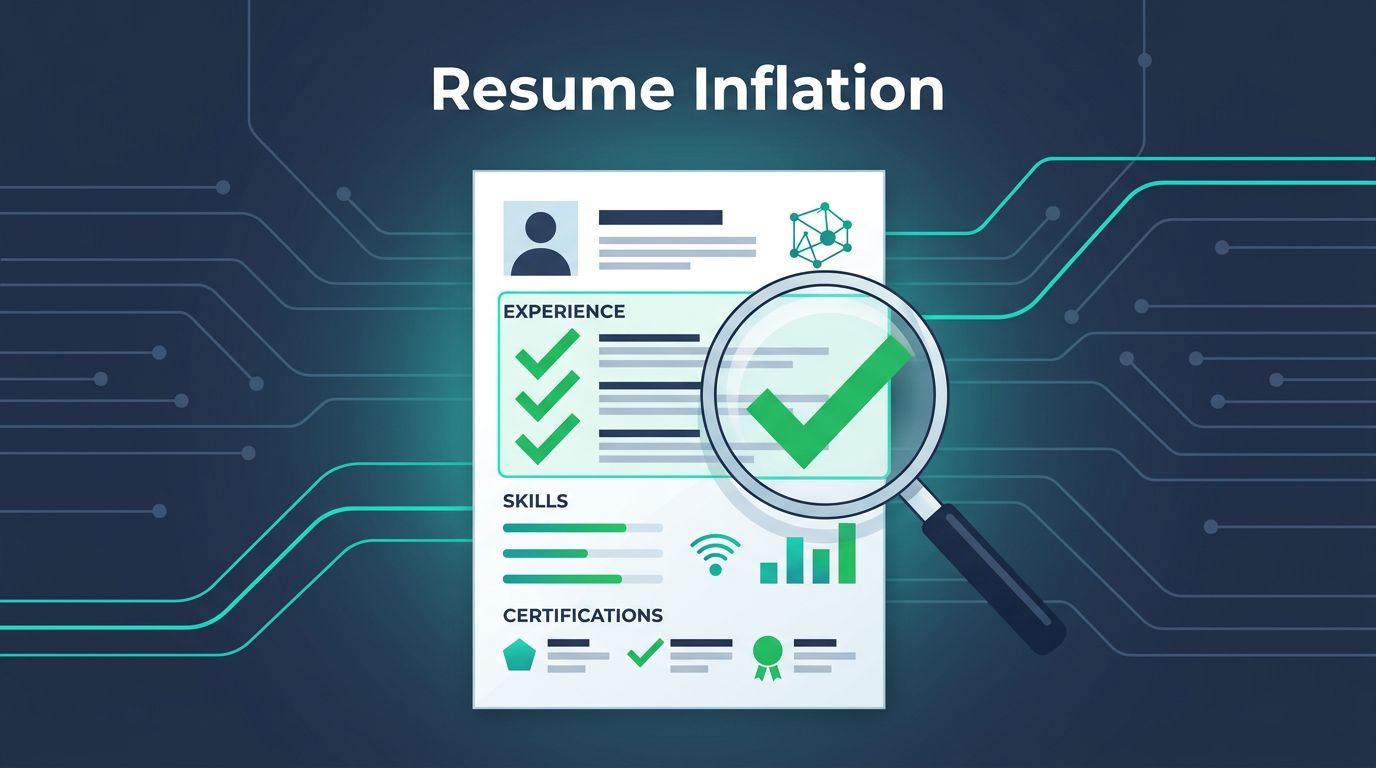
This image shows a typical resume with highlights on puffed-up areas. Blurred text keeps focus on structure, not words.
Iceberg outlines similar red flags in cybersecurity resumes. Use their checklist alongside yours for consistency.
Document these notes per candidate. It helps calibrate your team later.
Screening Questions for the First Pass
Phone screens cut noise fast. Start with timeline probes. “Walk me through your Kubernetes work. What version did you deploy first, and what challenges hit?”
For leadership, ask: “How many direct reports did you have? What KPIs did that team hit under you?”
Incident response needs details. “Describe your biggest response. How long to contain? What tools led?”
Tool proficiency? “Pick Splunk. Give an example query you wrote and the result.”
Clearance check: “When did your clearance last renew? Any restrictions?”
Cert status: “Which certs are active? When did you last recertify CISSP?”
These questions reveal gaps without accusation. If answers stay high-level, pause. A strong candidate shares specifics easily.
Keep questions consistent across recruiters. It builds fair processes.
Interview Prompts That Reveal True Experience
Interviews test depth. Use open prompts that demand stories.
For leadership: “Tell me about a security project you owned end-to-end. What went wrong, and how did you fix it?”
Incident response: “Walk through a real breach you handled. Who did you loop in first, and why?”
Tools get real: “How have you tuned CrowdStrike rules? Share a policy change and its impact.”
Compliance: “Explain a NIST control you implemented. What resistance did you face?”
Certs in action: “How did your CISM shape a decision at work?”
Record responses. Rate them on specifics versus fluff.

Panels work best here. Multiple views spot inconsistencies.
Calibrate post-interview. Discuss one candidate per 15 minutes. Note evidence, not gut feel.
Reference Checks and Verification Steps
References confirm claims. Ask past bosses: “What scope did they lead? Any key wins or misses?”
For tools: “Did they use this in production? Examples?”
Chase docs too. Verify certs on official sites like (ISC)². Check clearances via JPAS or DISS if needed.
LinkedIn cross-checks help. Gaps in job history raise flags.
AI tools flag odd phrasing now, but pair with human review. As Mondo notes on job market mismatches, resume noise demands better signals.
Log everything. It protects against bias claims and trains your process.
If vetting senior roles overwhelms, book a discovery call with Bud Consulting. They specialize in security talent.
Conclusion
Resume inflation stems from market pressures, not deceit. Structured questions, prompts, and checks uncover real skills.
You build better teams this way. Fair processes reduce bad hires and boost trust.
Apply these steps next cycle. Your hires will thank you.