table of contents
Fraud strikes fast. One suspicious email from a fake CEO, and your finance team wires millions away. You need a plan ready before panic sets in.
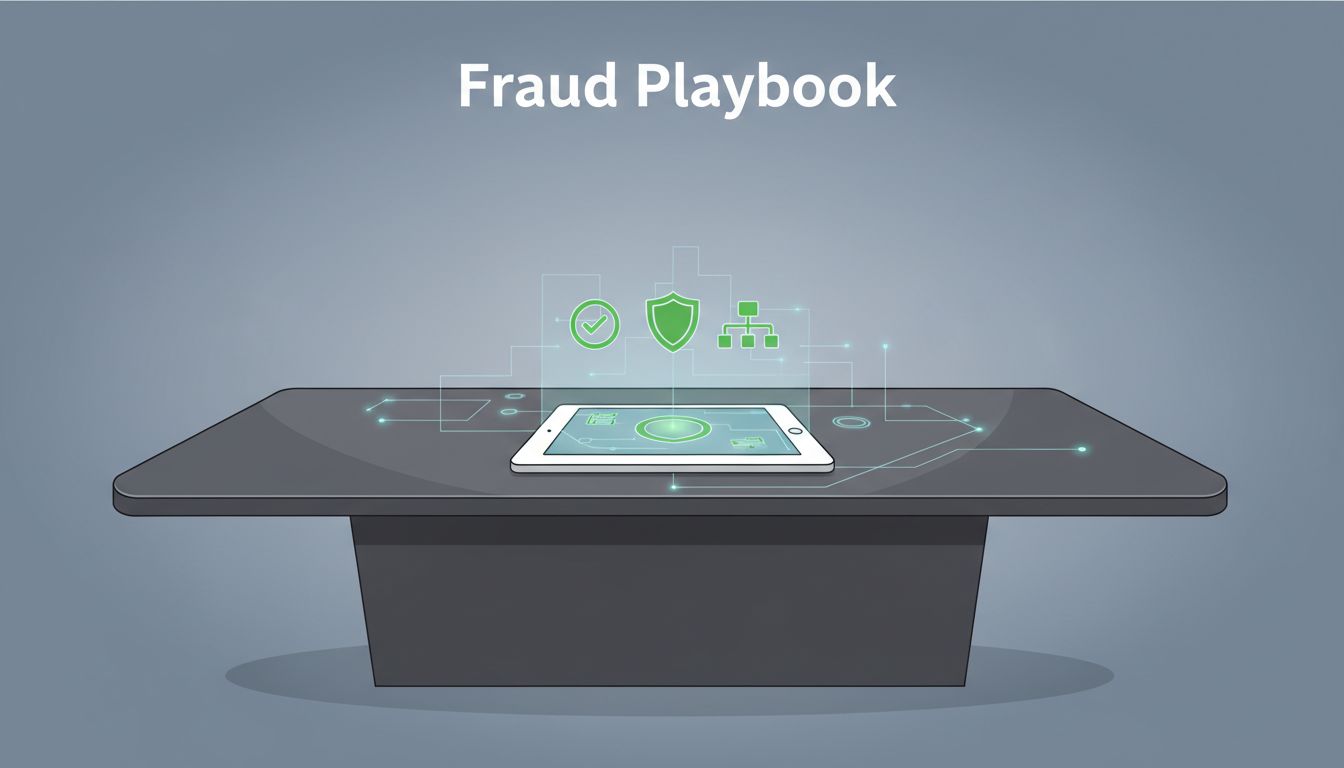
Senior leaders face this risk daily. A solid fraud response playbook cuts losses, protects reputation, and meets new rules. It guides your team through chaos.
This article shows you how to create one. Start with core parts, then build step by step.
Why Your Team Needs a Fraud Response Playbook Now
Fraud costs businesses billions each year. In 2026, AI deepfakes and BEC attacks make it worse. Without a playbook, responses turn sloppy. Decisions delay. Losses grow.
A playbook acts like a fire escape plan. Everyone knows their role. You contain damage quick. For example, Rexxfield’s guide on wire fraud stresses first-hour moves. Contact banks right away. Preserve evidence.
Boards demand this prep. Regulators check it too. New US rules from early 2026 push cyber-fraud plans. They require risk reviews and vendor checks. Your playbook proves compliance.
It also builds trust. Staff report issues faster. Customers stay loyal when you fix fast. Test it with drills. That spots gaps before real hits.
Key Components of Your Playbook
Every playbook needs clear sections. List roles first. Who leads? Your CISO or GC? Define escalation paths.
Next, outline stages: alert, assess, contain, investigate, remediate, review. Add templates for reports. Short ones for execs. Full ones for teams.
Include contact lists. Internal: IT, legal, HR. External: banks, forensics firms, counsel. Note 2026 must-haves like AI tools for detection.
Document comms rules. What to tell staff? Customers? Regulators? Keep it factual. Avoid speculation.
Here’s a sample structure:
| Section | What to Include | Purpose |
|---|---|---|
| Roles & Escalation | Names, titles, backups | Quick activation |
| Detection Triggers | Odd logins, spikes | Early alerts |
| Containment Steps | Freeze accounts, block IPs | Stop spread |
| Investigation Kit | Forensics checklist | Gather proof |
| Recovery Plan | Refunds, fixes | Restore normal |
| Lessons Log | Post-event review | Improve next time |
This table keeps it simple. Tailor to your risks, like wire fraud or deepfakes.
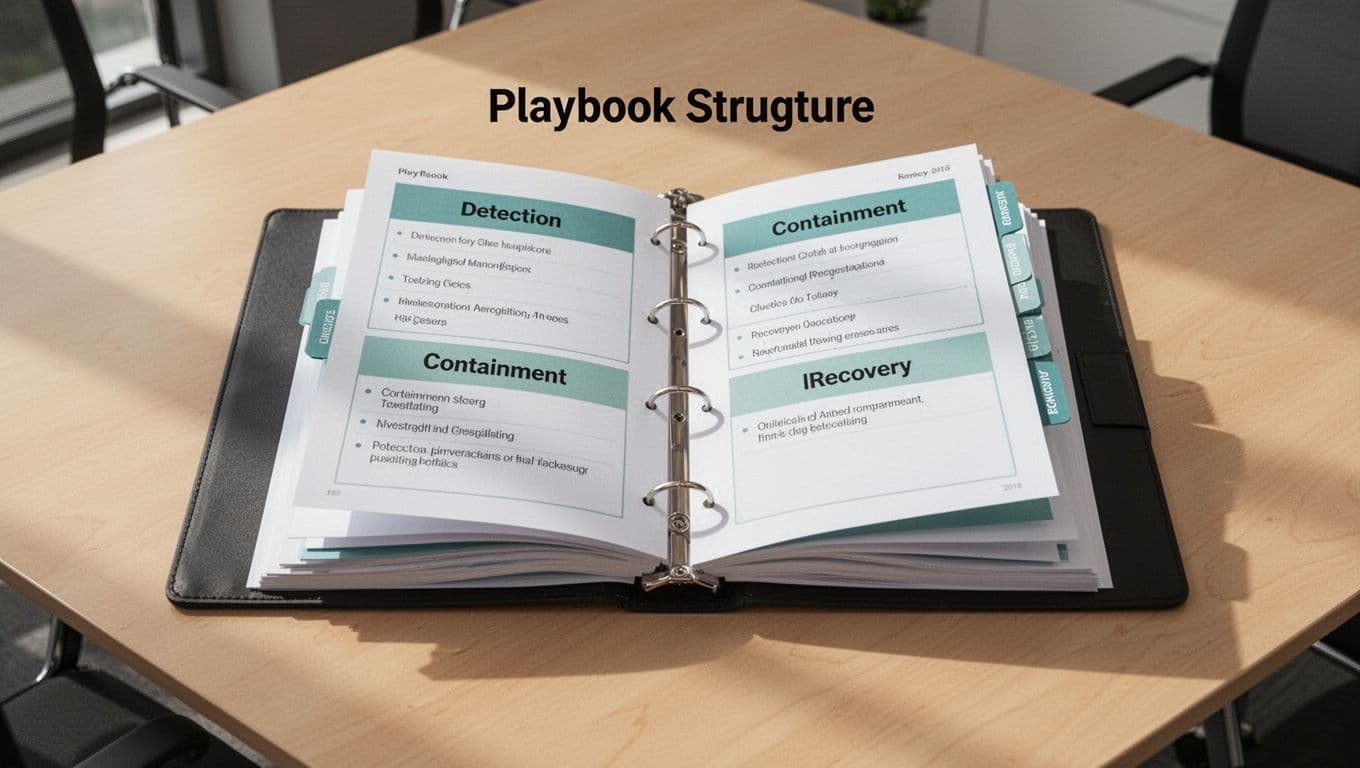
Put this in a shared doc or binder. Update yearly.
Build Your Playbook Step by Step
Start with a team. Pull in risk, legal, IT, and ops leads. Meet weekly for a month.
First, map risks. BEC? Vendor scams? AI fakes? Rank by impact.
Then, write the alert stage. Set triggers: high chargebacks or odd wires. Assign monitors.
Assess next. Triage size. Small? Handle local. Big? Escalate to execs.
Contain fast. Examples: Pause payments. Change passwords. Isolate systems.
Investigate deep. Use forensics. Interview quietly. Log everything.
Remediate after. Patch holes. Train staff. Test AI detectors.
Review last. Debrief. Update playbook. Run a drill soon.
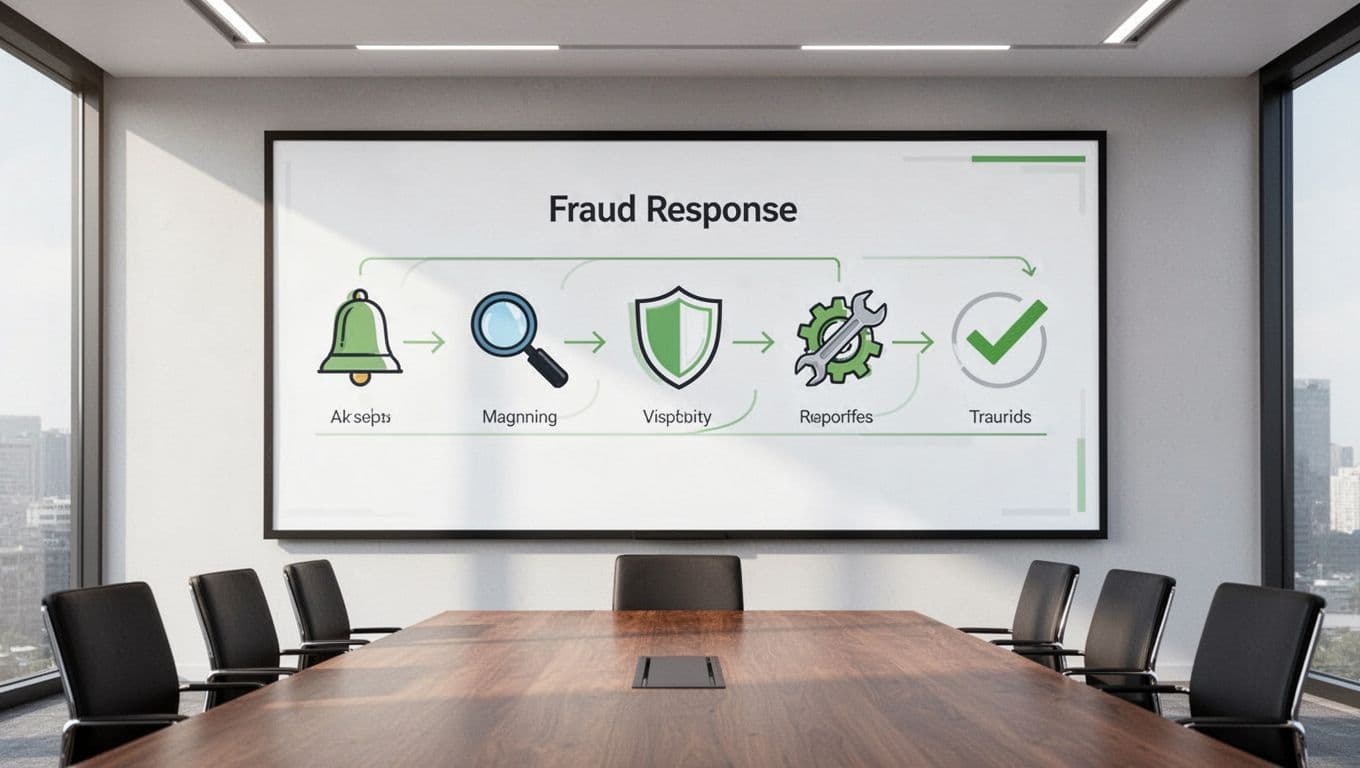
Follow this flow. It matches Brady Martz’s 2026 practices, which stress tabletop exercises.
Get buy-in from the top. Share drafts. Refine based on feedback.
Common Mistakes to Avoid
Don’t make it too rigid. Fraud evolves. Leave room for judgment.
Skip vague steps. “Investigate” won’t cut it. List tools and timelines.
Overlook people. HR rules matter for interviews. Consult counsel first.
Ignore tech. AI spots patterns humans miss. Train on it.
Forget testing. Plans gather dust without drills. Schedule now.
One pitfall: solo ownership. Spread roles. No single hero.
Valydex’s BEC guide warns against single-channel trust. Always verify out-of-band.
2026 Best Practices to Include
AI changes everything. Use it for real-time flags on logins or spikes. Pair with human checks.
New regs demand plans. US orders target scam groups. Review vendors. Boost training.
Global efforts like GASA push ID checks. Add scam reporting.
For deepfakes, follow this rapid playbook. Preserve evidence raw. Coordinate CISO and comms.
Sumsub’s 2026 playbook segments by firm type. Adapt that.
If gaps persist, book a discovery call with Bud Consulting. They help with security culture and talent.
Conclusion
A fraud response playbook saves your firm when attacks hit. It covers stages from alert to lessons learned. Build it now with clear roles and 2026 updates.
Test often. Fix weak spots. Your team will respond sharp.
Fraud waits for no one. Act today. Your board will thank you.