table of contents
Ransomware hit over 7,000 organizations last year. Projections show more than 12,000 attacks this year alone. You face credential theft, multi-extortion, and AI-driven phishing that steal data before locking files.
These threats demand speed. A solid playbook cuts recovery time and limits damage. It turns chaos into steps your team can follow under pressure.
Let’s build one that fits your setup. Start with the team, then phases, tasks, and tests.
Assemble Your Incident Response Team
Pick roles that match your size. A CISO leads overall. SOC managers handle detection. IT admins focus on containment.
Add legal counsel early. They guide notifications and payments. Cyber insurance reps join for claims. Law enforcement gets looped if data theft occurs.
In 2026, attackers use stolen logins from VPNs or tools like Jira. Your team needs forensics experts to trace that. External IR firms help if internal skills gap.
Define contacts in a one-page roster. Include phone numbers and backups. Assign a communicator for executives.
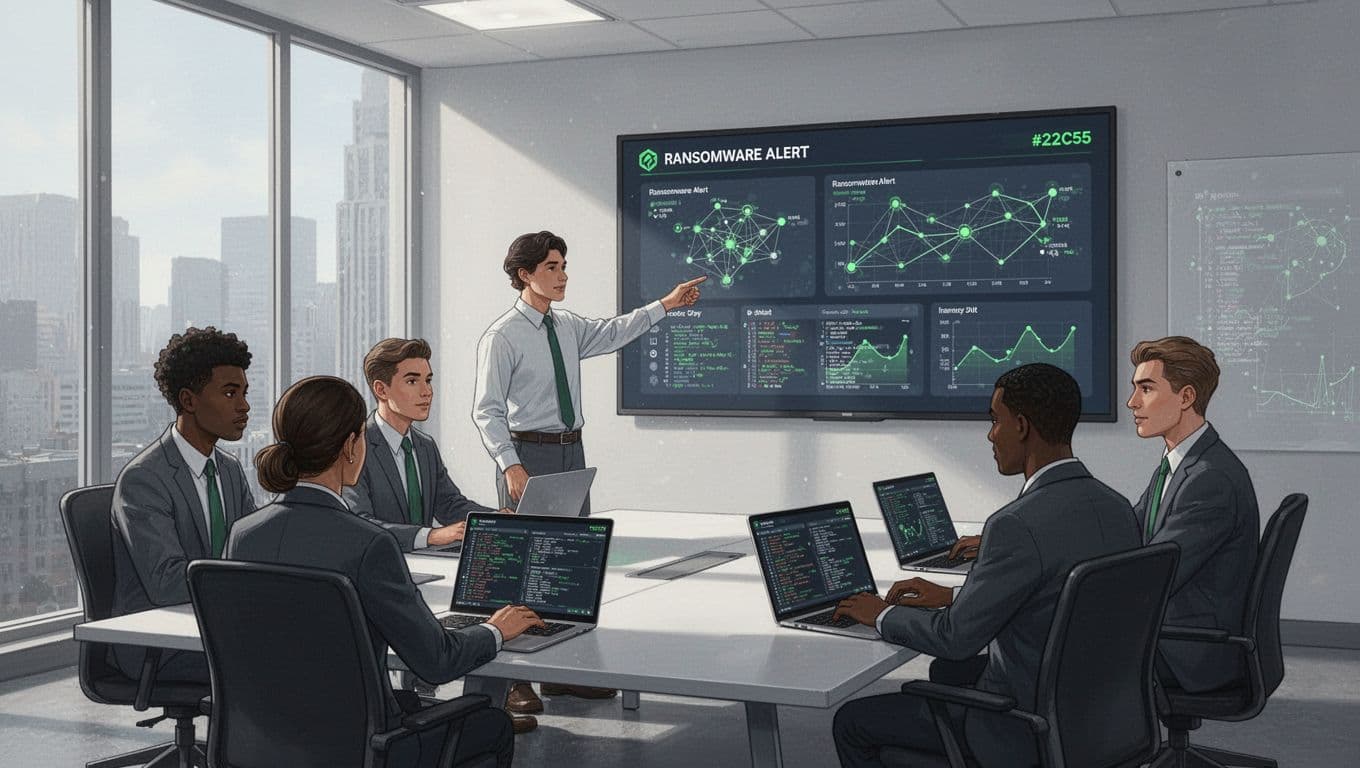
Test this group quarterly. That way, everyone knows their spot when alerts hit.
Bud Consulting can source specialists like cloud security architects. Book a Discovery Call with Bud Consulting to fill gaps.
Map Out Your Playbook Phases
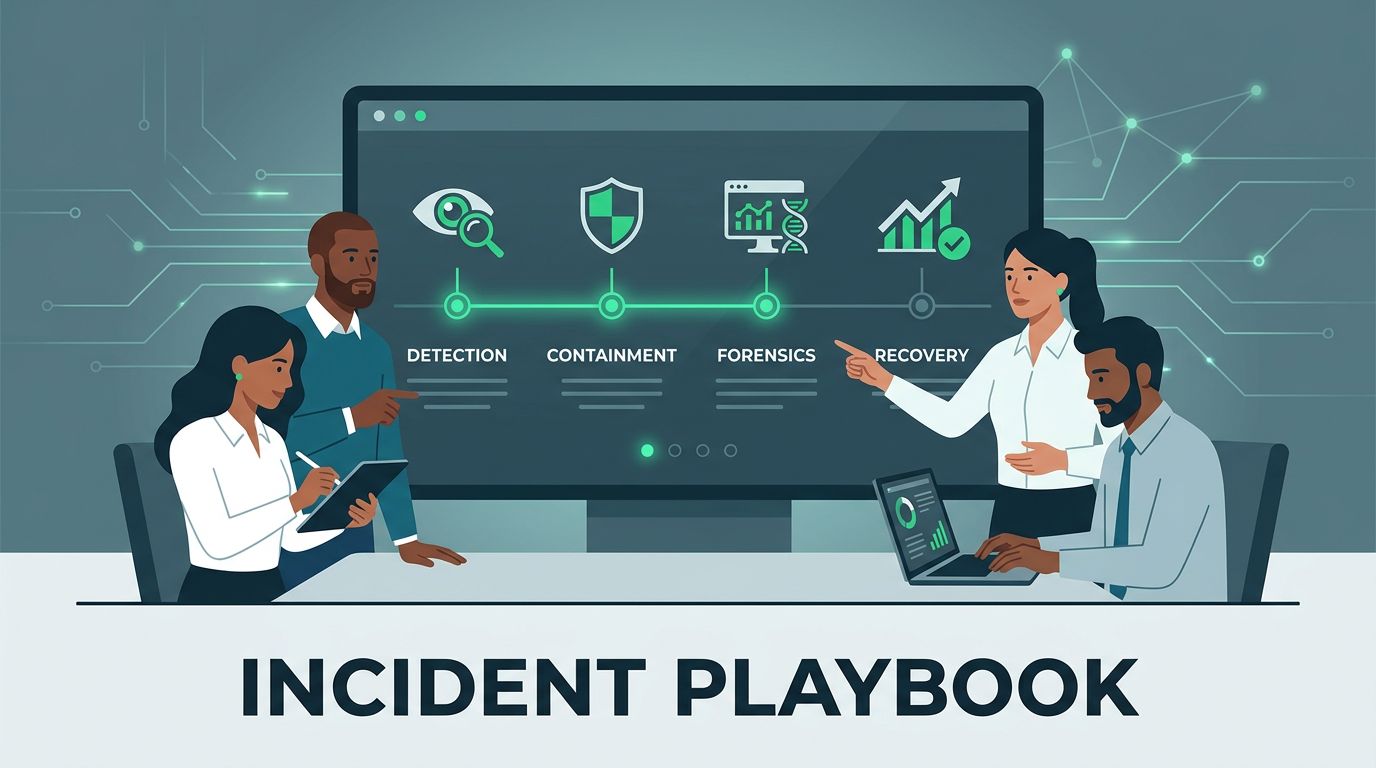
Base phases on NIST or SANS models. Adapt for 2026 realities like triple extortion.
First, preparation. Verify air-gapped backups. Enforce MFA everywhere. Segment networks to slow spread.
Next, identification. Spot odd logins or data exfil. Use EDR tools for alerts.
Containment follows. Isolate hit systems. Disable compromised accounts. Protect backups first.
Eradication removes threats. Scan for malware. Change all passwords.
Recovery restores from clean sources. Patch flaws like recent Oracle CVEs.
Lessons learned closes it. Run forensics. Update defenses.
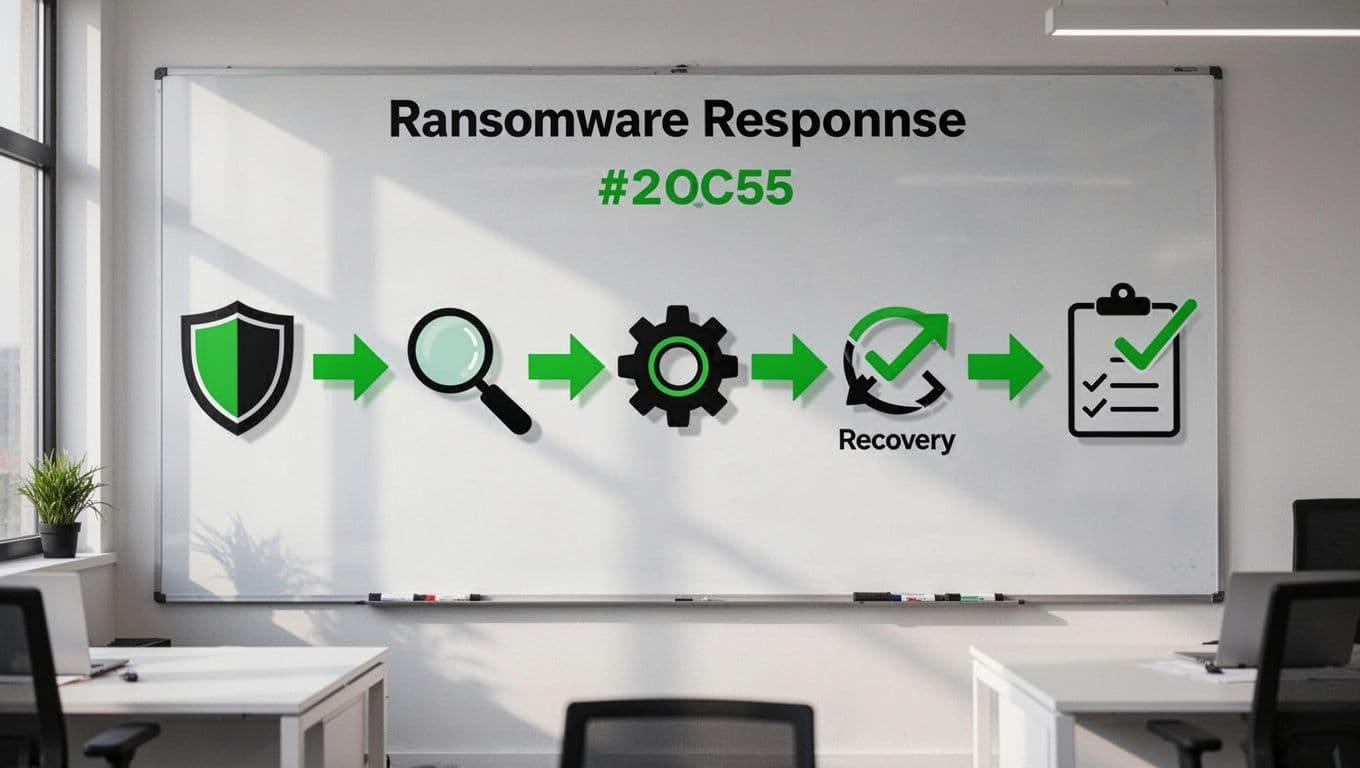
See Microsoft’s ransomware playbook for line-of-business app guidance.
Time each phase. Aim for containment in 60 minutes. That stops most damage.
Build Checklists for Key Actions
Checklists make playbooks usable. Assign tasks by role. Keep them short.
Here’s a containment checklist:
- Confirm ransomware via ransom note or EDR.
- Disconnect affected hosts from network. Unplug cables if needed.
- Take screenshots of screens and notes.
- Block C2 domains at firewalls.
- Notify team lead and leadership.
For eradication:
- Kill attacker processes.
- Wipe and reimage systems.
- Hunt for persistence like scheduled tasks.
- Reset credentials across the board.
Recovery needs:
- Validate backups offline.
- Restore in test environment first.
- Monitor for re-infection.
Use a shared doc or tool like Microsoft Teams. Log every step with timestamps.
This containment playbook offers subnet isolation tips.
Tailor to your stack. Linux servers? Add ESXi checks, as attacks target them more.
Coordinate with Stakeholders
Don’t go solo. Brief executives hourly at first. Use secure bridges.
Legal reviews extortion demands. They check payment laws. Insurance handles claims but needs full logs.
If data leaked, notify regulators fast. Partners might face harassment in multi-extortion.
Law enforcement tracks groups like LockBit cartels. Share indicators without paying ransom.
Prep templates: customer notices, board briefs. Practice them.
External help speeds things. Retain IR firms ahead.
Test Your Playbook Regularly
Run tabletop exercises every quarter. Simulate a phishing entry with data theft.
Pick a scenario: insider aid or DDoS add-on. Inject timed events.
Debrief gaps. Did backups restore clean? Who called insurance?
Measure against goals. Containment under four hours? Good.
Live tests on labs follow. Use purple team for realism.
Update yearly for trends like AI voice clones.

This 72-hour guide stresses pre-testing.
Conclusion
Strong ransomware incident response playbooks save time and money. They guide teams through credential thefts and extortions that define 2026 attacks.
Focus on clear phases, checklists, and tests. Coordinate legal, insurance, and execs from minute one.
Build yours now. Practice often. Your next alert depends on it.