table of contents
A data breach hits hard. You spot suspicious activity in your logs. Now you need answers fast, before attackers wipe traces or regulators call.
Rushing a hire risks weak evidence or botched reports. The right forensic analyst collects proof that holds up. This guide shows you how to find one quickly, even under pressure.
You start by matching skills to your breach.
Define Your Breach Investigation Needs
Every breach differs. Ransomware locks files. Insiders steal data. Cloud misconfigs expose buckets.
Ask what happened first. Check endpoint telemetry for malware drops. Review SaaS logs from tools like Office 365 or Salesforce. These hold clues on access patterns.
Pinpoint scope. Does it involve AWS S3? Multi-cloud setups? In 2026, 79% of teams prioritize security in SaaS for shared logs. Early isolation preserves evidence.
Talk to your counsel early. They guide legal holds. Coordinate with cyber insurance too. Insurers demand phased analysis and tool validation.
List must-haves. Need mobile forensics? IoT traces? This shapes your search.
Key Qualifications to Look For
Top analysts master tools like Volatility for memory dumps or Autopsy for disk images. They parse endpoint data from EDR like CrowdStrike.
Look for GIAC Certified Forensic Analyst (GCFA) status. It proves skills in timeline analysis and anti-forensics detection. GIAC’s GCFA page details advanced incident handling.
Experience counts most. Seek 5+ years on real breaches. Ransomware cases teach lateral movement hunts. Cloud forensics needs snapshot grabs before auto-delete.
Test expertise. Ask about 2026 trends. AI aids 68% of investigators for pattern spotting in big data. They handle phased hunts over full scans.
Check past work. Did they trace exfiltration via cloud logs?

Industry time separates pros from juniors. Boutique firms like Mandiant hire for major incidents. Corporate teams focus on compliance.
Vetting saves time later.
Follow These Steps to Hire Quickly
Speed matters post-breach. Act in days, not weeks.
Post a targeted job on USAJobs or cybersecurity boards. Or use recruiters who vet seniors.
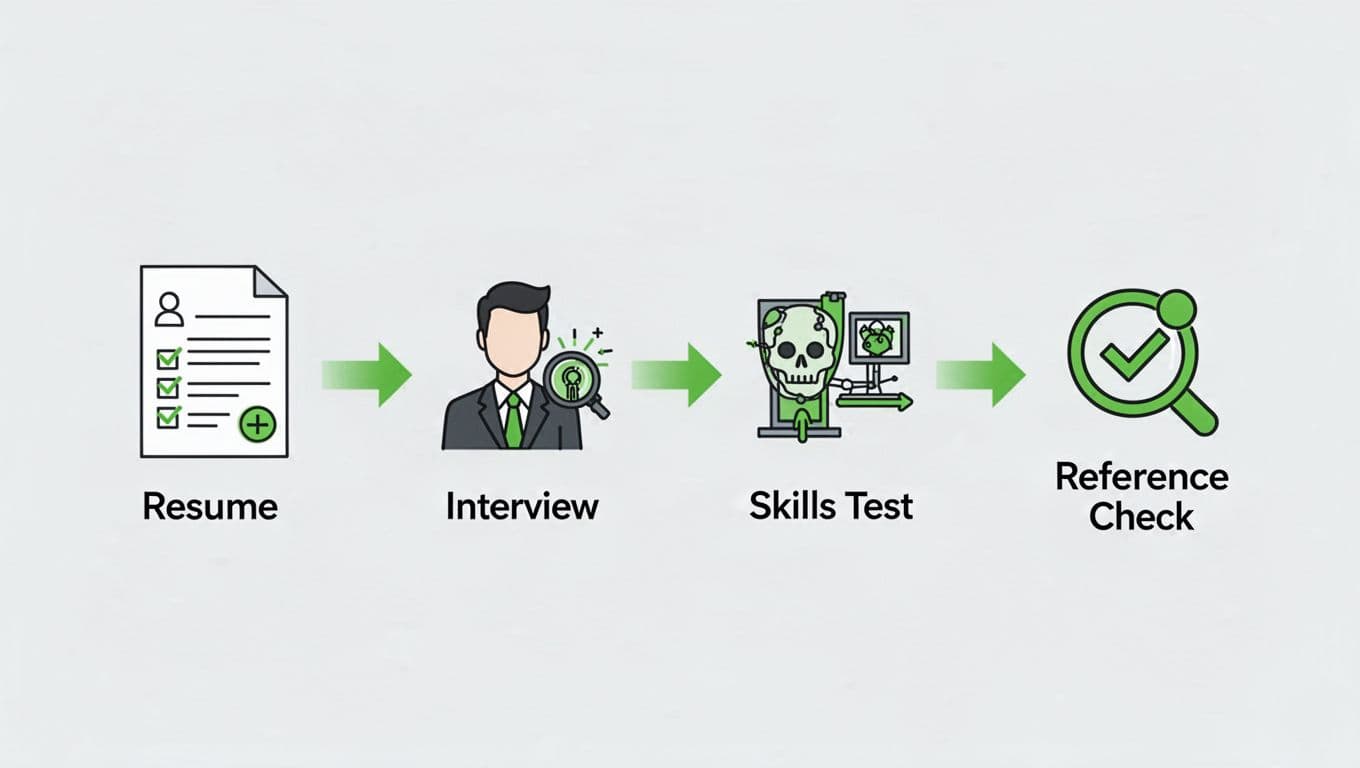
Step 1: Screen resumes. Filter for certs like CHFI from EC-Council. It covers cloud and malware forensics. Skip generalists.
Step 2: Phone interview. Probe a recent case. How did they chain custody?
Step 3: Technical test. Give mock SaaS logs. Time their artifact timeline.
Step 4: References and offer. Confirm court testimony.
Freelancers work for urgent needs. Sites like SoftAIMS offer vetted talent. For teams, check Iceberg on hiring leads.
Book a Discovery Call with Bud Consulting if you need vetted options fast.
This process fits tight timelines.
Assess Communication and Reporting Skills
Analysts don’t work alone. They brief CISOs and counsel.
Probe soft skills. Can they explain timelines without jargon? Test with a sample finding.
Reports must chain evidence clearly. Hashes prove no tampering. Visuals like graphs aid.
Court readiness seals it. Ask for testimony examples. They face cross-exam on methods.
In 2026, insurers check report integration. Teams use 7.1 tools per case. Clean narratives prevent claim denials.
Good communicators bridge tech and business.
Tackle 2026 Breach Challenges
Cloud shifts forensics. Grab GCP flow logs before expiry. Google Cloud forensics guide stresses snapshots.
Ransomware hides in endpoints. Patch SharePoint flaws fast. Analyze WinRM for movement.
SaaS logs demand quick pulls. 24% yearly growth in tools means more sources.
AI speeds triage but needs audit trails. Seek analysts comfy with it.
Regulators like SEC want 48-hour notices. Prep reports for that.
These skills future-proof your hire.
Prepare for Court and Regulators
Evidence must stand scrutiny. Analysts follow NIST chains.
Test defensible methods. Did they image volatiles first?

For ransomware, prove exfil via DLP. Ransomware Authority on investigations covers legal holds.
Insurance needs phased proof. Coordinate with lawyers always.
Strong prep turns investigations into wins.
Key Takeaways
Hire analysts with GCFA-level skills and breach experience. Follow a four-step process for speed.
Focus on cloud, SaaS, and ransomware know-how for 2026 threats. Test reports and testimony early.
The right pick preserves evidence and cuts risks. Your breach response strengthens from here.