table of contents
Vendor breaches hit headlines every month. One weak link in your supply chain can cost millions and damage trust. You manage dozens of vendors, but how do you spot the real threats fast?
A solid vendor risk scoring system changes that. It turns gut feelings into clear numbers so you prioritize high-stakes partners. This guide walks you through building one that fits your team.
Start with the basics of risk types. Then craft scores, govern the process, and keep it fresh.
Grasp Inherent Risk Versus Residual Risk
Inherent risk shows a vendor’s base threat level. Think of it as danger before you add any safeguards. A cloud provider handling customer data scores high here because breaches happen often in that space.
Residual risk is what stays after your controls kick in. You require multi-factor authentication or audits. That drops the score if the vendor complies well.
For example, a software firm might have high inherent risk from poor past security. But your contract forces encryption and quarterly scans. Residual risk falls to acceptable levels.

This split matters in 2026. Regulators like the SEC demand proof you track both. See ProcessUnity’s explanation of inherent versus residual risk for more details.
Assess inherent risk first. List factors like data sensitivity and vendor size. Then apply your mitigations to get residual. This gives a true picture of exposure.
Teams often mix them up. That leads to overkill on low risks or blind spots on big ones. Keep them separate for smart decisions.
Pick Your Core Risk Categories
Focus on what hits your business hardest. Common categories include cybersecurity, financial stability, compliance, operations, and reputation.
Cybersecurity tops the list now. AI tools in vendor stacks raise new flags, per 2026 surveys. Financial checks catch vendors near bankruptcy.
Weight them by impact. Data-heavy vendors get heavier cyber scores. Operations matter more for supply chain partners.
In 2026, third-party risk blends with enterprise risk. Boards push for ESG factors too. The 2026 KPMG TPRM survey shows cyber and compliance drive most strategies.
Tailor categories to your industry. Banks stress regulatory fit. Tech firms watch fourth-party risks, like a vendor’s subs.
Document choices clearly. Stakeholders need to see why cyber weighs 30% for you. This builds buy-in early.
Design a Simple Scoring Framework
Turn categories into numbers. Use a 1-5 scale: 1 means low risk, 5 means critical.
Assign weights that add to 100%. For instance:
| Category | Weight | Max Score |
|---|---|---|
| Cybersecurity | 30% | 5 |
| Financial | 20% | 5 |
| Compliance | 20% | 5 |
| Operations | 15% | 5 |
| Reputation | 15% | 5 |
Multiply subcategory scores by weight. Sum for total out of 100. Scores over 70 trigger deep dives.
This table adapts from real examples. Check CISOSHARE’s third-party risk scorecard for a formula with modifiers like contract strength.
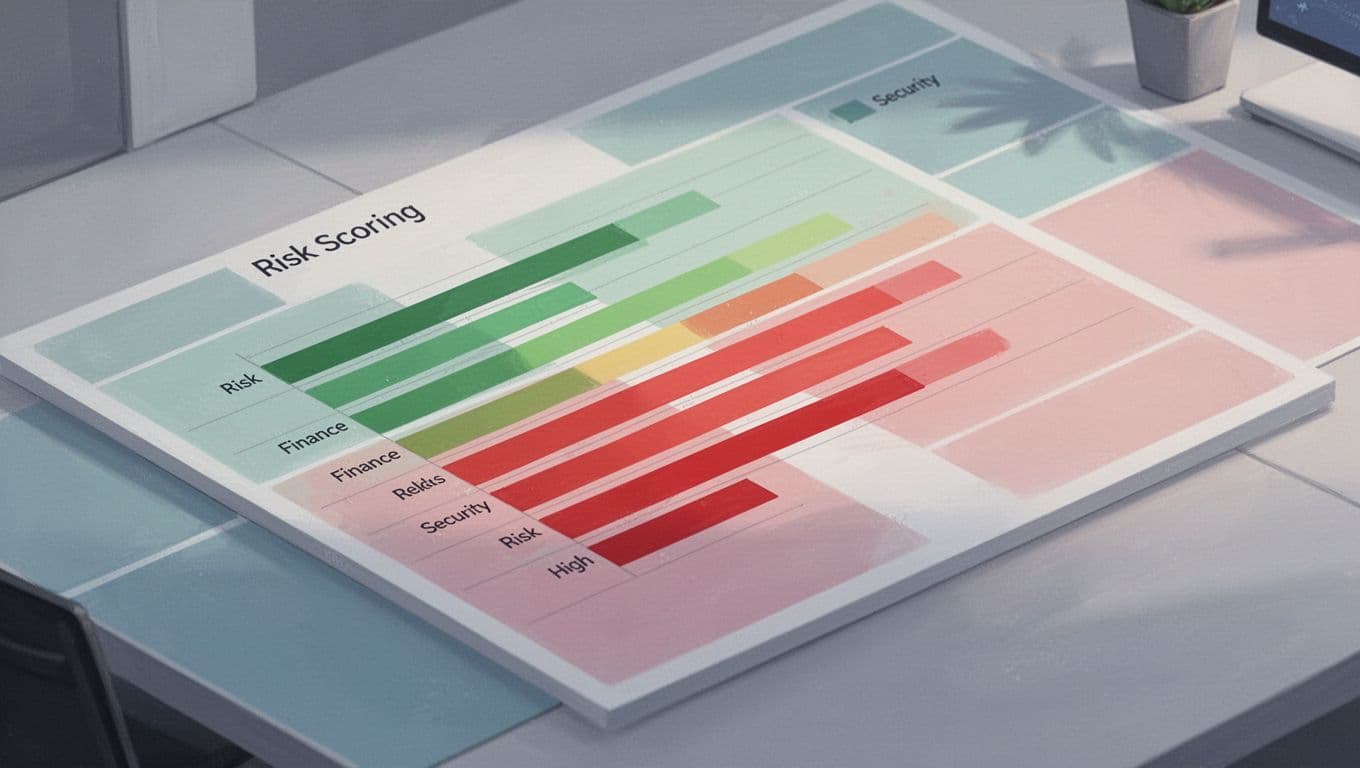
Add thresholds: Green under 30, yellow 30-70, red above 70. Color-code dashboards for quick scans.
Test on current vendors. Adjust weights if scores don’t match your instincts. Tools now use AI for this, speeding assessments by weeks.
Convert Qualitative Data to Numbers
Assessments start subjective. “Good security” needs a score.
Map phrases to values. “SOC 2 certified, no breaches” equals 1-2 in cyber. “Frequent vulnerabilities” hits 4-5.
Use evidence checklists. Ask for certs, scan results, financials. Rubrics make it repeatable.
For residual risk, subtract points for your controls. Strong contracts drop scores by 10-20%.
In 2026, continuous monitoring feeds this. AI scans news and scans for changes. Real-time data keeps scores current, cutting incidents.
Train your team on the rubric. Consistency avoids bias. Document every score with proof for audits.
Establish Governance and Periodic Reviews
Governance keeps the system alive. Assign owners: procurement leads intake, security scores cyber.
Align stakeholders quarterly. IT, compliance, ops review high scores together.
Set review cadences. Annual for low risk, quarterly for high. Triggers like mergers refresh scores fast.

Document everything. Policies spell out processes. This defends against regulators.
Bud Consulting helps teams build these. Book a Discovery Call with Bud Consulting to close skills gaps in TPRM.
Automation scales reviews in 2026. But human oversight catches nuances.
Conclusion
A vendor risk scoring system prioritizes threats and fits your risk appetite. Focus on inherent and residual splits, weighted categories, and governance for results.
You now have steps to build one. Test small, refine, and review often. Boards and regulators expect this maturity.
Strong scores mean fewer surprises. Your vendors stay secure, so does your business.