table of contents
Cyber attacks hit in minutes now. Attackers break out in under 30 on average. Your SOC can’t wait for alerts anymore.
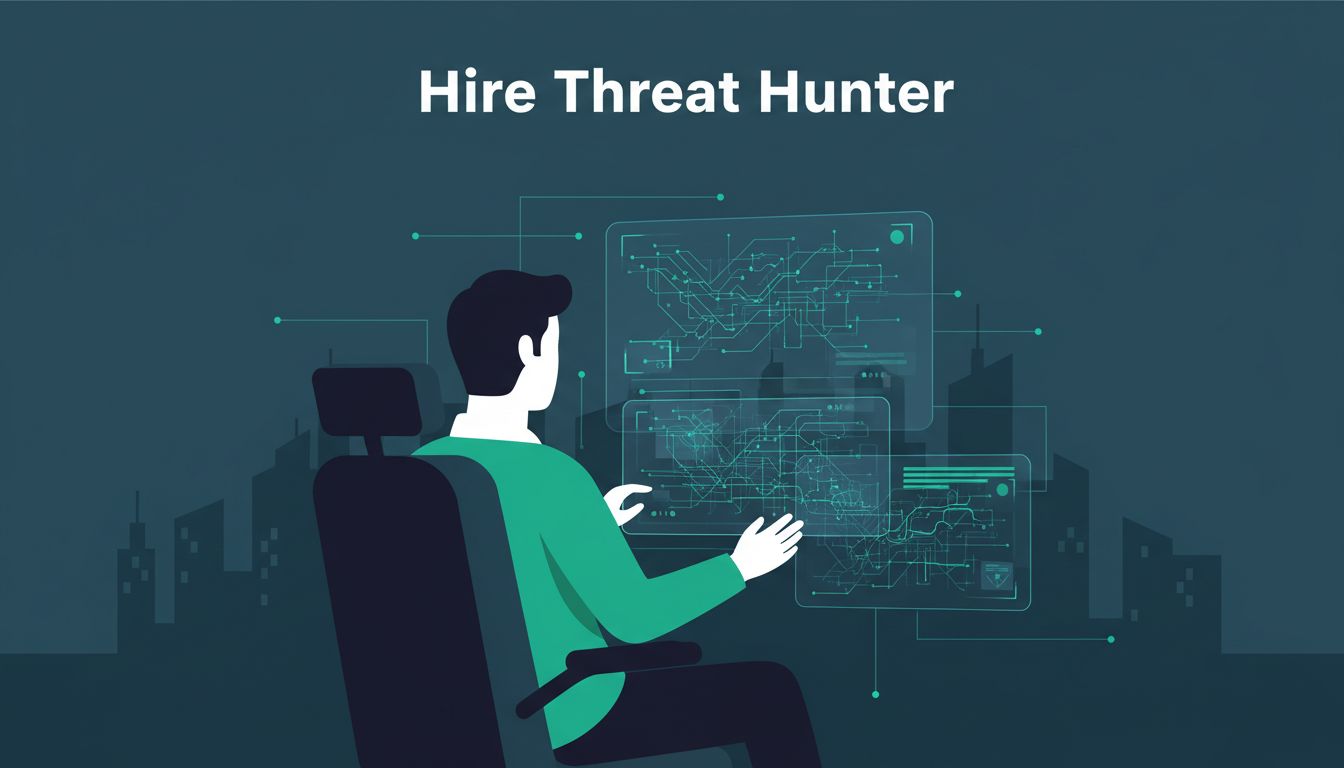
Threat hunters find hidden dangers before they strike. They search networks and endpoints for signs of trouble. As a CISO or SOC manager, you need one on your proactive defense team to stay ahead.
This guide walks you through hiring the right threat hunter. You’ll learn key skills, interview tips, and how to spot real talent.
Define What Threat Hunters Do
Threat hunters don’t react to alarms. They assume breaches already happened. Then they dig for proof.
Daily work starts with hypotheses. A hunter might ask, “Are attackers using PowerShell at odd hours?” They query logs in tools like SIEM or EDR. If data shows odd patterns, they pivot to endpoints or cloud logs.
Common workflows include structured hunts. Hunters map to MITRE ATT&CK tactics. They check for living-off-the-land techniques, where foes use your own tools against you.
In 2026, AI speeds this up. Tools predict threats from past attacks. Hunters validate with custom queries.

Expect hunters to document findings. They turn hunts into detections. This feeds detection engineering, where rules go into production.
Business outcomes matter. Good hunters cut dwell time. They spot zero-days early and block ransomware chains.
For details on daily tasks, check how to hire a threat hunting lead.
Spot Essential Skills Beyond Certifications
Certifications like GCIH help, but they don’t prove skills. Focus on hands-on ability. Look for those who built detections from hunts.
Core skills include query languages. KQL for Microsoft Sentinel, SPL for Splunk. They need SQL basics for osquery too.
AI literacy tops lists now. 41% of employers want it most. Hunters must know how foes use AI for phishing or scans. Defenders use it for anomaly detection.
Familiarity with frameworks counts. MITRE ATT&CK mapping turns raw data into stories.
- Hypothesis-driven thinking: Start with “what if” questions.
- Pivot skills: Follow leads across logs, endpoints, identity.
- Communication: Explain findings to non-tech leaders.
Test these in take-homes. Ask candidates to hunt a sample dataset. Real talent shines here.
Skip degree chasers. A self-taught sysadmin who hunts weekends beats a cert collector.
Check Familiarity with Key Tools and Platforms
Your stack dictates fit. Popular 2026 tools include CrowdStrike Falcon for XDR hunts. It offers AI like Charlotte AI for real-time graphs.
SentinelOne Purple excels in natural language queries. Microsoft Defender suits hybrid setups with behavioral hunts.
Open-source options build basics. Osquery queries endpoints like a database. TheHive aids team collaboration on incidents.
Here’s a quick comparison:
| Platform | Best For | Pricing Note |
|---|---|---|
| CrowdStrike Falcon | Managed hunts, AI speed | Per endpoint |
| Osquery | Free endpoint queries | Open-source |
| Microsoft Sentinel | Cloud-native KQL hunts | Usage-based |
Hunters should know at least two. They integrate intel from Flare or Anomali for dark web ties.
For top picks, see threat hunting tools reviewed.
Prioritize those who automate. SOAR playbooks enrich alerts fast.
Assess Team Fit for Proactive Teams
Hunters join SOCs or detection engineering groups. They need to collaborate, not lone wolf.
Look for SOC experience. They triage alerts and promote hunts to rules.
Culture match avoids burnout. Proactive teams hunt daily, so resilience counts.
Ask about past teams. Did they share playbooks? Train juniors?
Diversity helps. Varied views spot blind spots.

Business alignment seals it. Hunters tie hunts to risks like cloud breaches, up 266% lately.
Run Smart Interviews to Test Real Ability
Standard questions flop for hunters. Use scenarios instead.
Give a log snippet. Ask, “Hunt for lateral movement.” Watch pivots.
Behavioral probes work too. “Describe a hunt that found a zero-day.”
Pair with a whiteboard. Have them sketch a workflow: hypothesis, data sources, validation.

Involve your team. Let engineers grill on tools.
For scenario ideas, review cyber directors’ hiring playbook.
Reference check past bosses. Ask for hunt impact metrics.
Onboard for Quick Wins
New hires need data access day one. Set up EDR, SIEM logins.
Pair with a mentor. Shadow hunts first week.
Track metrics early. Hunts run, detections built, false positives tuned.
Invest in training. Conferences or platforms like TryHackMe keep skills sharp.
Key Takeaways for Hiring Success
Hiring a threat hunter boosts your defenses. Focus on skills, tools, and fit over paper creds. Use hunts in interviews to see true ability.
Teams with hunters predict attacks better. They close speed gaps against fast foes.
Ready to build your team? Book a Discovery Call with Bud Consulting for vetted talent matches.
(Word count: 982)