table of contents
Employees grab unapproved apps to speed up work. That’s shadow IT in action. But it leaves your organization exposed. Recent stats show 80% of workers use unsanctioned SaaS tools, and 50% of companies face breaches from them.
You can’t fix what you don’t see. A shadow IT audit uncovers these risks before they hit compliance checks or regulators. This process spots gaps in data handling and access controls. It also builds a path to safer tools.
Start by mapping your hidden tech stack. Then check key risks. Finally, act on the results.
Spot Hidden Shadow IT Tools
Your team might think they know all apps in use. They don’t. Big firms guess at 91 cloud services but run over 1,200. Only 8% see the full picture.
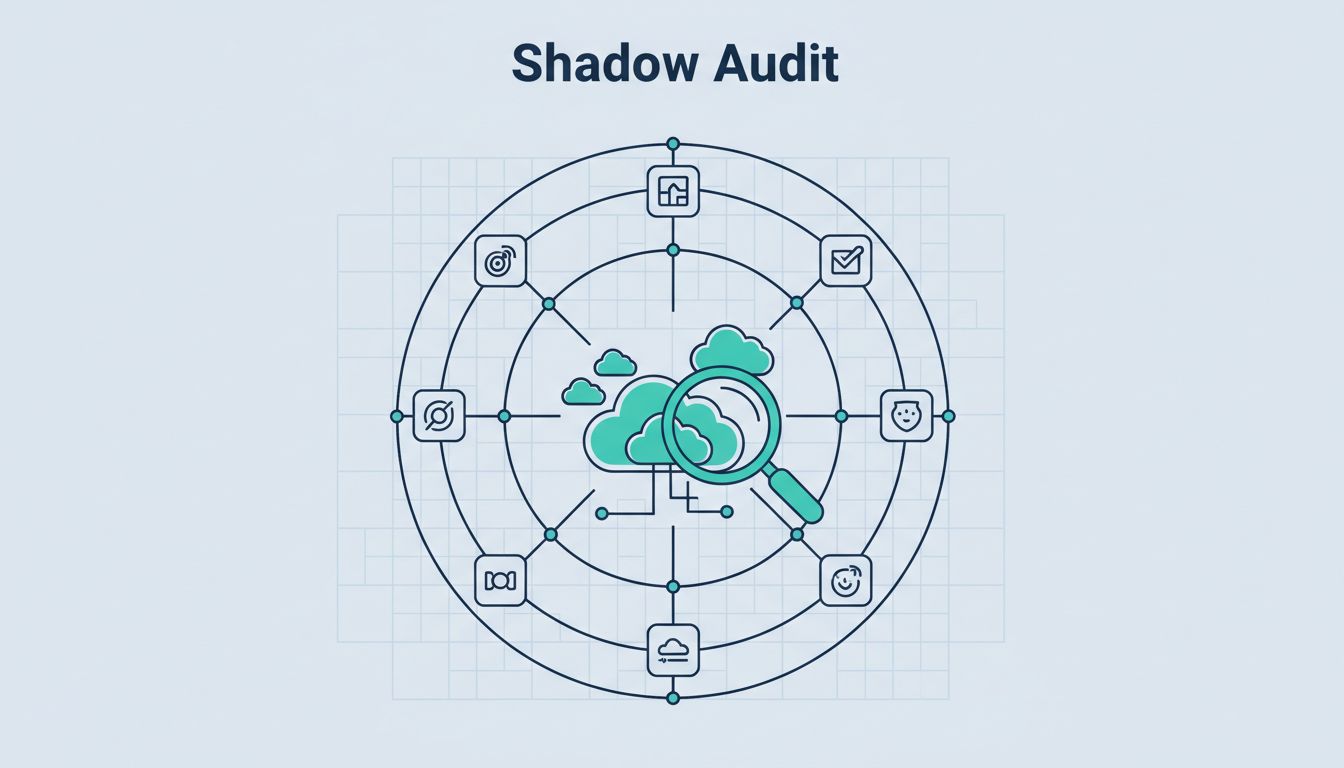
Begin with network scans. Tools pull DNS logs, proxy data, and browser history. They flag unknown domains tied to SaaS logins. CASB solutions monitor cloud traffic for patterns like file uploads to Dropbox alternatives.
Next, review endpoints. Endpoint detection catches installs of tools like unauthorized chat apps. Check browser extensions too. Many block corporate policies.
SSO logs reveal the truth. Employees log into apps outside your identity system. Cross-check invoices for subscriptions. Finance reports often hide recurring charges for tools like AI editors.
For 2026 realities, scan for shadow AI. Engineers use 79% unvetted models. Add filters for API calls to services like open AI endpoints.
Document each find. Note user, department, and traffic volume. This builds evidence fast.

Repeat quarterly. Automation keeps it fresh as new apps launch weekly.
Assess Compliance Gaps Step by Step
You found the tools. Now rate the dangers. Focus on data flows and controls.
First, map data handling. Does the app store sensitive info? Check for PII or customer records. 65% of AI incidents leak personal data. Pull usage logs to confirm.
Review access controls. Who logs in? Multi-factor? SSO integration? Weak auth opens doors. Test sharing features. Public links bypass your rules.
Encryption matters. Ask if data rests encrypted. Transit too. Vendor docs confirm this.
Retention policies clash often. Apps keep files forever. Your rules say delete after 90 days.
Third-party terms hide traps. Scan contracts for sub-processors. Data residency? EU rules demand local storage. Breach history flags repeat offenders.
Policy violations stand out. Does it log audits? Meet SOC 2? Use a simple scorecard.
| Risk Area | Sample Criteria | Red Flag Example |
|---|---|---|
| Data Handling | Encrypts at rest/transit? | No TLS for uploads |
| Access Controls | MFA required? SSO? | Password-only login |
| Retention | Auto-delete options? | Indefinite storage |
| Vendor Terms | SOC 2 report? Residency? | Offshore subs, no audit logs |
This table speeds reviews. Score 1-5 per row. Total over 15 means high risk.
For details on vendor checks, see Broadcom’s guide to monitoring shadow IT.
Train your team on this. It creates repeatable audits.
Document Evidence Without Overload
Proof drives action. Screenshots alone won’t cut it.
Build a central sheet. Columns for tool name, users, data type, risks, and evidence links. Attach logs or vendor pages.
Tag by impact. High if it handles regulated data. Medium for productivity apps. Low for internal notes.
Interview users. Why this tool? Pain points guide alternatives.
Share findings with stakeholders. Limit to executives and department heads. Use visuals like heat maps.
This step prevents disputes. Everyone sees the gaps.
Turn Findings into a Remediation Plan
Audits mean nothing without fixes. Prioritize by risk score.
For high risks, block access. Use firewalls or CASB. Migrate data first.
Medium ones get guardrails. Integrate SSO. Disable risky features.
Approve low risks with monitoring. Add to your catalog.
Offer alternatives. Your Slack beats rogue chats. Train on them.
Set timelines. Block high risks in 30 days. Review quarterly.
Track progress. Metrics show app count drop and risk reduction.

For a full process, check this shadow IT detection guide.
Build culture too. Reward policy followers.
Conclusion
A solid shadow IT audit cuts breaches and fines. You spot tools, check gaps, and fix them fast. That’s control.
Start small. Run one scan this month. Scale to routine.
Strong audits protect data and compliance. Your team stays ahead.
Book a Discovery Call with Bud Consulting to strengthen your security team.