table of contents
IoT devices now flood enterprise networks. Medical monitors, factory sensors, and building controllers connect everything. Yet, these assets create massive attack surfaces. In 2026, routers and switches average 32 vulnerabilities each, per recent Forescout data. Traditional scans miss most risks.
You face constant changes. Devices join and leave networks fast. Breaches cost $330K on average for IoT incidents. CTEM workflows fix this. They shift to ongoing validation of real threats. You focus on what attackers can exploit.
This guide shows you how. Start with mapping your surface, then build workflows that prioritize and remediate. Let’s get your team aligned.
Why CTEM Beats Traditional Vulnerability Management for IoT
Traditional vulnerability management runs scans on a schedule. It lists CVEs by CVSS scores. High scores get attention first. But IoT ignores those rules. Devices like unpatchable sensors stay vulnerable forever.
CTEM changes that. It runs continuously. Tools discover assets, check configurations, and test exploitability. For IoT, this matters because networks mix IT, OT, and edge gear. A factory robot might score critical, but isolation makes it low risk.
Take medical devices. CISA flagged Contec CMS8000 monitors for remote code execution via UDP. Traditional VM flags the CVE. CTEM validates if it’s reachable from the internet. No reachability? Drop priority.
CTEM also maps attack paths. Hackers chain flaws across devices. In smart buildings, a weak HVAC controller leads to core systems. Continuous monitoring spots these chains in real time.
You reduce noise. Teams fix 3x fewer issues but cut real risk. Gartner outlines the five stages of CTEM for this shift. IoT demands it now.
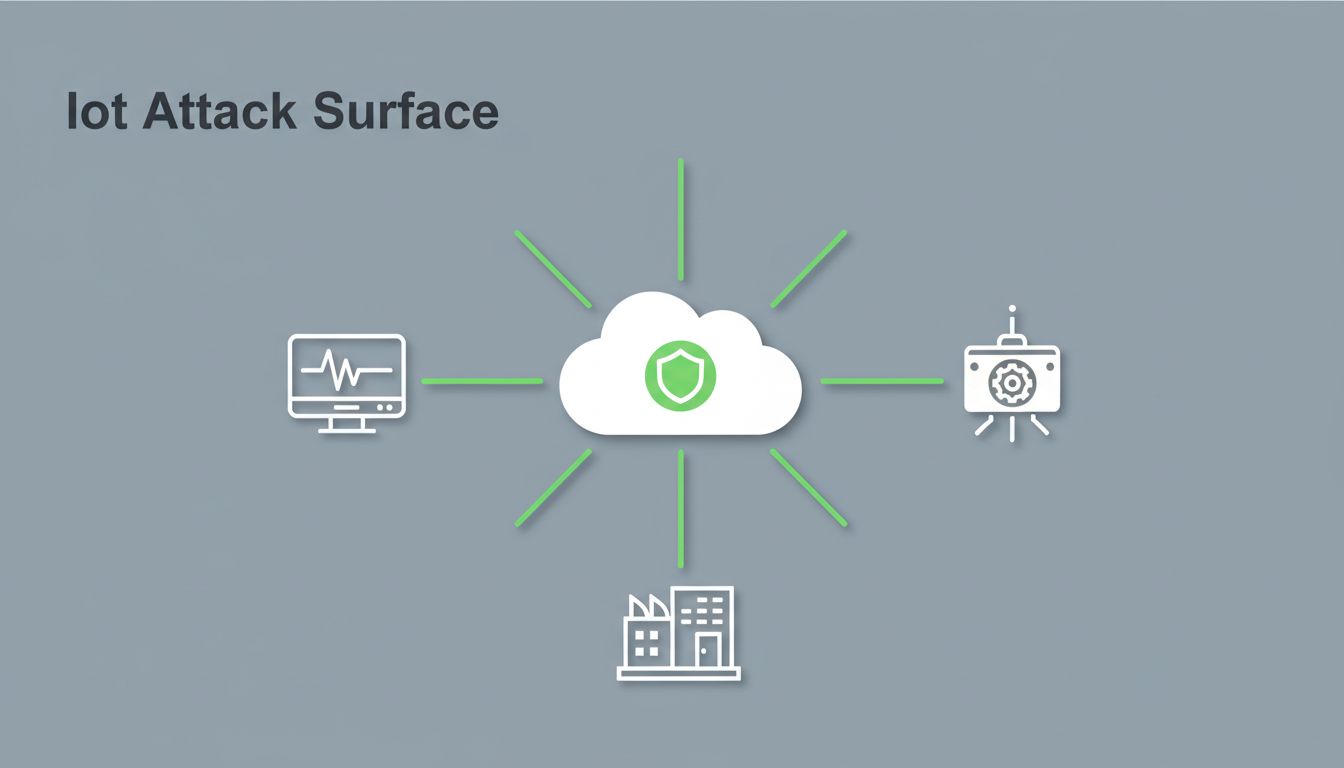
Map Your IoT Attack Surface
Start here. Know your assets before workflows matter. IoT hides in shadows. Serial-to-IP converters and BACnet routers pop up unannounced.
Use agentless discovery. Scan protocols like Modbus for industrial gear or HL7 for medical devices. Build a digital twin of your network. Forescout platforms excel here with persistent inventories for IoT and OT.
Define scopes by business units. For manufacturing, focus on production lines. Smart buildings? Target HVAC and access controls. Medical? Prioritize patient monitors.
In 2026, regulations like the EU Cyber Resilience Act force this. Map cloud ties too. Third-party integrations expose edges.

This view helps. One operator oversees medical monitors, sensors, and controllers. Glowing spots mark exposed risks. Feed data into your CTEM cycle.
Inventory changes weekly. Automate alerts for new devices. Assign initial tags by type and location.
Structure Your Core CTEM Workflows
Build workflows around five stages: scope, discover, prioritize, validate, mobilize. Make them repeatable.
First, scope ties to business risks. Pick crown jewels like insulin pumps in hospitals. Map dependencies.
Discovery follows. Pull from EASM for internet-facing assets. Correlate with internal scans. Include misconfigs and weak creds.
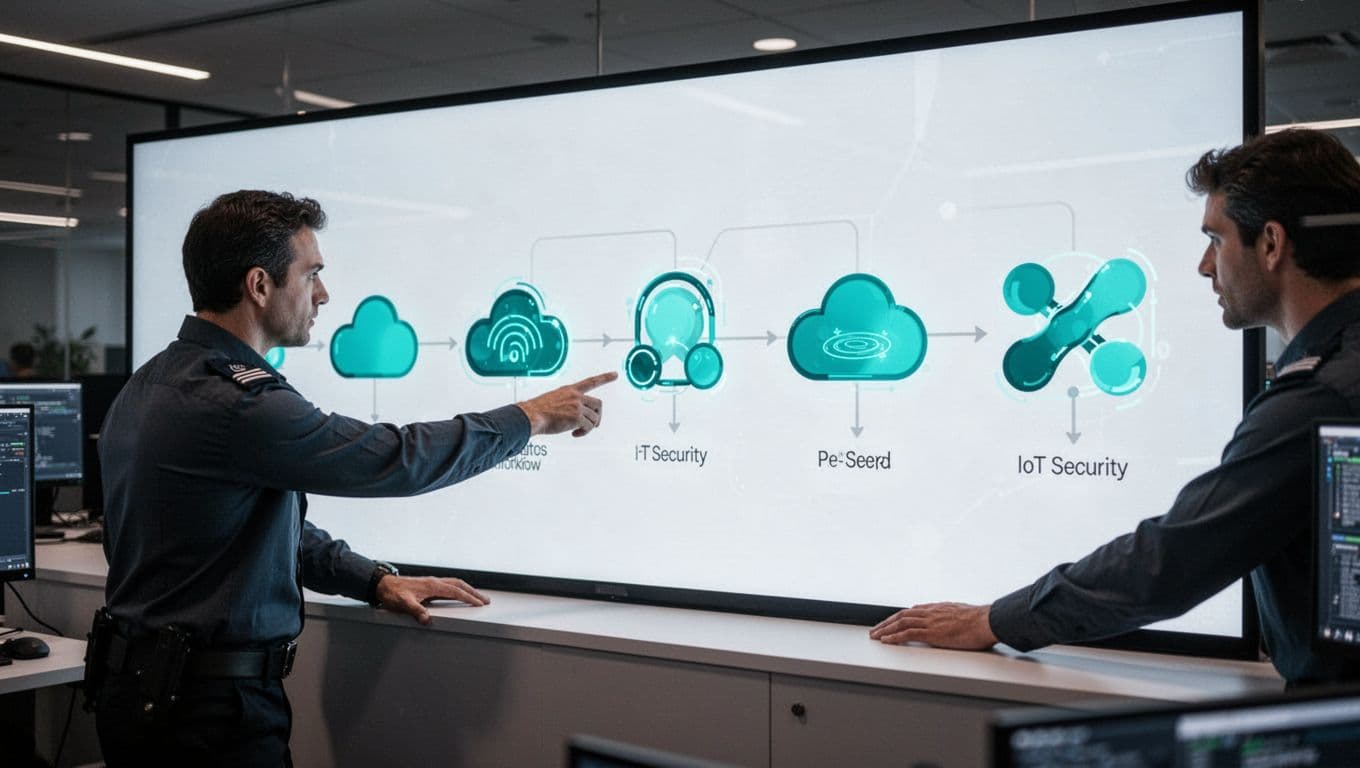
See the flow. An analyst reviews nodes from discovery to monitoring. Each connects in your ops room.
Validation tests exploits safely. Use EPSS scores and KEV lists. For industrial IoT, simulate without disrupting lines.
Mobilize assigns tickets. Integrate with ITSM tools. Set SLAs by risk.
Run cycles quarterly at first. Automate daily for high-value scopes. Track metrics like mean time to validate.
Prioritize Exposures by Business and Safety Impact
CVSS lies for IoT. A factory flaw might crash a robot, halting production. Patient data leak? Fines and lawsuits.
Build a matrix. Axes: exploitability and impact. Exploitability factors reachability, prerequisites, controls. Impact weighs safety, revenue, ops.
Medical example: High exploitability UDP flaw in monitors hits top quadrant. Factory sensor with air gap? Bottom.
Smart buildings face web-exposed interfaces. 29% attacks start there. Default creds amplify risks.
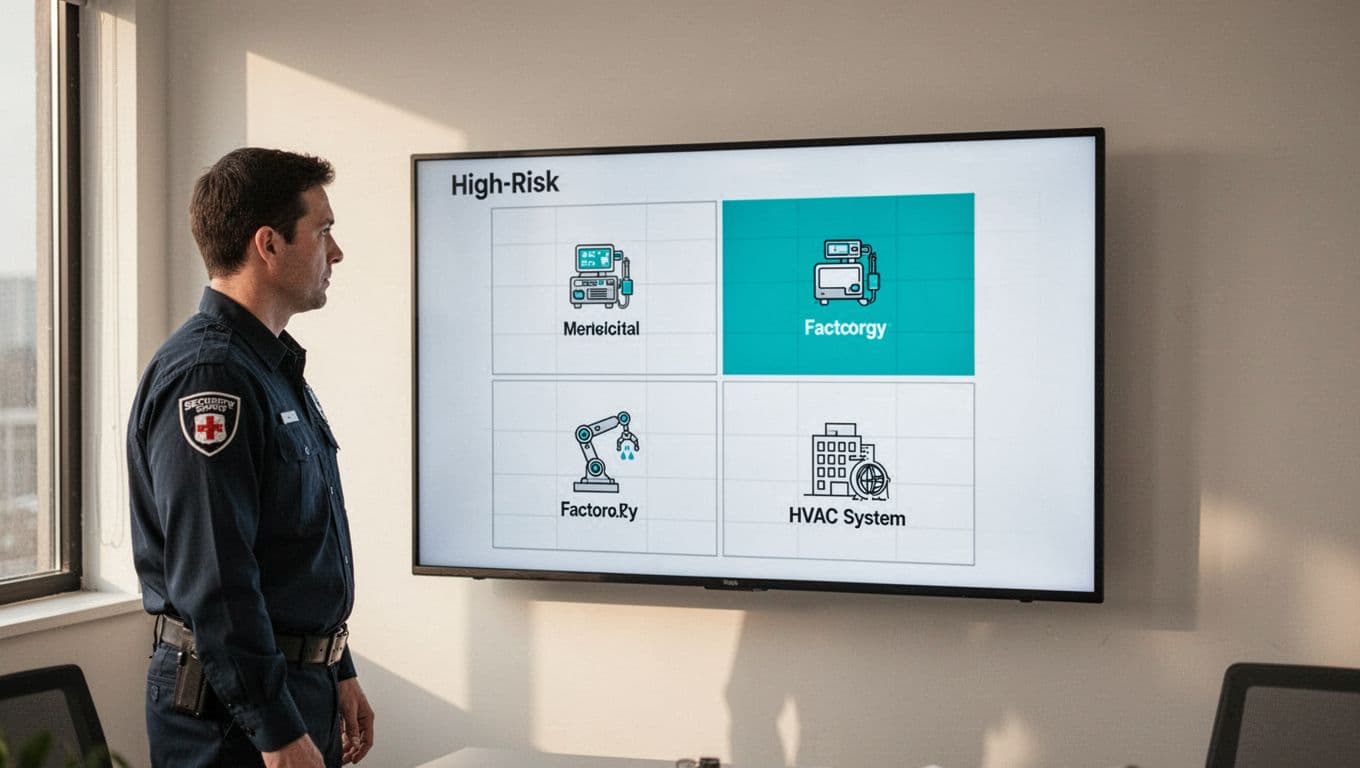
This matrix guides you. Engineer spots medical device and robot in high-risk green. HVAC sits lower.
Score with threat intel. Weight safety highest for OT. Output ranks with SLAs: 7 days for critical.
Review monthly. Adjust for new intel like Mirai variants.
| Factor | Weight for IoT | Example |
|---|---|---|
| Exploitability | 40% | EPSS >0.5, internet-facing |
| Business Impact | 30% | Revenue loss >$1M |
| Safety Impact | 30% | Patient harm, production halt |
Use this table. It sets context. High scores demand action first.
Assign Ownership and Drive Remediation
Ownership sticks workflows together. Don’t dump on SecOps alone.
Tag assets by owner: OT for industrial, facilities for buildings, clinical IT for devices. Weekly huddles assign tasks.
Remediate smart. Patch where possible. Segment unpatchables. For medical gear, deploy virtual patching via IPS.
Integrate monitoring. Post-fix, revalidate. Tools like Tenable cover IT/OT/IoT for this.
Track progress. Dashboards show SLA compliance. Low? Escalate to execs.
If gaps persist, book a discovery call with Bud Consulting. They help build teams for CTEM execution.
Conclusion
CTEM workflows transform IoT security. You map surfaces, prioritize real risks, and close loops fast. Medical breaches drop. Factories run safe.
Focus on impact over noise. Your attack surface shrinks. Teams act with confidence.
Start small. Scope one unit today. Measure risk reduction quarterly. You’ve got this.