table of contents
AI procurement security requirements protect your organization when you buy AI tools. They set clear standards for vendors on data handling, model safety, and compliance. Without them, you risk breaches, biased decisions, or regulatory fines.
Enterprise buyers face growing pressure. AI systems process sensitive data, yet many vendors lag in security. Recent rules like the GSA’s draft clause from March 2026 demand U.S.-made AI and quick breach reports. You need requirements that match your risks and keep deals moving.
This guide walks you through building them. Start with risk assessment, then craft demands vendors can meet.
Table of Contents
- Why Security Requirements Matter in AI Purchases
- Assess Risks Specific to Your AI Use Case
- Step-by-Step Guide to Building Your Requirements
- Your AI Procurement Security Checklist
- Practical Examples of Requirements to Demand from Vendors
- Align with Latest Regulations and Frameworks
- Conclusion
- FAQ
Why Security Requirements Matter in AI Purchases
You buy AI to boost efficiency. But poor security turns gains into losses. A single weak vendor exposes customer data or poisons models with bad inputs.
Consider supply chain attacks. Hackers target AI APIs because they scale fast. In 2026, cyber insurance often requires AI-specific proofs like red-teaming. Skip strong requirements, and premiums rise or coverage drops.
Requirements also build trust. They force vendors to prove controls upfront. This cuts negotiation time later. Procurement teams save weeks by baking security into RFPs.
Regulators agree. California’s March 2026 executive order sets trust standards for state vendors. Federal rules push similar bars. Your requirements prepare you for audits.
Start simple. Map your AI use to risks. Then define non-negotiables. This approach works for any enterprise size.
Assess Risks Specific to Your AI Use Case
Every AI project carries unique threats. Procurement leaders must pinpoint them first. Ask: What data feeds the model? Who accesses outputs?
Data privacy tops the list. AI trains on employee records or customer info. A breach here violates GDPR or CCPA. Measure likelihood by vendor data flows.
Model bias follows close. Unchecked algorithms discriminate in hiring tools. Impact hits reputation and lawsuits. Rate it high if decisions affect people.
Supply chain issues lurk too. Vendors use subprocessors. One weak link lets attackers inject malware. Adversarial attacks fool models with crafted inputs.
Use a matrix to score them. Plot likelihood against impact. High-high quadrants demand strict controls.
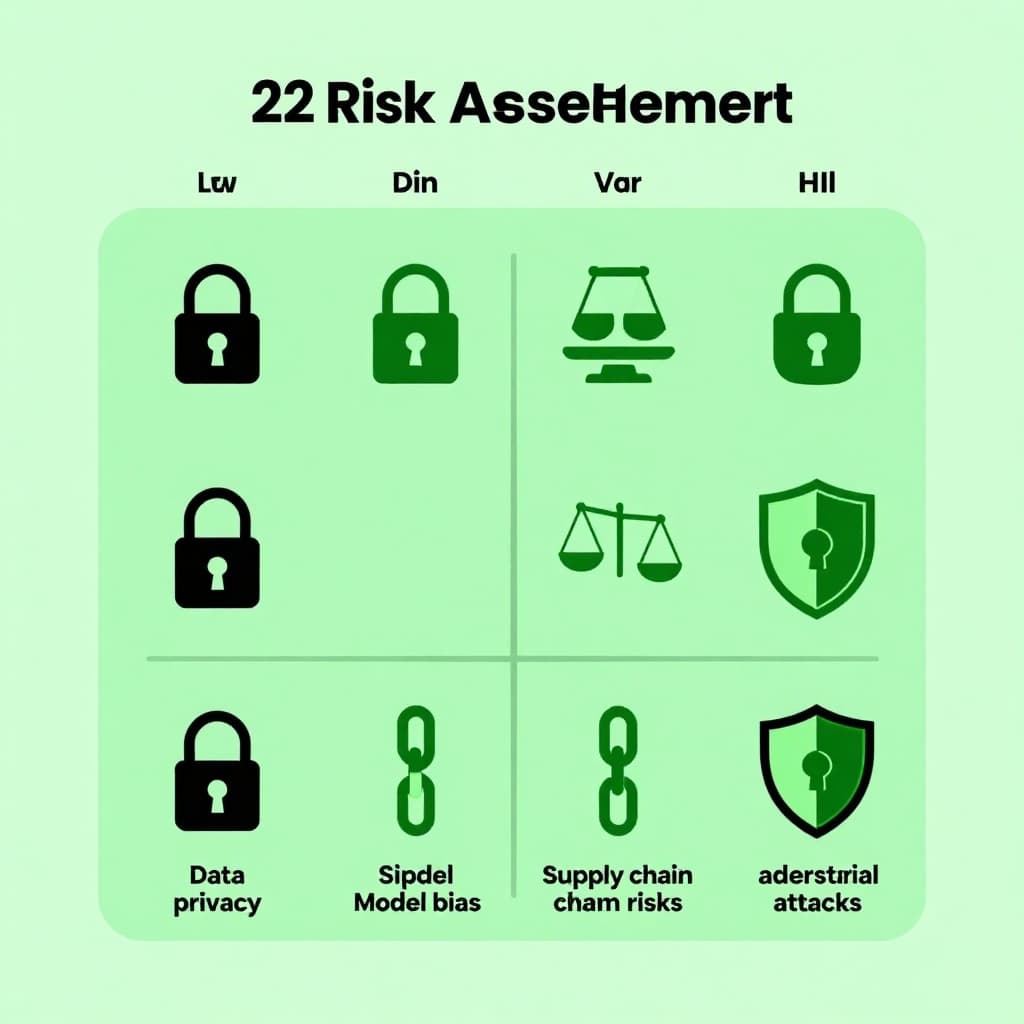
This visual helps teams prioritize. For a fraud detection AI, focus on adversarial robustness. In HR tools, stress bias testing.
Document scores in a shared sheet. Involve security and legal early. Their input refines your list. Result: Tailored requirements that vendors respect.
Tailor further by sector. Finance needs encryption proofs. Healthcare demands HIPAA mappings. Always tie risks to business outcomes.
Step-by-Step Guide to Building Your Requirements
Build requirements methodically. Rush it, and gaps appear in contracts. Follow these steps for solid coverage.
First, gather stakeholders. Include procurement, security, IT, and legal. They spot blind spots. Hold a one-hour kickoff to align on goals.
Next, inventory your AI needs. List use cases like chatbots or analytics. Note data types and volumes. This shapes security asks.
Then, benchmark against standards. Pull from NIST AI Risk Management Framework. It covers trustworthiness from design to deployment.
Review recent rules too. GSA’s 2026 draft requires AI disclosure within 30 days. California’s order adds bias certifications.
Draft categories now. Cover data protection, model security, access controls, and audits. Make them measurable, like “SOC 2 Type II report due in 10 days.”
Score vendor responses. Use pass-fail criteria. Red flags include no subprocessors list or Type I reports only.
Finalize with contracts. Embed requirements in RFPs. Add SLAs for breaches, like 72-hour notice.
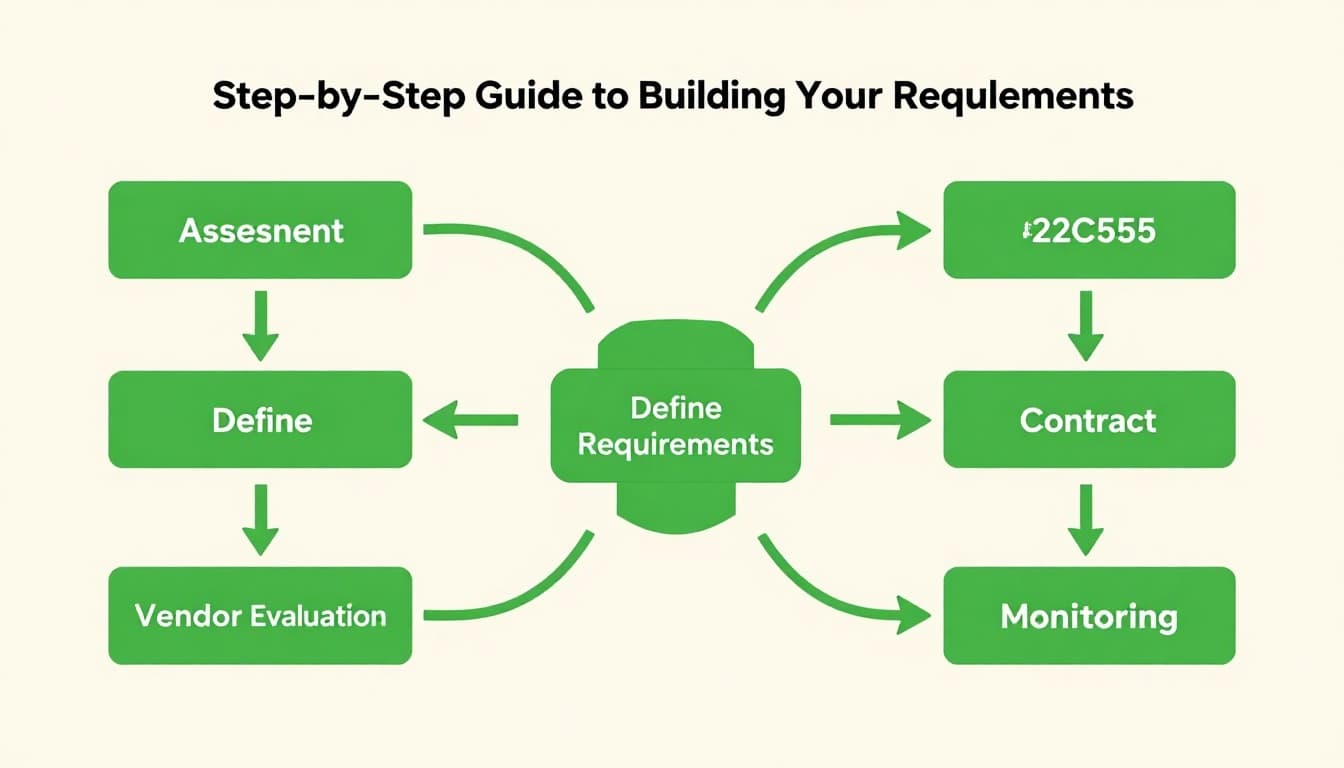
This workflow keeps processes tight. Repeat annually for renewals. Adjust as threats evolve.
Test in pilots. Run small deployments. Check if requirements hold under load.
Your AI Procurement Security Checklist
Checklists speed reviews. They turn vague worries into yes-no questions. Use this one for every RFP.
Focus on core areas. Data handling first: Does the vendor encrypt at rest and in transit? Demand AES-256 minimum.
Access controls next. Require role-based access and MFA. No shared credentials allowed.
Audits matter. Ask for recent pen tests targeting AI, like prompt injection checks. Need executive summaries.
Compliance proofs: SOC 2 Type II, ISO 27001. Map to NIST 800-53 for gaps.
Incident response: 24-hour breach notice. Include root cause analysis.
Model specifics: No training on your data without opt-in. Provide bias test results.
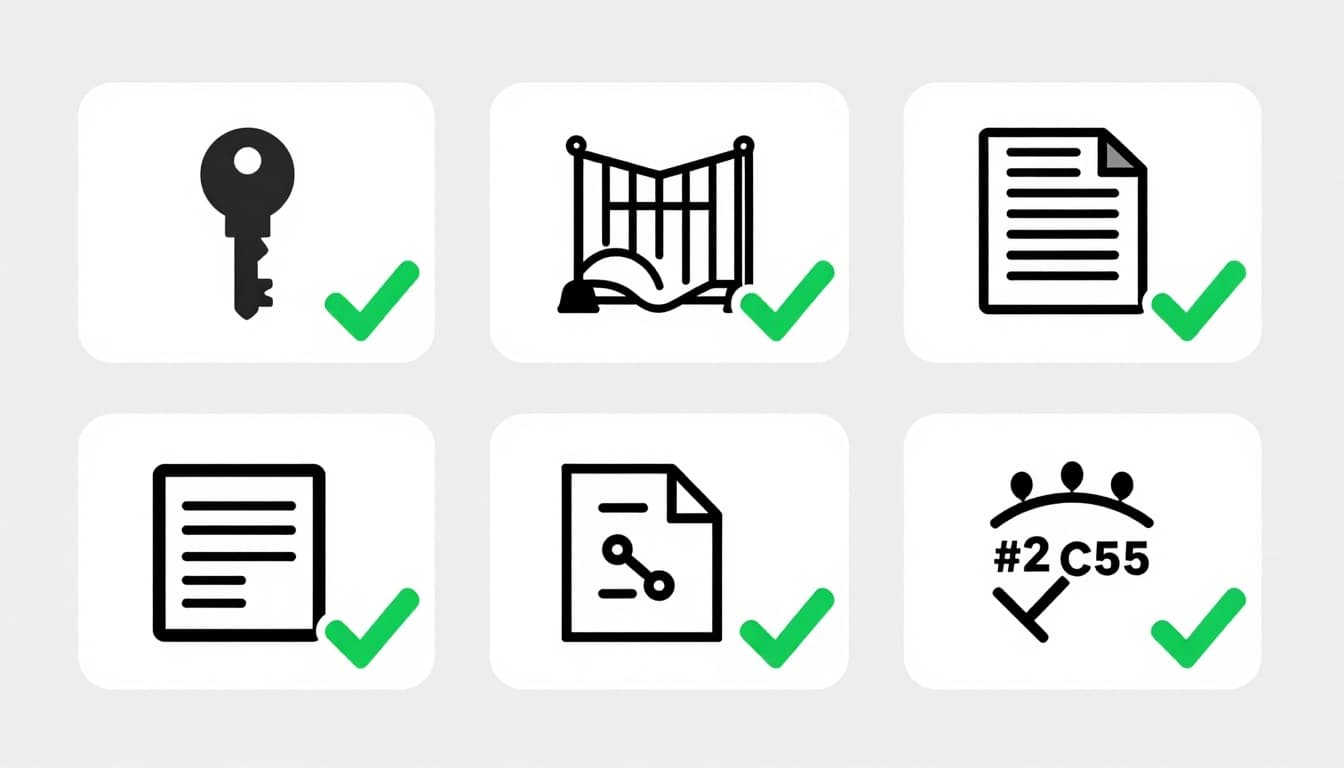
These icons remind teams of essentials. Print it for meetings.
| Category | Key Checks | Evidence Needed |
|---|---|---|
| Data Protection | Encryption, segregation | AES-256 cert, data flow diagram |
| Access Management | RBAC, MFA | Policy doc, audit logs sample |
| Security Testing | Pen tests, vuln scans | Reports from last 12 months |
| Compliance | SOC 2, ISO | Type II report, mappings |
| Incident Handling | Notification timelines | Response plan, past incidents |
| AI-Specific | Bias tests, no-training clause | Test results, contract language |
This table fits quick scans. After reviews, note gaps. Follow up before signing.
Customize per risk. High-risk AI gets quarterly reassessments.
Practical Examples of Requirements to Demand from Vendors
Vague asks fail. Use precise language vendors understand. Here are real-world examples.
For data security: “Provide a data processing addendum compliant with your DPA template. Include no-training-on-customer-data clause and subprocessors list with security ratings.”
On testing: “Submit annual third-party pen test results focused on AI endpoints. Cover prompt injection, model inversion, and adversarial examples. Share executive summary within 5 days of request.”
Compliance: “Map controls to NIST AI RMF 1.0. Furnish SOC 2 Type II report covering AI operations. Disclose any open POA&Ms.”
From GLACIS AI Vendor Due Diligence Checklist, add model transparency: “Describe training data sources, debiasing methods, and reproducibility steps.”
GSA-inspired: “Confirm all AI components are U.S.-personnel developed. Notify of changes within 30 days.”
California flavor: “Certify no civil rights harms from bias. Provide watermarking for generated content.”
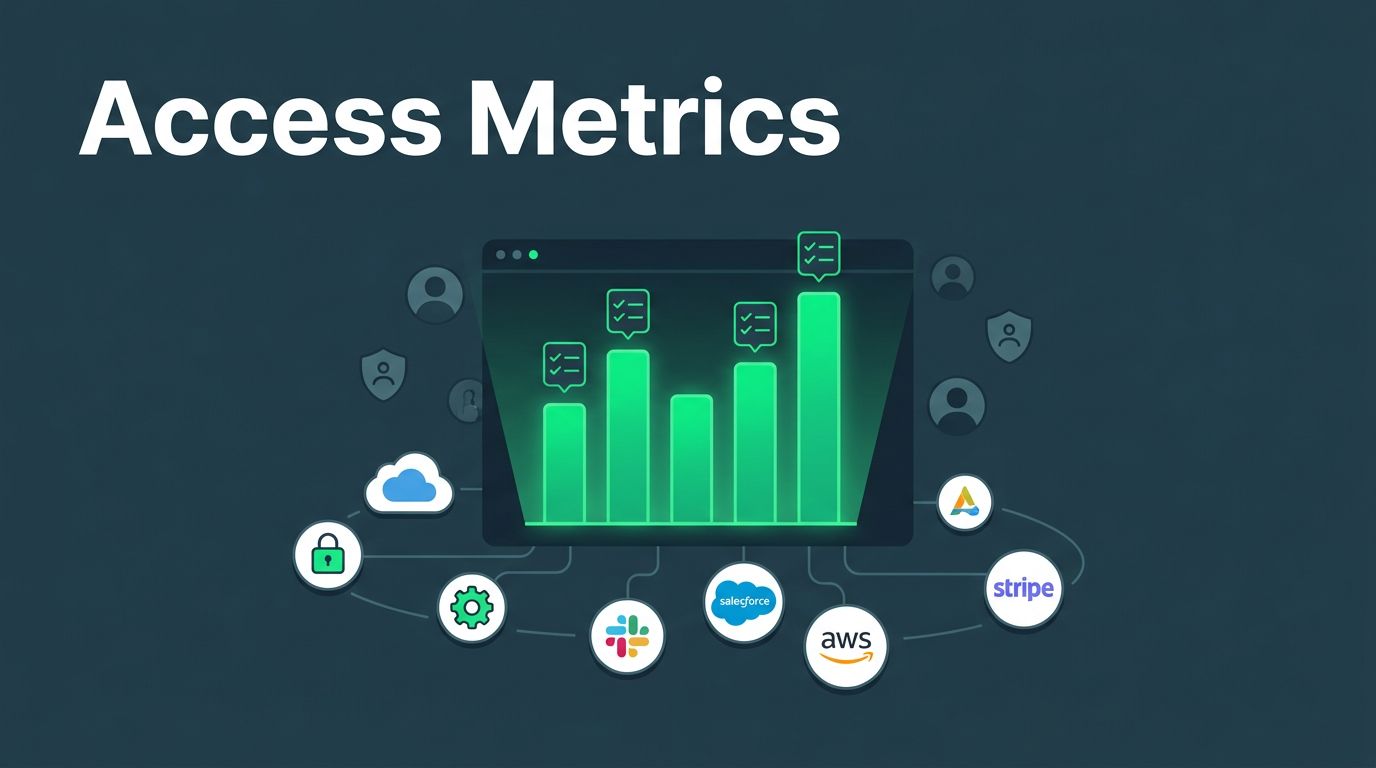
Dashboards like this track scores. Green means go; red flags pauses.
Push for audits: “Allow annual access to logs for your data. No extra fees.”
These examples close deals faster. Vendors with proofs win. Others drop out early.
Tailor to pilots. Test requirements in sandboxes first.
Align with Latest Regulations and Frameworks
Regulations shift fast. In May 2026, stay ahead with proven frameworks.
NIST AI RMF guides risk management. It stresses governance and measurement. Use its playbooks for procurement.
UK’s Guidelines for AI Procurement covers fairness and transparency. Adapt for enterprise RFPs.
OECD’s AI-RFX Framework offers templates. It evaluates beyond algorithms to infrastructure.
GSA’s March 2026 draft clause bans foreign AI. It mandates human oversight docs. Comments closed; watch for finals.
California’s EO N-5-26 requires certifications against bias harms. State CISO reviews supply chains.
SEC exams now probe AI data risks. Insurance ties coverage to NIST proofs.
Map your checklist to these. For example, add “eyes-off” data handling from GSA.
Book a Discovery Call with Bud Consulting to benchmark your process. Experts help align with trends.
Revisit quarterly. Threats don’t pause.
Conclusion
Strong AI procurement security requirements shield your enterprise. They start with risk assessment and end with enforceable contracts. Use the checklist and examples to act now.
You gain control over vendors and compliance. Breaches drop; innovation rises.
Build yours today. Your stakeholders will thank you.
FAQ
What are the top security risks in AI procurement?
Data leaks, model poisoning, and bias top the list. Assess likelihood and impact first. Use matrices for clarity.
How often should you review vendor security?
Annually for low-risk; quarterly for high-risk AI. Tie to contract renewals.
Can small teams handle AI security requirements?
Yes. Start with checklists and NIST templates. Outsource audits if needed.
What if a vendor lacks SOC 2 Type II?
Red flag. Demand it or walk. Type I shows designs only, not operations.
How do recent U.S. rules affect procurement?
GSA requires U.S. AI and breach reports. California adds bias certs. Embed in RFPs now.
(Word count: 2487)