table of contents
Hiring for hybrid identity is hard because the wrong person can make a complex environment feel simple, right up until it breaks. A strong IAM architect has to connect Active Directory, Entra ID, Okta, Ping Identity, SSO, MFA, federation, IGA, and PAM without creating fragile workarounds.
If your identity program spans on-premises and cloud systems, you need more than a good administrator. You need someone who can design the target state, reduce risk, and keep access usable for real people.
This guide shows what to look for, what to ask, and where hiring teams often miss the mark.
Table of contents
- What an IAM architect does in hybrid identity environments
- Hiring criteria that separate strategists from admins
- Technical skills to check before you make an offer
- Interview questions that expose real hybrid identity experience
- Mistakes that slow IAM architect hiring
- Conclusion
- FAQ
What an IAM architect does in hybrid identity environments
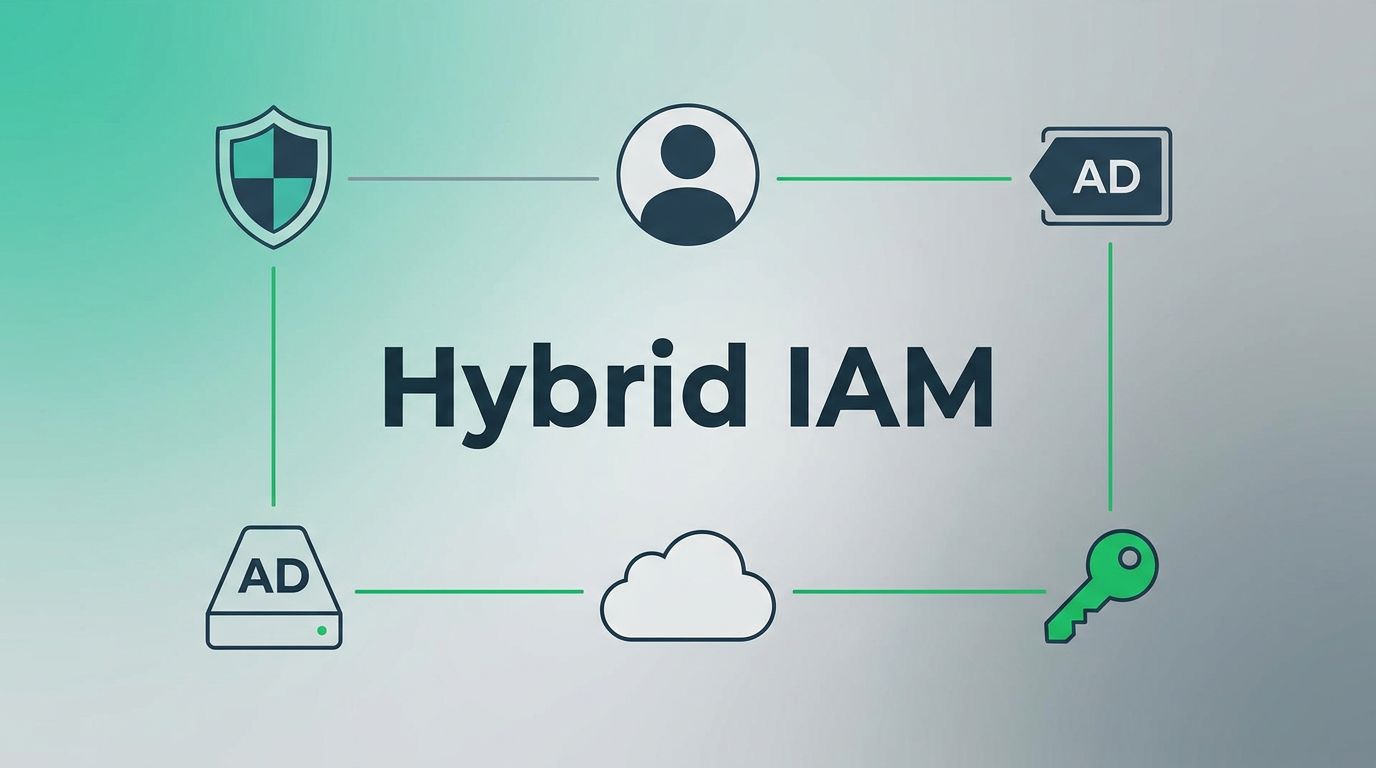
An IAM architect designs how identities are created, authenticated, governed, and removed across multiple systems. In a hybrid setup, that usually means Active Directory still matters, while Entra ID, Okta, or Ping Identity handle cloud access, federation, and policy decisions.

They decide where the source of truth lives, how accounts sync, and how apps trust the identity provider. They also shape SSO, MFA, conditional access, access reviews, and privileged access patterns so the program works as a system, not as a pile of tools.
A practical IAM architect job description gives a useful baseline, but hybrid identity demands more than a single-platform view. The best architects can explain why a choice helps security, operations, and user experience at the same time.
They also keep the program honest. If a policy looks good on paper but breaks a critical app, they catch it early. If a cloud rollout creates duplicate accounts or weak federation rules, they push back before the damage spreads.
Hiring criteria that separate strategists from admins
Good IAM architect hiring starts with role clarity. The person you want should own architecture decisions, not day-to-day ticket work.
A useful IAM architect role blueprint can help you compare candidates against real responsibilities. It also reminds hiring teams that the job is part security, part integration, and part program design.
Look for these signals in every candidate:
- They can explain a target-state model in plain language.
- They have led at least one hybrid integration across Active Directory and a cloud identity platform.
- They understand governance, not only authentication.
- They work well with app owners, infrastructure teams, and security leaders.
- They write decisions down and follow change control.
If a candidate talks only about tools and skips policy, governance, and app owners, the hire will likely become a senior admin, not an architect.
The best interviews also test judgment. For example, ask how they would balance fast SSO rollout with tighter MFA rules. A strong answer will show tradeoffs, not slogans.
If the role needs to cover architecture, governance, and vendor coordination, Book a Discovery Call with Bud Consulting before the search drifts into a generic identity admin hire.
Technical skills to check before you make an offer
Skills matter, but only the right ones. A candidate can know Entra ID and still miss the bigger hybrid picture.
A live identity and access management architect role is a good reminder of how often employers ask for hybrid integration, cloud identity, and governance in the same job.
Use this matrix to judge depth.
| Competency | What strong looks like | Warning sign |
|---|---|---|
| Directory and sync design | Knows how Active Directory, Entra ID, and sync tools fit together, with clear source-of-truth rules | Talks about syncing everything without naming ownership or conflict handling |
| SSO and federation | Understands SAML, OIDC, and federation choices for SaaS and partner apps | Treats every application as if it uses the same login pattern |
| MFA and conditional access | Can design step-up auth, device checks, and policy exceptions without weakening control | Sees MFA as one fixed rule for all users |
| IGA | Knows joiner-mover-leaver flows, access reviews, and approval models | Treats IGA as a reporting tool only |
| PAM | Understands privileged roles, vaulting, just-in-time access, and service account controls | Ignores admin accounts and machine identities |
| Zero Trust | Connects identity signals to least privilege and continuous verification | Uses Zero Trust as a buzzword instead of a control model |
| Operations and change control | Plans testing, rollback, incident response, and release timing | Does not ask how a broken claim affects production apps |
The key point is simple. Hybrid IAM work lives in the seams between systems. A strong architect understands those seams and designs for them.
They should also be able to talk about how IGA, PAM, and Zero Trust support each other. For example, access reviews reduce standing privilege, while PAM limits what privileged users can do after access is granted. That kind of thinking matters more than tool loyalty.
Interview questions that expose real hybrid identity experience
Good interview questions force candidates to explain choices. The best answers sound specific, practical, and calm.
Start with a few scenario-based questions. They reveal how the person thinks under pressure, which is what the job demands.
| Question | What a solid answer includes |
|---|---|
| How would you design a hybrid identity target state for Active Directory and Entra ID? | Source of authority, sync boundaries, account lifecycle, rollout phases, and app impact |
| When would you choose federation over password hash sync or pass-through auth? | App support, outage risk, trust model, user experience, and supportability |
| How would you integrate Okta or Ping Identity with an existing Microsoft stack? | Application inventory, policy alignment, duplicate control planes, and migration order |
| How do you connect IGA and PAM to reduce standing privilege? | Approval flows, access reviews, privileged role design, JIT access, and break-glass access |
| How would you secure service accounts and non-human identities? | Ownership, rotation, vaulting, monitoring, and clear exception handling |
| What would you measure in the first 90 days? | Baseline metrics, priority risks, migration plan, and stakeholder map |
After the table, ask for one real example. A candidate who has done the work will describe a failure, a fix, and what changed after launch. That is far more useful than a polished theory.
Use references too. People who actually led hybrid identity work can usually point to app teams, infra teams, or security groups they had to align.
Mistakes that slow IAM architect hiring
A lot of searches fail for the same reasons.
First, teams hire for a product instead of an architecture. Someone may know Entra ID well and still struggle with federation design, lifecycle governance, or PAM integration.
Second, they overvalue certifications. Certifications can help, but they do not show whether the person can make tradeoffs or lead stakeholders through change.
Third, they skip communication checks. IAM architects spend much of their time explaining risk, writing standards, and pushing back on bad assumptions. If a candidate cannot do that in the interview, they will struggle on the job.
Fourth, hiring teams ignore the application layer. Identity work breaks when apps cannot support SSO, MFA, or modern federation rules. The architect has to push app owners forward, not just configure the platform.
Fifth, they expect one person to run every identity tool. The architect should guide the program and set standards, while operations teams handle ongoing administration.
For a broader IAM content hub, this article pairs well with posts on PAM roadmap planning, access review automation, Zero Trust identity policy, and Active Directory to Entra ID migration. Those topics make strong internal links because they sit close to the same hiring decision.
Conclusion
Hybrid identity hiring works best when the role is defined around architecture, not tool support. The right person can connect Active Directory, Entra ID, Okta, Ping Identity, IGA, PAM, SSO, MFA, federation, and Zero Trust into one workable model.
When you screen for judgment, communication, and real integration experience, the hire is far more likely to hold up after the first rollout. That is the difference between a busy admin and a true IAM architect.
FAQ
What should an IAM architect own versus an IAM engineer?
An IAM architect should own the target-state design, standards, and key decisions. An engineer usually handles build work, scripts, and routine platform changes.
Do we need experience in both Entra ID and Okta?
Not always, but hybrid programs benefit from platform range. Someone who understands both can compare control models and avoid blind spots when one stack has to talk to another.
How much IGA or PAM experience is enough?
Enough to design how they fit into the identity program. The candidate should understand access reviews, privileged roles, and lifecycle controls, even if another team runs the tools.
What is the best interview test for this role?
A scenario-based design question works well. Ask the candidate to map a hybrid identity flow, explain tradeoffs, and name the risks they would watch first.