table of contents
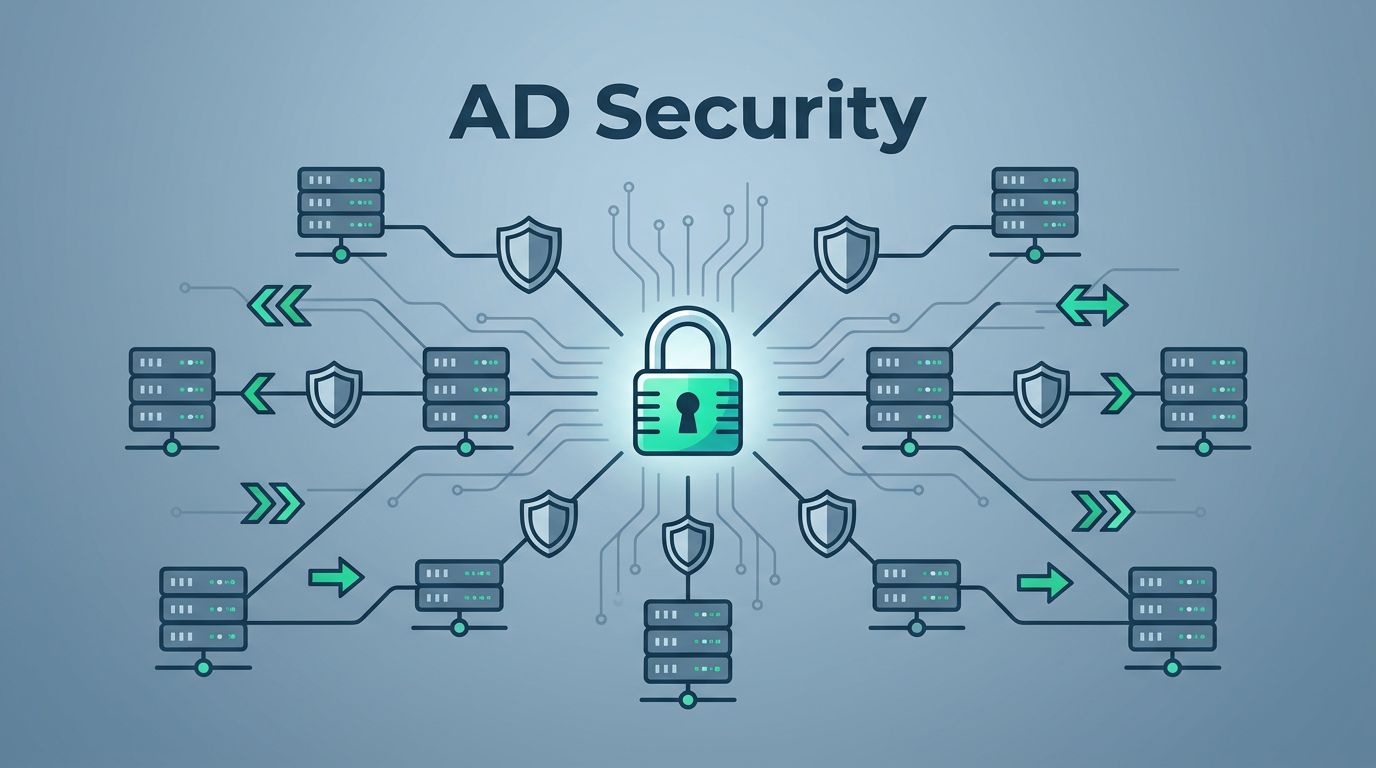
Active Directory still holds the keys to too many enterprises. When attackers get a foothold there, they can move fast, and the blast radius gets ugly fast.
That’s why active directory security consultants matter more than a general security team. You need people who can map attack paths, harden privileged access, and recover identity services when things go wrong.
The hard part is sorting true AD specialists from broad MSSPs and general cyber firms. The firms below are the ones worth a closer look, along with the criteria that should shape your shortlist.
What a real AD consultant should bring to the table
A strong AD consultant should feel less like a slide deck vendor and more like a surgeon. They need to understand the forest, the trusts, the GPO sprawl, and the hidden paths attackers use.
That means more than running an audit. It means spotting weak delegation, stale admin groups, risky certificate services, weak tiering, and bad sync choices between on-prem AD and Entra ID.
It also means knowing what to do after a breach. Can they help contain the damage, preserve evidence, reset trust, and rebuild safely? If not, they may be a monitoring shop, not a recovery partner.

The best firms also speak hybrid identity fluently. In 2026, most enterprise projects touch both AD and cloud identity, so that experience matters as much as classic domain knowledge.
If a consultant can’t explain attack paths, recovery, and privilege separation in plain language, keep looking.
The firms that stand out in 2026
A 2026 domain-security watchlist from Cybersecurity Ventures shows how crowded this market has become. Still, the mix of vendors is not the same as the mix of consultants.
Here’s a practical way to look at the names that come up most often.
| Firm | Best fit | What stands out | Watch-out |
|---|---|---|---|
| Semperis | Hybrid AD security, recovery, and incident response support | Deep identity focus and strong AD recovery story | Usually a better fit for identity-led projects than broad security programs |
| Netwrix | AD auditing, detection, and remediation support | Strong visibility into changes and privilege issues | More platform-led than boutique consulting-led |
| SentinelOne | Identity protection tied to broader endpoint and XDR programs | Good if AD is part of a larger attack-surface effort | AD may not be the main focus |
| Radiant Logic | Identity data, governance, and rights mapping | Useful for complex identity stores and federation | Less centered on hands-on recovery work |
| Palo Alto Networks | Hybrid identity and Zero Trust alignment | Strong for large environments already tied to the platform | Not a pure AD specialist |
Semperis stands out because its bench includes long-time identity people, not only product marketers. Profiles like Sean Deuby and Jake Hildreth show the kind of practical AD experience enterprise buyers should ask for.
Netwrix gets attention because visibility matters. Its AD audit and monitoring lineage, plus tools like PingCastle and Stealthbits, make it a strong name when the problem is “show me what’s wrong” before “help me rebuild.”
SentinelOne, Radiant Logic, and Palo Alto Networks can all fit in the right program. Still, they often sit closer to platform-led security than to deep, hands-on AD consulting.
How to compare vendors without getting lost in demos
The best demos talk about features. The best evaluations talk about failure modes.
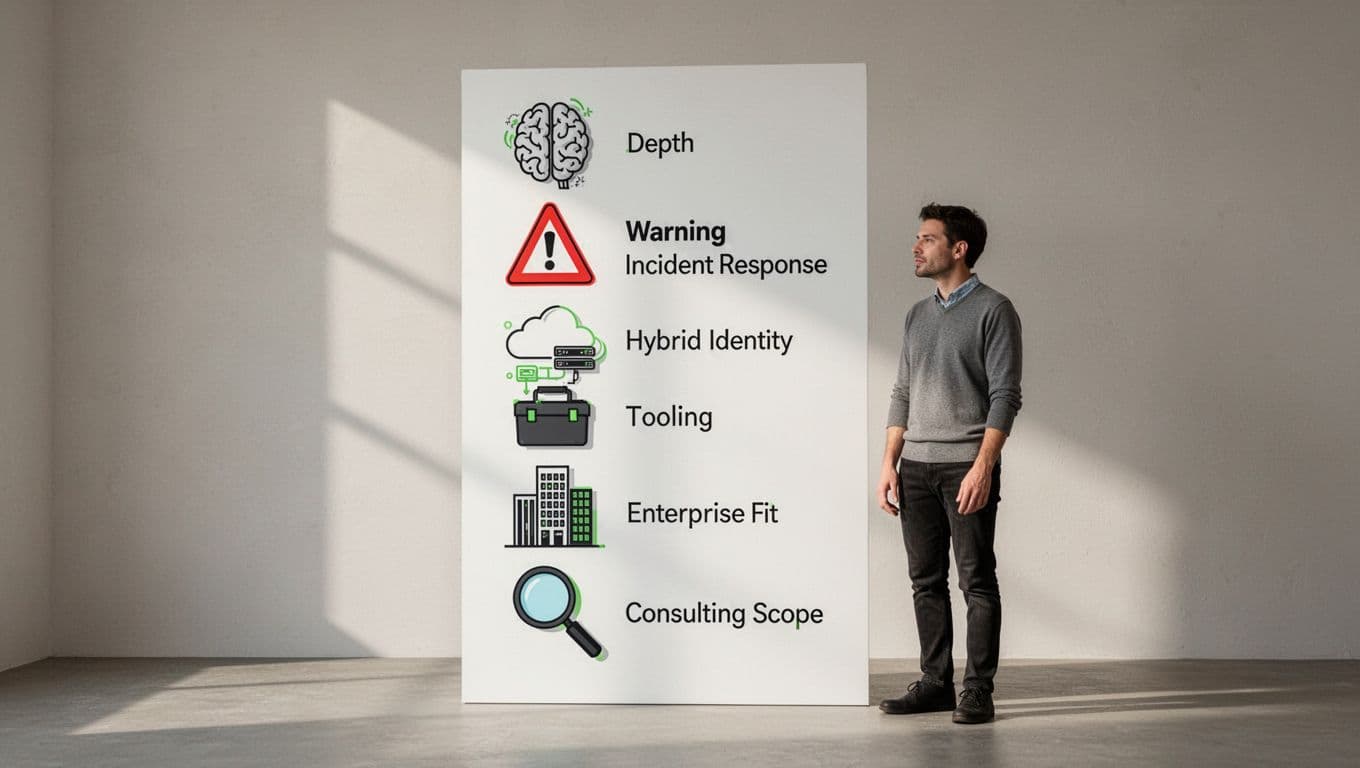
Use these six checks when you compare top Active Directory security consultants:
- Technical depth: Ask how they handle ACL abuse, Kerberos abuse, ADCS risk, privileged group design, and replication issues.
- Incident response: They should explain how they’d support containment, forensics, and recovery after a domain compromise.
- Hybrid AD and Entra ID experience: Cloud sync, conditional access, break-glass access, and admin separation should all be familiar territory.
- Tooling familiarity: A 2026 roundup of Active Directory monitoring tools shows how broad the market is, so ask which tools they actually trust and why.
- Enterprise fit: Large global forests, regulated sectors, mergers, and messy legacy setups need more than a generic checklist.
- Consulting scope: Some firms only assess. Others harden, test recovery, and stay through remediation. Know which one you’re buying.
That last point matters. An MSSP can watch alerts all day, but it may not know how to rebuild trust in a broken forest. A true AD specialist should help you recover, not only report.
If you’re comparing firms now, Book a Discovery Call with Bud Consulting to get a clear view of which vendors can handle real identity work, not just surface-level checks.
When specialist help matters most
Some projects need outside help right away. A breach, a ransomware event, a merger, or a major Entra ID migration can expose weak privilege design fast.
Specialists also matter when recovery is on the line. If your team needs to reset trust, redesign tiering, or test forest recovery, a general cyber consultant may slow you down.
That’s where the best AD firms earn their keep. They don’t just point at risks, they help your team fix the structure that made those risks possible.
Choosing an AD consultant is less about brand names and more about depth. The right partner can find attack paths, clean up privilege, and help you recover when identity services fail.
In 2026, the best choice still comes down to one test, can they speak clearly about AD security, recovery, and hybrid identity without hiding behind jargon? If they can, you’ve found a serious contender.