table of contents
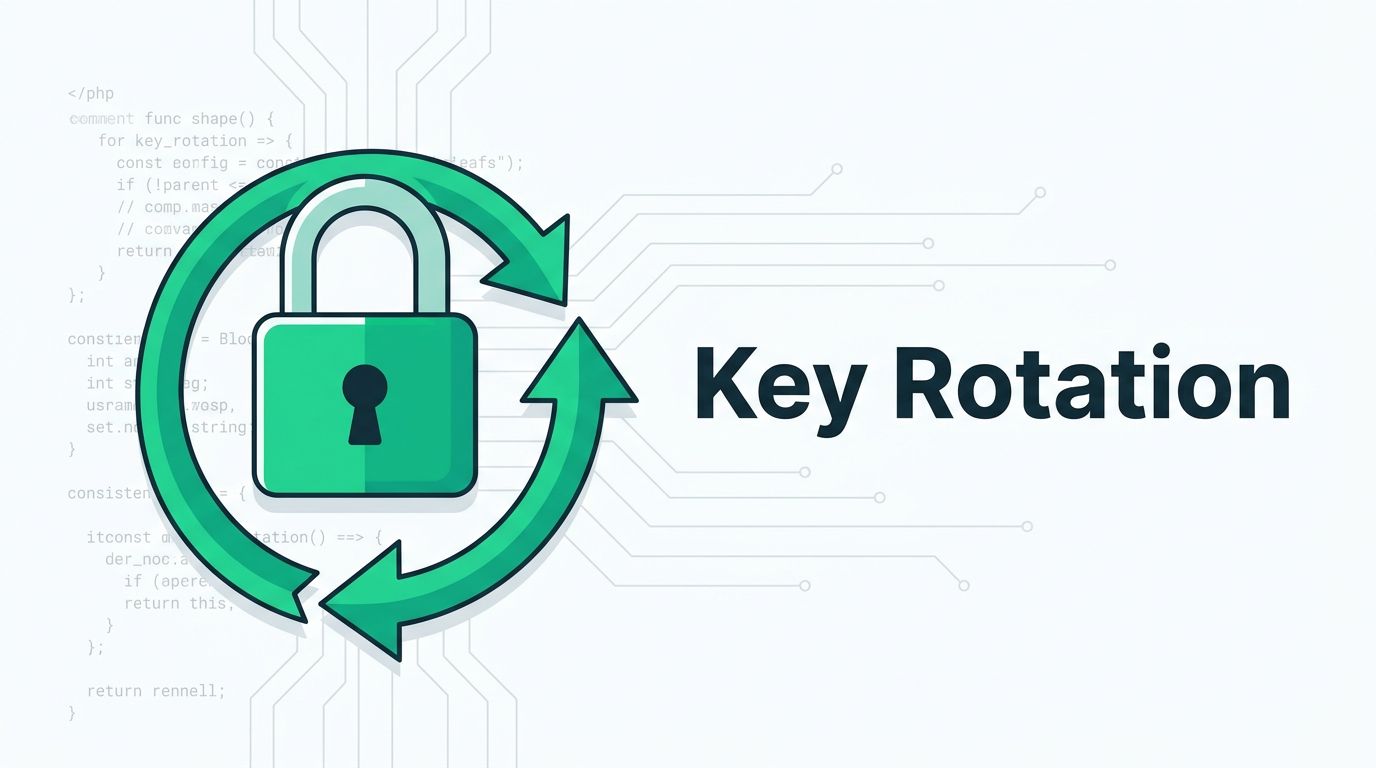
An API key that stays active too long becomes a quiet risk. One leak in source control, one noisy CI log, or one old integration can give someone access long after the original mistake. That is why API key rotation should sit near the top of every dev team’s security backlog.
The cost of waiting is bigger in 2026. Broken authentication and exposed secrets keep showing up in real breaches, and teams still lose time cleaning up keys that no one owns. Rotation cuts that mess down fast, and it gives you a clean way to limit damage when something goes wrong.
Leaks happen in normal work, not rare edge cases
Most key exposure does not come from a dramatic hack. It comes from everyday work.
A developer pastes a token into a repo for a minute, then forgets it. A CI job prints an env var during a failed deploy. A third-party integration stores credentials in a place you never planned to audit. Later, someone leaves the company, and their access lingers because no one mapped which systems they touched.
Supply chain exposure makes this worse. A shared package, build plugin, or vendor connector can copy secrets into places your team never sees. Once a key escapes into logs, caches, backups, or old branches, it can stay useful for months.
That risk is not theoretical. In February 2026, researchers found nearly 3,000 Google Cloud API keys that could reach Gemini endpoints. The lesson from a 2026 Google API key incident was simple: a key that looked harmless yesterday may expose more than you expected today.

A leaked key is only a small problem if it disappears fast. If it stays live, it becomes a standing invitation.
Manual rotation breaks down as soon as the system gets busy
A manual process sounds fine until you try to run it across real services. Then the cracks show.
Someone has to remember which keys exist. Someone else has to find every app that uses each key. Then the team has to test the swap, watch for failures, and revoke the old value without breaking production. If any step slips, rotation turns into a risky one-off project instead of a repeatable control.
That is why manual rotation fails in practice. It depends on memory, ticket hygiene, and release timing. It also breaks down when keys live in too many places, such as shell history, CI variables, build artifacts, shared documents, and vendor dashboards.
A better approach is to treat keys like inventory with an owner, a purpose, and an expiry plan. The more systems you touch, the more automation matters. Otherwise, your rotation schedule becomes a wish list.
What good API key rotation looks like
Good rotation starts with design, not cleanup. The key should be easy to replace, easy to trace, and hard to misuse.
Google Cloud’s API key best practices call out restrictions and safer handling for a reason. The same idea works across most stacks. Keep the key narrow, keep the lifecycle short, and keep the handoff controlled.
A solid pattern usually includes these parts:
- Short-lived credentials wherever the platform allows it. Temporary tokens beat long-lived static keys.
- Secret managers instead of code, shared docs, or plain CI variables. They give you access control and audit logs.
- Least privilege so each key can only reach the API methods it needs.
- Dual-key rollover so a new key can run alongside the old one until traffic is fully moved.
- Environment-specific keys for dev, staging, and production. One leaked dev key should never touch prod.
- Ownership tracking so every key has a person or team attached to it.
- Alerting and regular audits so unusual use or stale keys surface before an incident does.
That mix lowers blast radius. It also makes offboarding faster, because you can revoke access by owner, app, or environment instead of hunting through guesswork.
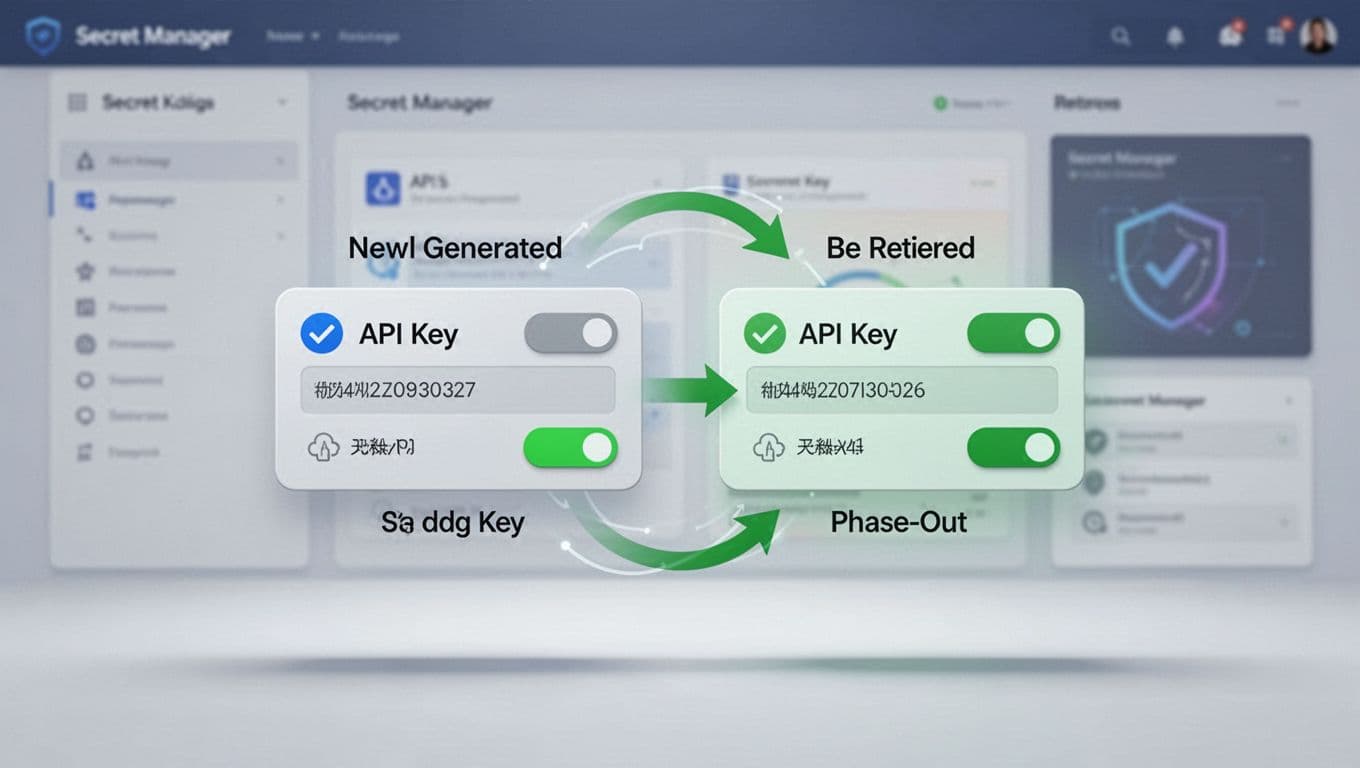
For a deeper process view, see zero-downtime API key rotation guidance. It shows how to move traffic without breaking services.
Automation turns rotation into a habit, not a fire drill
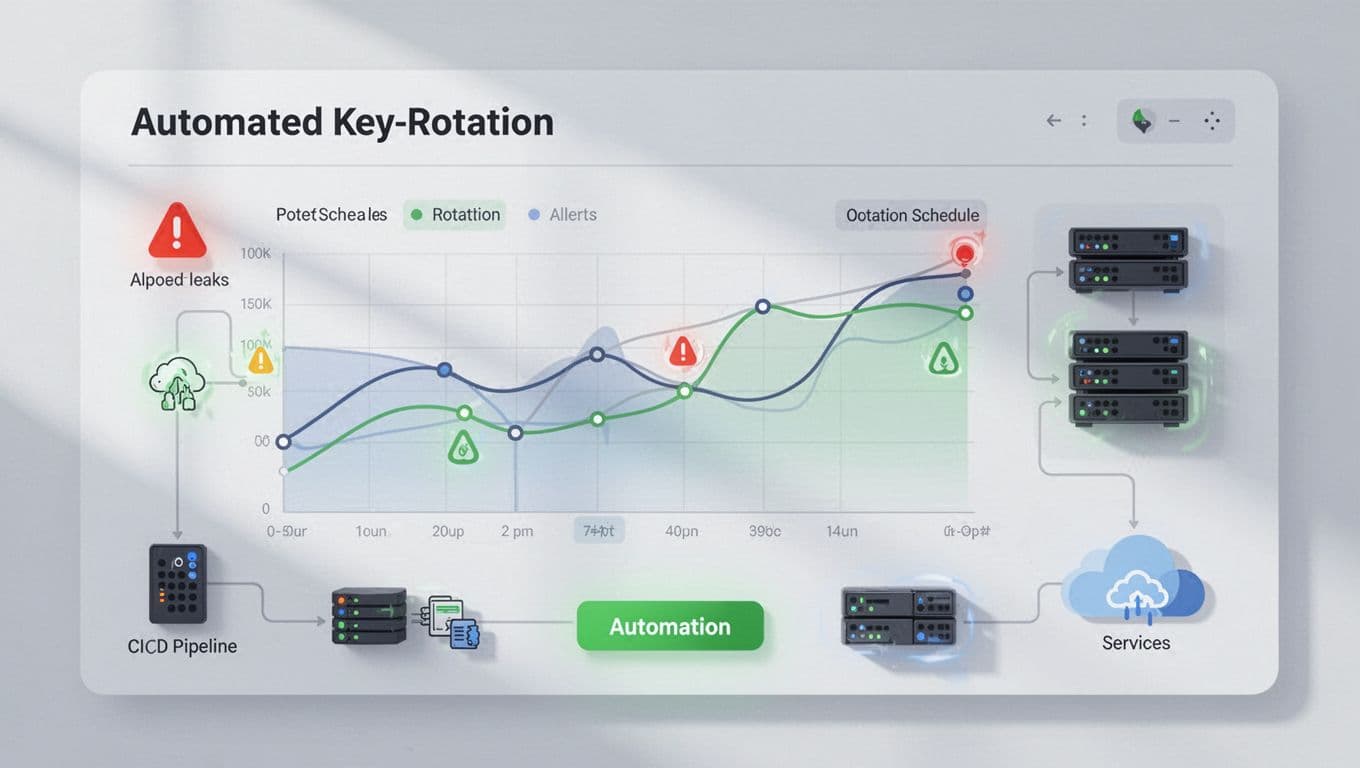
Automation is the difference between a policy and a control. If a person has to remember the whole sequence, the process will slip.
A strong setup usually follows this path:
- Inventory every key and assign an owner. You need a current map before you can rotate safely.
- Store keys in a secret manager. Pull them into apps at runtime, not into code or long-lived env files.
- Rotate with dual-key overlap. Create the new key, test it, switch traffic, then revoke the old one.
- Tie rotation to events and schedules. Handle offboarding, suspicious activity, vendor changes, and regular audits the same way every time.
- Add alerts for failures and leaks. If a key is used from an odd place or appears in a scan, the right people should know fast.
This is where automation helps incident response too. When a key leak hits, you do not want a long debate. You want a clear path to replace credentials, confirm service health, and close the window of exposure.
If your team needs help building that kind of operating model, Book a Discovery Call with Bud Consulting.
The business case is bigger than security theater
API key rotation helps security, but it also helps the business. It reduces the blast radius of a leak, makes compliance checks easier, and shortens response time during an incident. It also gives engineering managers a cleaner story when auditors ask who owns access and how often it changes.
In practical terms, good rotation keeps teams moving. It removes stale access, clears out forgotten keys, and makes vendor risk easier to manage. When that work is automated, it stops being a monthly scramble.
The best teams do not wait for a breach to clean up access. They make rotation routine, so one bad key does not turn into a long, expensive problem.