table of contents
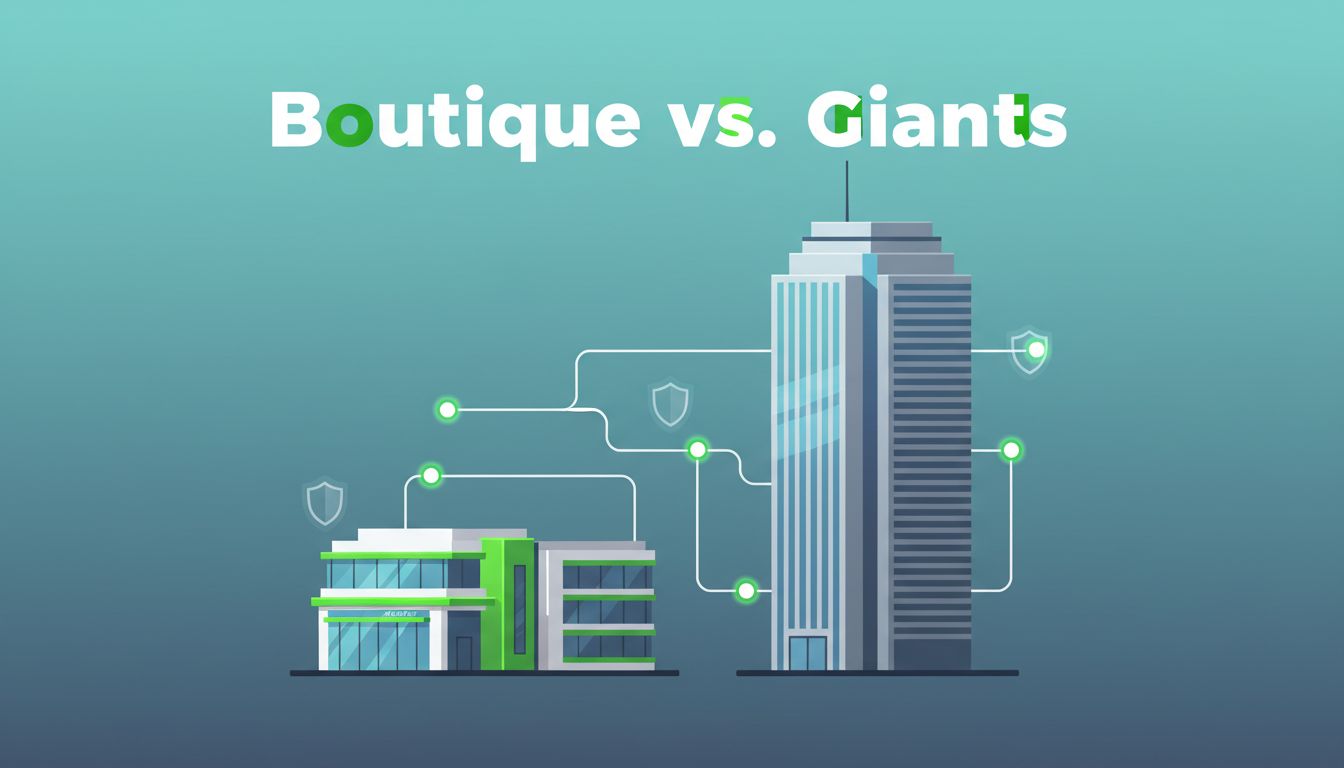
You’re a CISO facing rising AI-driven threats and third-party risks. Your team needs help with cloud security or compliance, but options overwhelm you. Do you pick a boutique cybersecurity agency for tailored advice, or a large firm for global scale?
Both serve well in 2026, yet they match different needs. Small breaches cost SMBs big, while enterprises battle complex attacks. This guide breaks down strengths, tradeoffs, and fits so you choose right.
What Makes Boutique Cybersecurity Agencies Stand Out
Boutique cybersecurity agencies focus on niche expertise. They deliver custom plans fast because teams stay small and agile. For example, a 50-person firm handles your cloud migration without layers of approval.
These agencies excel in areas like virtual CISO services or pentests. They spot gaps in AppSec or IAM quicker than giants. Costs run lower too, often $15,000 to $40,000 yearly for mid-size teams.
In 2026, boutiques shine with AI threat exposure. They craft defenses against smart phishing tailored to your industry. Compliance help fits evolving rules like zero-trust mandates.
Agility helps here. Large projects drag in big firms, but boutiques pivot fast. A healthcare client gets HIPAA tweaks in weeks, not months.

Personal touch builds trust. Owners often lead projects, so you talk direct to experts. This matters for third-party risk assessments, where details count.
Strengths of Large Cybersecurity Firms
Large firms bring massive resources. They run 24/7 SOCs with MDR and XDR tools. Fortinet or IBM monitor endpoints, networks, and clouds in one view.
Scale handles high-volume threats. In 2026, supply chain attacks quadrupled, so their global intel spots patterns early. AI automation speeds responses too.
These firms lead in enterprise tools. They integrate XDR across multi-cloud setups, vital as cloud risks rank second after AI. Teams of hundreds cover sectors like finance deeply.
Benchmarks prove value. U.S. breach costs hit $10.22 million average, but large MDR cuts dwell time. Compliance audits scale for Fortune 500 needs.
However, processes add time. You book meetings weeks out. Still, for quantum risks or vast data lakes, their depth wins.
Key Tradeoffs Between Boutique Agencies and Large Firms
Boutiques cost less upfront. They skip big marketing budgets, passing savings to you. Yet, they lack round-the-clock SOCs, so pair them with basic tools like Sophos.
Large firms charge premium rates. Their XDR stacks demand enterprise budgets, but deliver proven ROI on massive threats. Personalization suffers though; one size fits most.
Speed varies. Boutiques fix issues in days, perfect for SMB ransomware hits (88% of their breaches). Enterprises need large-firm patience for full audits.
For deeper comparisons, check this guide on boutique vs. large cybersecurity firms. It highlights service differences.
Expertise overlaps in cloud security, but boutiques niche down. Large firms cover more ground, like global compliance.
Best Fit Scenarios for Your Organization
Match provider to your setup. SMBs under 500 employees pick boutiques for quick wins. They handle 1-in-3 attack rates with affordable pentests and vCISO.
Enterprises go large for scale. Multi-cloud and third-party chains need XDR depth. 65% of big firms flag vendors as top risk.
Here’s a quick comparison:
| Aspect | Boutique Agencies | Large Firms |
|---|---|---|
| Best For | SMBs, niches like healthcare | Enterprises, multi-cloud |
| Cost | $15-40K/year | Higher, scale-based |
| Speed | Fast, agile | Structured, thorough |
| 24/7 Support | Limited | Full SOC/MDR |
| Customization | High | Standardized with add-ons |
Boutiques suit ongoing exposure management. Large firms fit heavy compliance lifts.

Assess your risks first. Count employees, cloud count, and vendor ties. Then decide.
Decision Criteria to Pick Your Partner
Start with budget. Boutiques save cash for growing teams. Next, check expertise in your stack, like IAM or DevSecOps.
Review case studies. Does the firm cut breach times? Ask for MDR metrics or AI defense proofs.
Test fit with a pilot. Boutiques run cheap proofs fast. Large firms offer demos.
Cybersecurity spending hits $520 billion in 2026. Non-CISOs drive 15%, so align with business goals.
Book a Discovery Call with Bud Consulting to match talent needs too.
Boutiques offer agility for targeted threats; large firms provide scale against floods. Weigh your risks and pick what fits. Your choice shapes resilience now.