table of contents
Table of Contents
- What Is a Centralized Security Team?
- What Is an Embedded Security Team?
- Centralized vs. Embedded: Key Comparison
- When Centralized Fits Your SaaS Stage
- When Embedded Works Best
- Hybrid Security Team Models
- Real SaaS Examples by Company Stage
- FAQs
SaaS companies face constant pressure to ship fast while staying secure. You build features daily, but breaches cost millions and trust. Security team structure decides if security slows you down or speeds you up.
Pick the wrong setup, and devs ignore risks. Choose right, and security becomes a team strength. Let’s break down centralized and embedded models to match your needs.
What Is a Centralized Security Team?
Centralized security teams sit apart from dev groups. They act as the main gatekeepers. One dedicated crew handles all threats, policies, and audits from a single spot.
This setup works because experts focus on big-picture risks. They set standards company-wide. Devs request reviews instead of owning every check.

For example, startups often start here. A small team reviews code pushes and monitors logs centrally. This keeps things simple as you scale users.
However, bottlenecks happen. Devs wait for approvals. In fast SaaS cycles, delays frustrate everyone.
What Is an Embedded Security Team?
Embedded teams place security pros right inside dev squads. Each product team gets its own expert. They work shoulder-to-shoulder on code and deploys.
Security shifts left. Experts catch issues during sprints, not after. Devs learn on the fly, so fixes happen fast.

Growth-stage SaaS loves this. Product velocity stays high because security integrates naturally. No more ticket queues.
Downside? Experts might miss company-wide patterns. Consistency slips without central oversight.
Centralized vs. Embedded: Key Comparison
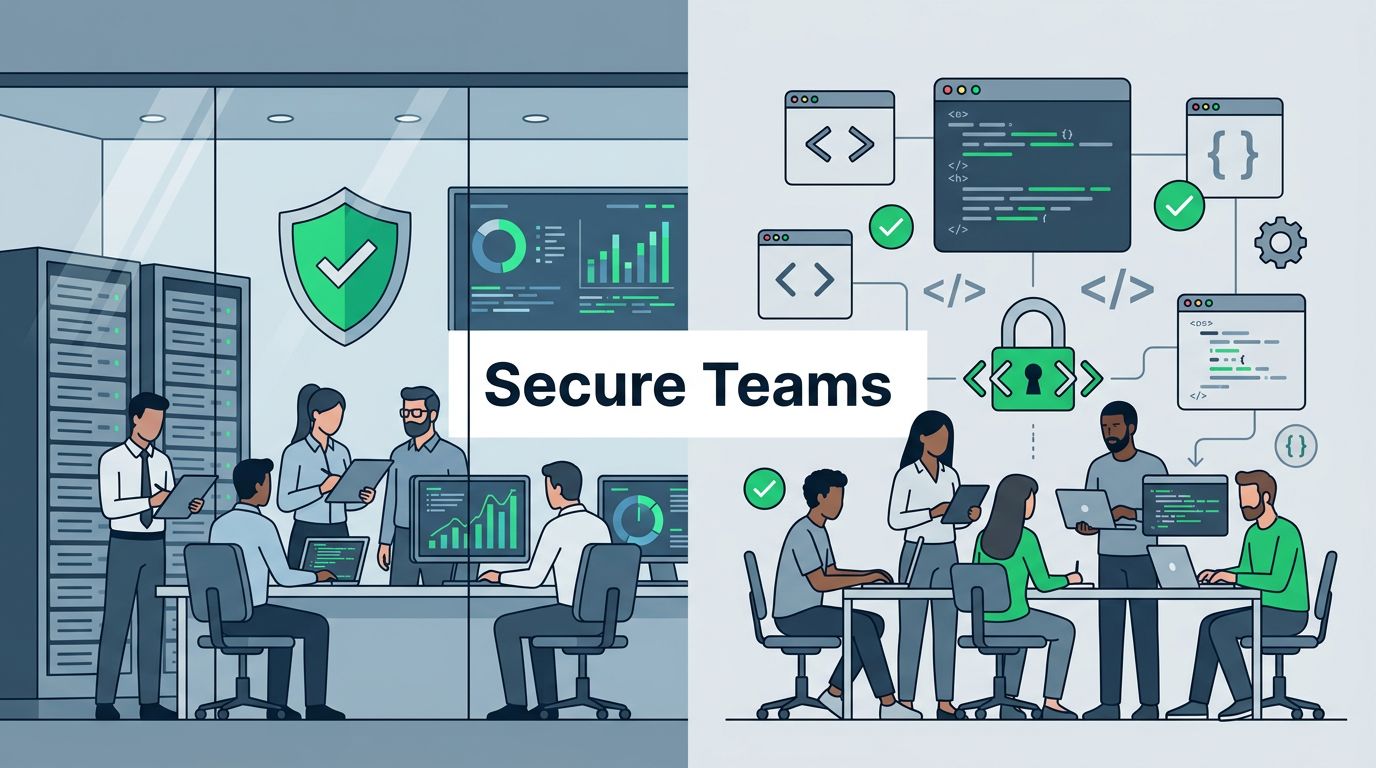
Both models secure your SaaS stack. Yet they differ in speed, scale, and fit. Here’s a side-by-side look.
One short note sets the stage: this table highlights core trade-offs for quick scans.
| Aspect | Centralized Security Team | Embedded Security Team |
|---|---|---|
| Ownership | Central experts own all reviews | Dev teams own security with embedded help |
| Speed | Slower; queues form for approvals | Faster; real-time fixes in sprints |
| Consistency | High; uniform policies across teams | Varies; risks drift per squad |
| Expertise | Deep specialists handle complex threats | Broader skills; devs gain security know-how |
| Cost | Lower headcount initially | Higher; one expert per major team |
| Best For | Compliance-heavy enterprise SaaS | Velocity-focused growth SaaS |
Centralized wins on standards. Embedded excels in agility. Microsoft’s cloud security roles guide shows how org size shapes these choices.
When Centralized Fits Your SaaS Stage
Startups pick centralized first. You lack bandwidth for embeds. One CISO or analyst covers basics like IAM and vuln scans.
Enterprises stick here too. Heavy regs demand audits. Think SOC 2 or HIPAA. Central teams enforce them without debate.
For instance, a fintech SaaS handles payments. Central pros align with Forrester’s security org advice. They block breaches before launch.
Actionable takeaway: Audit your compliance needs. If audits dominate, go central.
When Embedded Works Best
Growth SaaS thrives on embeds. You ship weekly. Delays kill momentum.
Embed one pro per pod. They automate scans in CI/CD. Devs fix issues same-day.
A CRM SaaS example: Pods build features fast. Security joins standups. Risks drop 40% without slowing releases.
In addition, it builds culture. Devs own security long-term.
Key step: Hire versatile experts. They code and secure.
Hybrid Security Team Models
Many SaaS blend both. Central core sets policy. Embeds handle daily work.
This balances speed and standards. Central tracks threats. Embeds execute locally.

Mid-stage SaaS uses hybrids best. Central for strategy, embeds for tactics. CloudAware’s DevSecOps roles backs this for scaling teams.
Start hybrid with 1-2 embeds. Scale as pods grow.
Real SaaS Examples by Company Stage
Startups like a new analytics tool use centralized. Two-person team reviews all PRs. Keeps burn low at $500K ARR.
Growth firms, say a $20M collaboration app, embed per feature team. Velocity doubles. Breaches? Near zero.
Enterprises at $100M+ mix both. Central SOC plus embeds. They meet GDPR while iterating.
Match your ARR and headcount. Test with a pilot embed.
Need talent? Book a Discovery Call with Bud Consulting for vetted security hires.
Conclusion
Your security team structure shapes SaaS success. Centralized offers control for startups and enterprises. Embedded boosts speed in growth. Hybrids often win overall.
Pick based on stage and risks. Pilot changes to test fit.
Strong security fuels growth. Build it right now.
FAQs
What’s the best security team structure for early-stage SaaS?
Centralized keeps it simple. One team covers essentials without high costs.
How do embedded teams improve DevSecOps?
They integrate security in workflows. Fixes happen fast, devs learn habits.
Can hybrids scale for enterprise SaaS?
Yes. Central policy plus local embeds handle complexity and speed.
How many security pros per dev team?
One embed per 5-10 devs works. Adjust for risk level.
What if we can’t hire embeds yet?
Start centralized. Automate scans to bridge gaps.
(Suggested slug: centralized-vs-embedded-security. Word count: 982)