table of contents
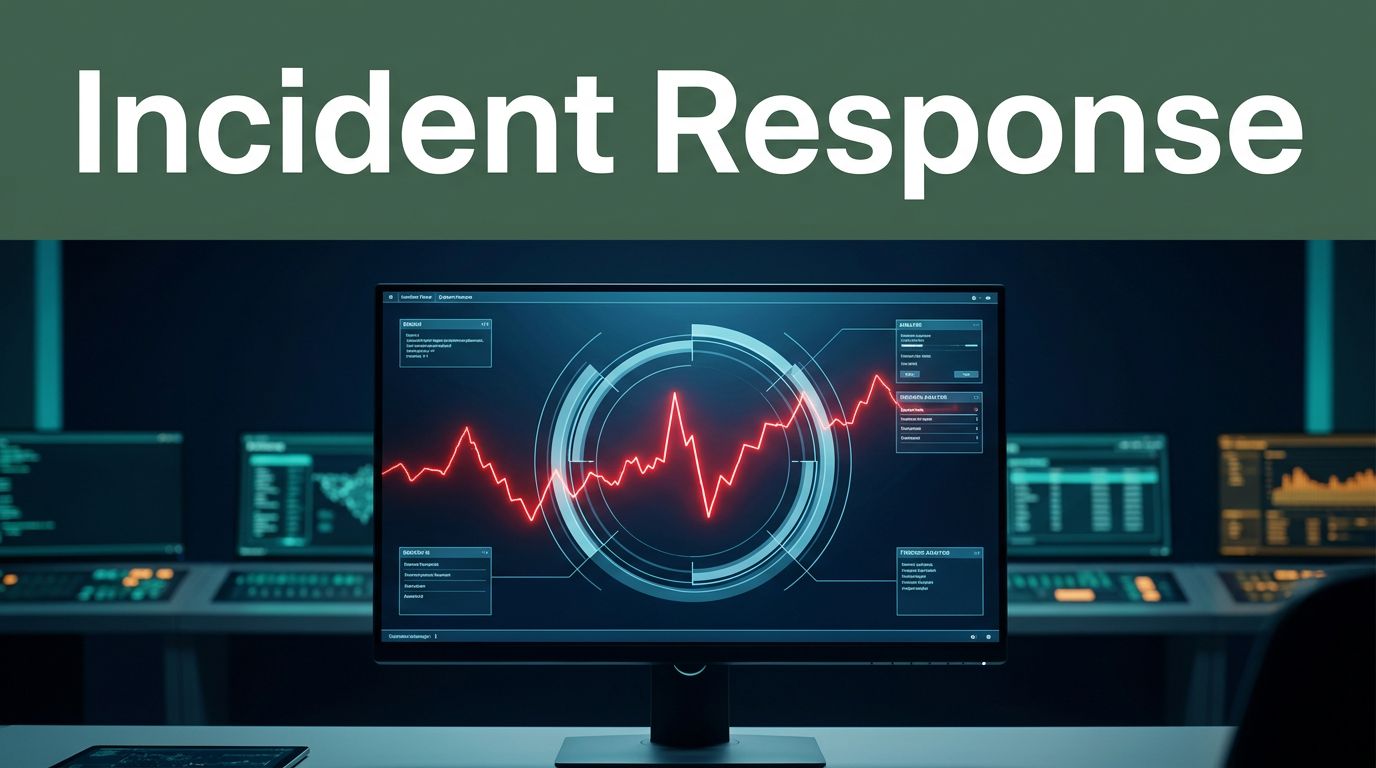
When a breach hits, time is the single variable you cannot buy back. Internal IT teams manage routine threats every day, but a coordinated ransomware attack or a zero-day exploit requires specialized forensic depth and legal coordination. Incident response consulting firms bring the technical firepower and crisis management playbook needed to eject threat actors, preserve digital evidence, and restore operational integrity without tipping off the adversary.
Choosing the right breach-response partner isn’t a decision you make in the middle of an active crisis. You need a pre-negotiated retainer, a clear understanding of service-level agreements, and total alignment with your cyber insurance carrier before an alert triggers. This guide examines the top incident response providers, evaluates their core operational strengths, and highlights the precise criteria security leaders must use to secure their networks.
Key Takeaways
- Pre-negotiate your retainers: Buying incident response hours during an active cyber attack leads to inflated rates, delayed response times, and gaps in insurance coverage.
- Assess core differentiators: Top firms separate themselves through proprietary threat intelligence, forensic depth, adversary emulation capabilities, and regulatory crisis experience.
- Match firm scale to enterprise needs: Global enterprises require multinational bench strength like Accenture or Kroll, while mid-market organizations often benefit from focused MDR and IR providers like Expel or Secureworks.
- Ask the right procurement questions: Vet prospective partners on retainer activation triggers, hourly forensics costs, data privacy compliance, and third-party forensic tool access.
Top Incident Response Consulting Firms on the Market
The cybersecurity landscape features dozens of specialized and enterprise-scale consultancies, each built around distinct operational models. Some providers rely on massive global footprints and specialized digital forensics laboratories, while others focus on automated detection and rapid containment integration.
Understanding who leads the market helps you align your budget with the exact threat profile your organization faces. Market evaluations from recent IDC MarketScape assessments and industry roundups highlight several dominant providers dominating the enterprise space.[2][14]
Accenture and Kroll
Accenture occupies a prominent position in worldwide incident response services, bringing massive enterprise transformation scale and deep advisory resources to complex breach scenarios.[2] Their global security practice handles massive multi-vector enterprise compromises, coordinating technical remediation alongside executive crisis communications and insurance stakeholders.
Kroll operates as a premier digital forensics and incident response provider with deep roots in financial advisory, global investigations, and litigation support.[1] Organizations facing extortion demands, regulatory scrutiny, or complex data exfiltration often look to Kroll for rigorous forensic reconstruction and forensic accounting expertise.
CrowdStrike Services and Palo Alto Networks Unit 42
CrowdStrike Services leverages its elite adversary-tracking telemetry to deliver rapid threat hunting, active containment, and root-cause analysis during active breaches. Their retainers connect directly into their broader endpoint telemetry platform, minimizing the friction of deploying new agents during an emergency.
Palo Alto Networks Unit 42 specializes in high-severity incident readiness, threat-led forensics, and credit-based IR retainers.[15] Their consultants frequently handle sophisticated nation-state campaigns and complex ransomware deployments, translating threat intelligence into actionable recovery frameworks for enterprise security teams.
NCC Group, Secureworks, and Expel
NCC Group provides global cybersecurity consulting, software assurance, and incident response services, offering reliable technical investigation across manufacturing, finance, and critical infrastructure sectors.[1]
Secureworks combines its threat intelligence platform with dedicated incident response retainers, providing structured triage and containment workflows designed to reduce dwell time.
Expel delivers managed detection and incident response services tailored for mid-market and cloud-native environments, focusing on transparent investigation workflows and automated remediation playbooks.
| Provider Name | Primary Geographic Presence | Core Specialization | Ideal Organization Type |
|---|---|---|---|
| Accenture | Global / Worldwide | Enterprise transformation, large-scale IR, crisis management | Fortune 500 and large multinational corporations |
| Kroll | Global / US (New York) | Digital forensics, extortion negotiation, litigation support | Enterprises facing regulatory pressure or legal disputes |
| CrowdStrike Services | Global | Endpoint telemetry integration, rapid threat containment | Organizations running CrowdStrike security stacks |
| Palo Alto Networks Unit 42 | Global | Nation-state threat tracking, high-severity breach response | Critical infrastructure and enterprise cloud environments |
| NCC Group | Global / US (New York) | Critical infrastructure assurance, compliance-tied IR | Regulated industries and industrial manufacturing |
| Secureworks | US (Atlanta) / Global | Threat intelligence-led MDR and incident triage | Mid-market to enterprise organizations |
| Expel | US (Herndon) | Cloud-native detection, transparent remediation | SaaS companies and cloud-first mid-market firms |
Note: Operational fit depends heavily on organization size, geography, industry sector, existing security stack, insurer requirements, and incident type. This overview does not constitute legal advice or guarantee incident-response outcomes.
How to Evaluate Incident Response Consulting Firms
Evaluating incident response consulting firms requires looking past glossy marketing materials and examining their operational readiness. When a domain controller goes down at midnight, you need to know exactly how fast a provider answers the phone and how many hours of active triage are included in your baseline agreement.
Many organizations make the mistake of selecting a provider based solely on brand recognition without auditing their technical bench strength or geographic jurisdiction. If your primary operations are based in North America, ensure your chosen firm maintains local forensic teams rather than routing your emergency through overseas call centers.
Selecting a breach-response partner requires verifying their active retention limits, SLA guarantees for on-site deployment, and the specific forensic tools their investigators use during an engagement.
You should also examine whether the provider mandates the installation of proprietary agents. For a deeper look at aligning security operations with specialized compliance standards, review this analysis of top cybersecurity compliance consulting firms. If your architecture relies on cloud workloads, confirm that your chosen incident response consulting firms possess native forensic capabilities for AWS, Azure, and Google Cloud Platform without causing operational downtime.
Questions Security Leaders Must Ask Before Signing Retainers
Procurement teams and CISOs must move past standard sales pitches by asking direct, high-scrutiny questions during the vendor evaluation phase. Asking the right questions uncovers hidden costs, response bottlenecks, and compatibility issues before an emergency occurs.
- What is your guaranteed Service Level Agreement for remote and on-site forensic deployment during a critical incident?
- Are retainer hours fully deductible for proactive services like tabletop exercises and threat hunting, or do they expire annually?
- Do your investigators rely on our existing security telemetry agents, or will you mandate the emergency deployment of your own tooling?
- What is your hourly rate structure for overtime, weekend work, legal expert witness testimony, and extortion negotiation support?
- Is your incident response team pre-approved by our cyber insurance carrier to ensure seamless reimbursement of investigative costs?
For organizations seeking independent vendor reviews and verified market data, platforms like the Gartner security consulting services reviews provide peer-sourced operational insights.
If you are ready to evaluate your current incident response readiness and secure a trusted breach partner for the upcoming year, Book A Call With Us to discuss your security stack and vendor requirements.
Conclusion
Securing the right incident response partner transforms a potential enterprise-ending disaster into a manageable operational event. Vetting providers before an emergency occurs protects your margins and ensures your team has immediate access to elite forensic investigators.
Review your current insurance requirements, audit your existing retainer agreements, and align your security leadership around a firm that matches your technical environment. Taking action on these vendor relationships today ensures your organization remains resilient against tomorrow’s threats.