table of contents
The fastest way to lose a strong candidate is to guess on pay. In 2026, top tech and cyber talent compares offers quickly, and weak ranges show up fast.
If your team relies on old requisitions or manager instinct, you’ll either miss the market or upset internal pay balance. Compensation data gives you a firmer base for pricing roles, explaining ranges, and closing offers with less friction.
Why compensation data matters more in 2026
Pay pressure hasn’t gone away. Security, cloud, and AI-related roles still move faster than many hiring teams can update their bands. Recent 2026 market summaries show US cybersecurity pay ranging from about $74,000 to $110,000 for entry-level talent, $115,000 to $212,000 for mid-level roles, $154,000 to $280,000-plus for senior specialists, and $220,000 to $420,000-plus for CISOs.
That spread tells you something simple. A job title alone doesn’t price a role. Scope, industry, risk level, reporting line, and geography all change the number.
For hard-to-fill roles, outside benchmarks help validate what your team is seeing. A 2026 tech salary guide can show percentile ranges across levels, while recent US cybersecurity salary trends highlight how steep the market can get for specialized security talent.
When employers skip compensation data, two problems show up fast. First, the range lands below market, so finalists walk. Second, a leader pushes for an exception, and the business creates pay compression for people already on the team.
Good data helps you avoid both. It supports salary ranges before sourcing starts, gives recruiters a strong opening range, and makes finance approvals easier because the offer ties back to evidence, not guesswork.
If your range is off by even 10 percent, candidates often spot it before your team does.
It helps with offer acceptance, too. Candidates want to know your number reflects the market and the role, not whoever spoke loudest in the approval meeting.
What a competitive offer needs beyond base salary
Base salary matters most, but it isn’t the full picture. Senior candidates, especially in cybersecurity, compare total rewards, risk, and long-term upside.
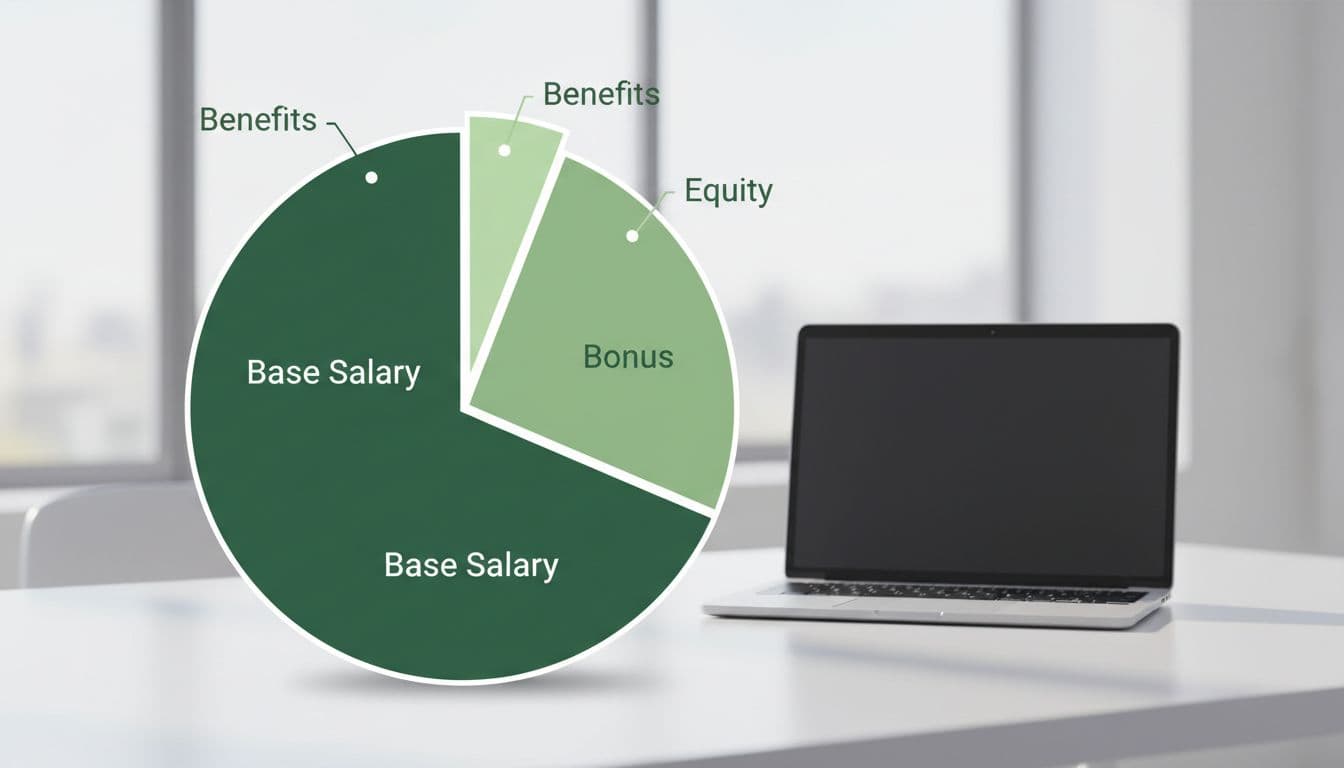
Use this simple checklist when you benchmark a package:
| Offer element | What to benchmark |
|---|---|
| Base pay | Range by role, level, and location |
| Bonus | Target percent, triggers, and eligibility |
| Equity | Grant size, vesting, and refresh practice |
| Benefits | Health, retirement, leave, and remote support |
| Geography | National, regional, and city pay gaps |
| Internal equity | Pay for comparable employees today |
If one line is missing, the package can look weaker than it is. That’s why strong compensation data has to cover more than a single base number.
Geographic differentials still matter in 2026. Remote hiring widened access, but it didn’t erase local pay markets. A New York City band, a national remote band, and a lower-cost regional band can all be fair if your policy is clear and applied the same way.
Internal equity matters just as much. If you hire a new cloud security engineer at the top of market while current peers sit far below, you create compression and trust issues. So market data should always sit beside your internal bands, not replace them.
The same structure supports pay transparency and reduces bias. When you set a range from current benchmarks, define allowed adjustments, and use the same rules for every finalist, you cut down on ad hoc deals. That matters because compensation gaps often start in those last-minute exceptions.
If you’re building a better market view, these compensation benchmarking data sources can help you compare surveys, recruiter data, and posted salary information.
How to turn market data into an actual offer
Data only helps if you turn it into a real package. The cleanest approach is simple.
- Pick your market position, such as 50th or 60th percentile for a standard hire, or higher for scarce skills.
- Adjust for scope, must-have skills, location, and internal peers in similar roles.
- Build the full offer, then explain each piece in a way the candidate can follow.

Take a hiring example. You’re filling a security architect role for a mid-size firm. Your market data shows comparable hires in your target geographies landing around $185,000 to $215,000 base. A 10 percent bonus is common. Equity is expected if you’re a growth-stage company, but less important in a mature enterprise.
Your internal architect band runs from $180,000 to $225,000. The finalist brings deep cloud security and IAM experience, but won’t manage people. A solid offer could be $205,000 base, a 10 percent annual bonus, equity in the middle of your architect grant range, standard benefits, and a sign-on payment if the candidate is walking away from vested money.
That offer works for a few reasons. It sits inside market. It fits internal equity. It pays for scarce skills without inflating the title or stretching base pay so far that next year’s comp cycle becomes a mess.
Clear logic improves acceptance rates. It also makes negotiation calmer. Instead of arguing from scratch, your recruiter can explain why the offer sits where it does and what would need to change to move it.
The strongest employers don’t treat compensation as a last-step problem. They use data early, set the range before interviews, and keep the same framework from intake call to signed offer.
Competitive offers don’t come from instinct or last year’s headcount plan. They come from current market data, clear pay rules, and discipline around internal equity.
If one role keeps falling apart at the offer stage, audit the range before blaming the candidate pool. Refresh your compensation data on the next hard-to-fill cyber hire, and the close rate usually tells you what changed.