table of contents
CTEM findings pile up fast, and they pile up even faster when nobody knows who should change what. CTEM remediation works only when a finding becomes a task with a clear owner, a clear risk, and a clear proof step.
CTEM, or Continuous Threat Exposure Management, tracks exposures as your environment shifts. Good programs use CTEM best practices from Deepwatch to find and validate issues, but the real value shows up after the scan. That is where many teams lose the thread.
This is where security data becomes work. A finding can be accurate and still be unusable. The fix is to turn it into something one team can act on this week.
Start with the team that can change the system
The best owner is the team that controls the setting, service, or code path. Infrastructure owns exposed ports on servers. Cloud owns security groups and storage policies. Identity owns MFA, roles, and stale accounts. Application owners own package updates and insecure code paths.
Use service catalogs, repo maps, asset tags, and IAM records to find the right team. If a platform supports predictive ownership assignment, use it. Even then, the rule stays simple, the ticket should land where the change can happen.
For shared services, name one accountable owner and list the support teams. That avoids the loop where everyone agrees and no one acts.
A finding has to name one accountable owner before anyone can close it.
When ownership is fuzzy, security teams spend days routing tickets. Meanwhile, the risk stays open. So the first step after validation is not more analysis, it is ownership.

Turn findings into remediation decisions
A finding says what exists. A remediation decision says what changes. That difference matters. A scanner may report a weak cipher or a public bucket, but the owner still needs a clear action. The decision might be patch, reconfigure, isolate, or accept risk with approval.
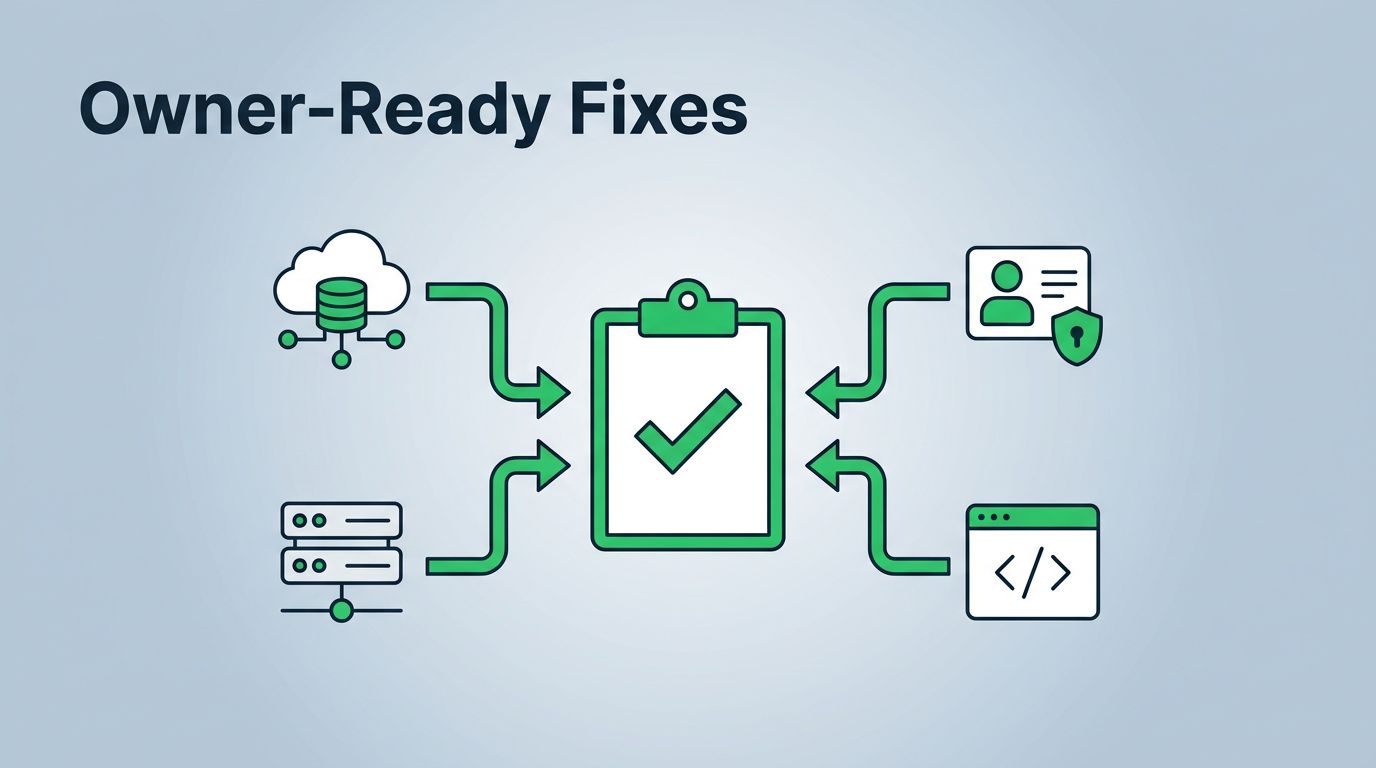
A good owner-ready ticket answers five questions:
- What was found?
- Where is it?
- Why does it matter to the business?
- What change should the owner make?
- How will the fix be checked?
The business context should be plain. Name the service, the data type, and the blast radius. That keeps the owner from guessing what matters most. It also helps managers decide whether the issue needs a fast fix or a planned change.
This approach matches best practices for implementing CTEM, because it ties the finding to context and validation. It also cuts down on back-and-forth.
A weak ticket says, “High-risk vulnerability on server 44.”
A stronger one says, “Patch OpenSSL on the payment API server in the customer checkout cluster. The service handles card data, and the issue is reachable from the internet. Retest after patching and close only when the exposure is gone.”
That extra context saves time. More important, it lets the owner act without waiting for another meeting.
Build a CTEM remediation workflow that keeps work moving
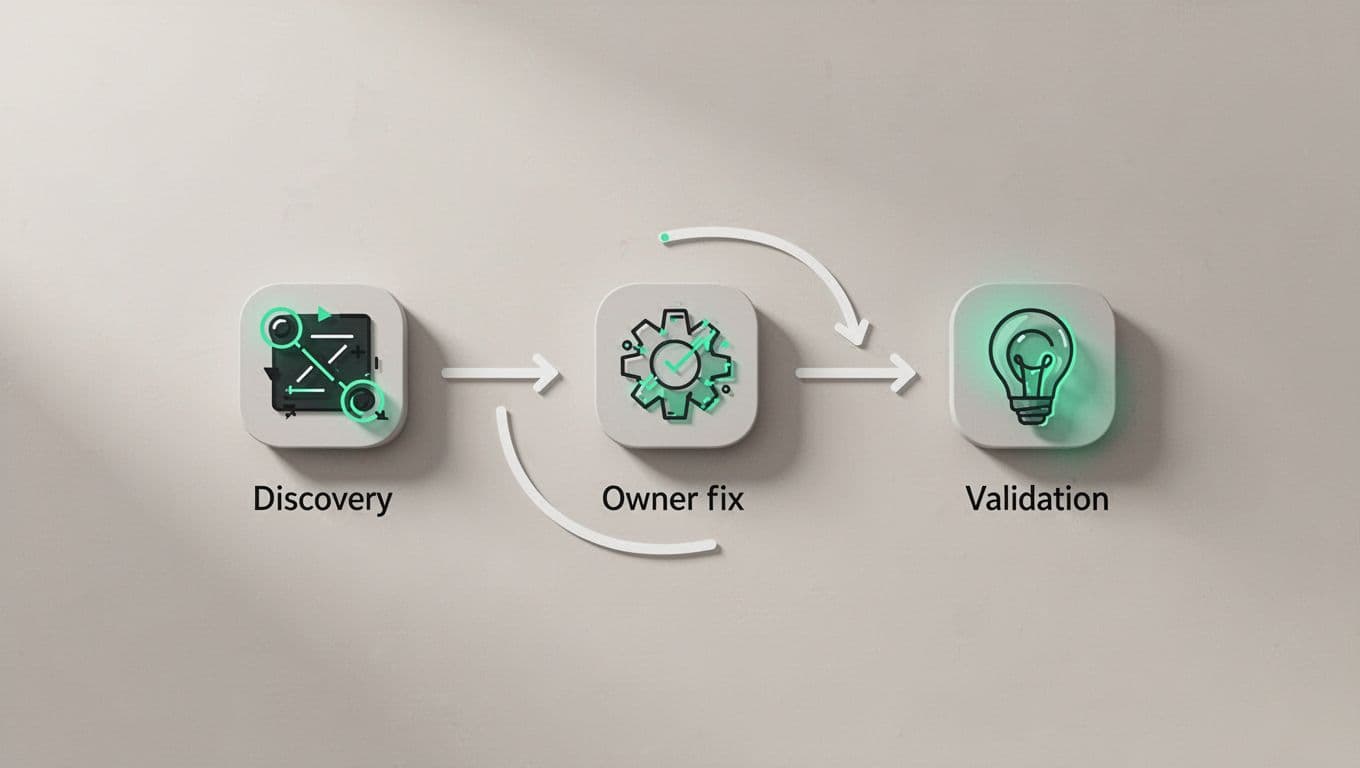
Findings stall when they move by email or chat. They move faster when every issue follows the same path. First, validate the exposure. Next, map the owner. Then open the ticket, set the due date, and define the retest step.
Use the same intake fields for every finding. Include exploitability, business service, evidence, owner, and validation method. That gives the receiving team enough detail to act. It also gives security a clean way to track progress.
A good workflow also needs the same SLA logic every time. High-exposure internet-facing issues should move faster than low-risk internal ones. That keeps the queue fair and visible.
For a practical view of that handoff, see frictionless remediation workflows. The point is not more tooling. The point is fewer handoffs and cleaner decisions.
If the ticket needs another meeting before anyone can act, the workflow is still broken.
Write owner-ready tasks for every team
The wording should sound like work, not a report. Use the language of each team, and keep the ask narrow.
| Team | Common CTEM finding | Owner-ready fix language | Validation |
|---|---|---|---|
| Infrastructure | Internet-facing RDP on a server group | Remove public RDP access on the payments server group, keep admin access through the approved jump host, and confirm the port is closed. | Re-scan the host and confirm no inbound exposure. |
| Cloud | Public storage bucket or overly broad security group | Restrict bucket access to the app role, tighten the security group to the app subnet, and review whether the service still needs the exposure. | Run a cloud posture check after the change. |
| Identity | MFA missing on privileged accounts, stale admin role, or risky service account | Require MFA for the privileged role, disable the unused admin account, or rotate the service account secret before the next review cycle. | Re-check the identity policy and sign-in logs. |
| Application | Vulnerable library in a released service | Upgrade the dependency in the next sprint, redeploy, and confirm the release removes the finding without breaking the service. | Retest with SAST, DAST, or the original scanner. |
Each row names the team, the change, and the proof. That is what keeps CTEM remediation moving. It also reduces the chance that a finding gets reclassified as “someone else’s problem.”
Low-context findings force the owner to become an investigator, and that slows every queue. Tie each fix to business risk, because that is what earns priority when teams are busy.
Some teams need more than tickets. They need a cleaner ownership model, better handoff language, and a way to align fixes with business risk. When that gap exists, Book a Discovery Call with Bud Consulting can be a useful next step.
Owner-focused fixes make CTEM useful
CTEM works when the output is actionable. If a finding cannot name the owner, the impact, and the proof of closure, it is still just noise. The best programs treat ownership as part of the fix, not a side note.
That shift changes the whole remediation cycle. Security stops forwarding alerts, and teams start closing exposures with less friction and more confidence.