table of contents
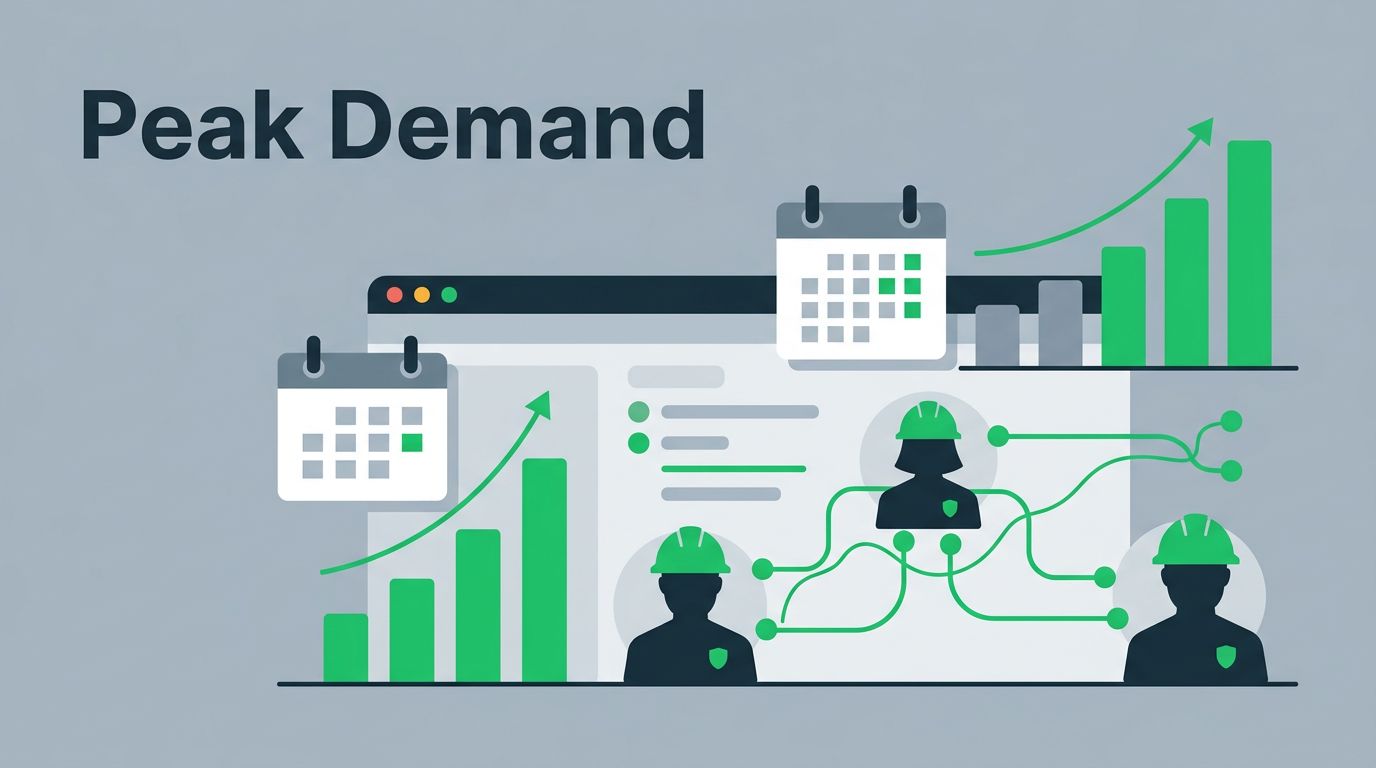
Cybersecurity demand rarely rises in a straight line. One week looks calm, then SOC coverage, cloud hardening, IAM reviews, and incident response all spike at once.
That is where cybersecurity bench planning matters. If your bench is built for steady work, peak demand can turn into slow fills, rushed rates, or lost margin. The firms that stay ready do not guess, they read the signals early and keep the right contractors warm.
Read peak demand before it hits
Peak demand in 2026 usually comes in clusters. A client needs help with a compliance audit, another wants cloud security cleanup, and a third gets pulled into an incident response drill. AI security work adds another layer, because governance, model risk, and threat testing all draw from the same talent pool.
The smartest staffing teams watch for patterns, not just open reqs. Start with a weekly demand calendar, then track proposal volume, renewal dates, audit windows, incident trends, and known client launches. Tag each request by role family, depth, and start date. When the same request shows up three times, it is no longer a surprise.
For market context, the 2026 cybersecurity workforce research shows how AI and compliance keep reshaping demand. That matters because your bench plan should follow the work, not the old org chart.
A second signal comes from lead time. The cybersecurity talent shortage stats make one thing clear, many of the hardest roles still take longer to source than clients expect. That is why peak demand planning is a timing problem as much as a headcount problem.
Build a bench you can actually deploy
A bench works best when every contractor has a clear lane. If everyone sits in the same bucket, resource managers end up overbooking generalists and underusing specialists.
A simple three-tier model helps. It keeps capacity visible without forcing every person into the same utilization target.
| Bench tier | Best use | Main risk |
|---|---|---|
| Ready now | SOC shifts, incident response, cloud remediation | Idle cost if demand slips |
| Ready soon | IAM, GRC, compliance support | Skills go stale if not refreshed |
| Surge specialist | AI security, PAM, niche architecture | Slower deployment if pre-work is missing |

The table shows the tradeoff plainly. A deeper bench improves response time, but it also lowers short-term utilization. A thin bench protects billable hours, but it leaves you exposed when a client wants help next week.
A bench that looks healthy on a spreadsheet can still fail if it needs two weeks to warm up.
That is why the best firms keep contractor profiles current, pre-check references, and refresh rate expectations often. They also separate roles by demand shape. SOC and incident response need fast redeploys. IAM and GRC often move with audit cycles. Cloud security and AI security spike around remediation, policy updates, and new program launches.
Protect margin without starving readiness
Profitability gets fragile when bench planning turns reactive. If you wait until the client calls, you pay for urgency in lost margin, overtime, or a bad fit.
Set utilization bands by tier, not by hope. Ready-now contractors can carry more billable hours because they move faster. Surge specialists may sit lower for a while, yet they protect larger projects when demand lands. That is a better trade than forcing niche experts into whatever work is available.
The same logic applies to 2026 compliance work. CMMC projects, incident reporting deadlines, privacy audits, and third-party risk reviews all create bursts of contractor need. Those bursts reward firms that already know who can step in, who needs a short reset, and who should stay on deck.
Keep one more habit in place, pre-brief contractors on the work they are most likely to see next. A short refresh on client controls, evidence packs, access workflows, or incident playbooks can cut ramp time fast. For incident response, that might mean tabletop practice. For cloud security, it might mean recent patterns in misconfigurations. For IAM, it might mean current policy language and approval flows.

When the bench gets close to a known surge, speed matters more than perfect optimization. If you need help building a stronger pool for cloud security, IAM, SOC, GRC, or incident response, Book a Discovery Call with Bud Consulting.
The best cybersecurity benches do one thing well, they turn uncertainty into a plan. They keep enough capacity warm to move fast, but not so much that margin disappears.
That balance is what separates a busy staffing desk from a reliable one. In peak demand, readiness wins before the first req even lands.