table of contents
You need better security now, but how long will it take? Many business leaders ask this when threats loom large. A cybersecurity consulting engagement can wrap up in weeks or stretch months, depending on your setup.
Scope drives the timeline. Simple audits finish fast. Full overhauls demand more time. Let’s break down what shapes the length so you pick the right fit.
Typical Timeframes for Cybersecurity Consulting Engagements
Most engagements last 1 to 6 months. Quick assessments often end in 2 to 4 weeks. They spot gaps without deep changes.
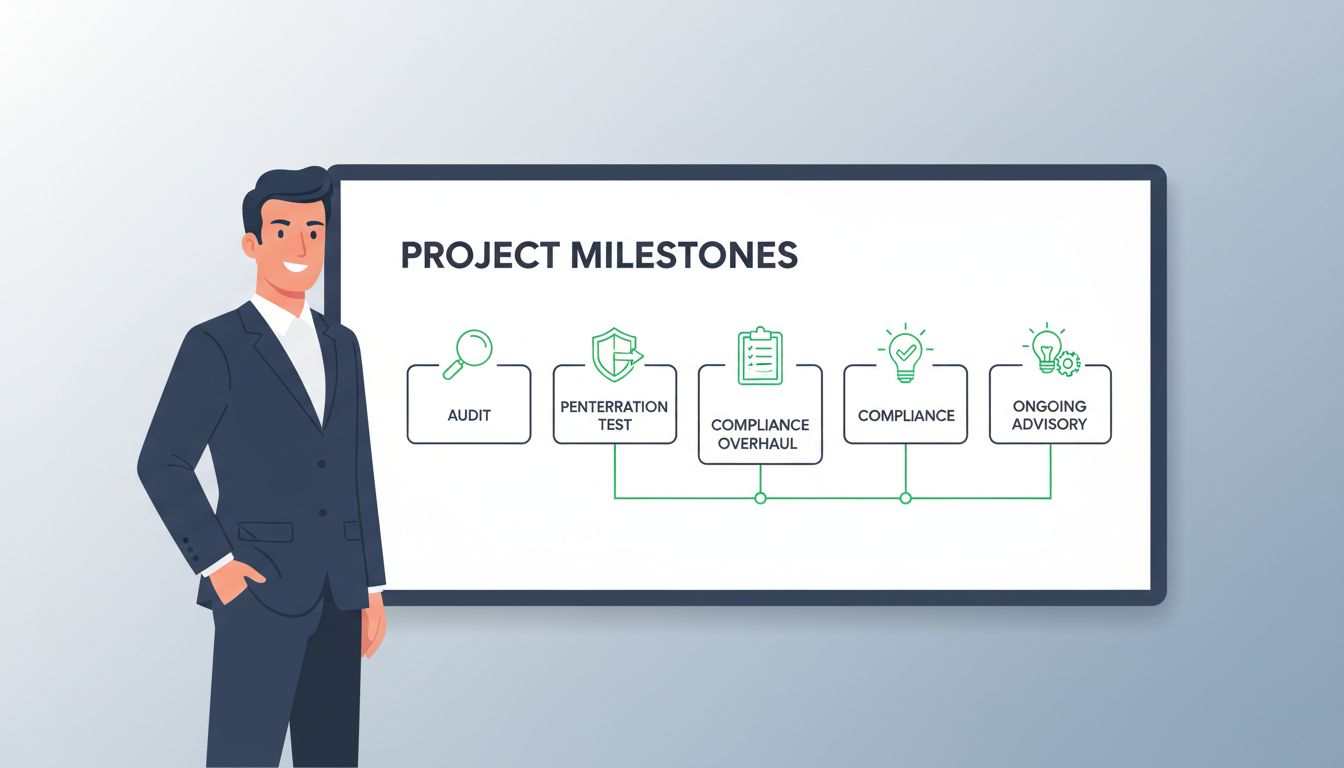
Larger projects run 3 to 12 months. Think compliance pushes or network redesigns. For example, a penetration test might take 4 to 8 weeks total. Ongoing advisory roles extend beyond a year. They provide steady guidance as threats shift.
Your industry matters too. Finance firms face tight rules, so timelines stretch. Startups might wrap audits quicker. Check APH Solutions’ FAQ on typical cyber security consulting durations for real-world ranges.
Bud Consulting sees this pattern across clients. Short gigs fix urgent holes. Longer ones build lasting defenses. Always ask for a custom timeline upfront.
Core Phases of a Cybersecurity Consulting Engagement
Every engagement follows clear steps. First comes discovery. Consultants review your systems and risks. This phase takes 1 to 4 weeks.
Next, they analyze findings. Reports highlight weak spots. You get prioritized fixes. Expect 2 to 6 weeks here, based on data volume.
Implementation follows. Teams apply changes like patches or training. This core work spans 4 to 16 weeks. Final reviews confirm results. Handover wraps it up in 1 to 2 weeks.
See the process outline from a NYC managed services provider for a step-by-step view. Phases overlap sometimes. Good firms adjust to your pace.
Your input speeds things. Provide access early. Delays hit here most.
Common Delays in Cybersecurity Consulting Projects
Timelines slip for predictable reasons. Scope creep tops the list. New issues pop up mid-project. Clients add requests without extra time.
Internal hurdles slow progress. Approvals drag from busy execs. Teams lack bandwidth for interviews or tests. Data access issues compound this.
Vendor mismatches hurt too. Poor communication leads to rework. Budget fights pause work. Read Cultivating Security’s take on why security projects fail to avoid these traps.
External factors play in. Supply chain lags for tools. Regulatory shifts demand pivots. Most delays stem from people, not tech.
Spot these early. Set firm boundaries in contracts.
Steps to Speed Up Your Cybersecurity Consulting Engagement
Prep sets the pace. Define goals before kickoff. List must-haves like “pass SOC 2 audit.”
Assign a point person. They handle requests fast. Clear their calendar for consultant needs.
Gather docs ahead. Share policies, logs, and diagrams. This cuts discovery time in half.
Choose fixed-scope projects first. They predict better than open-ended ones. Track weekly via simple dashboards.
Internal training helps. Staff learns alongside consultants. Adoption happens smoother.
Firms like ours at Bud Consulting stress this. Clients who prep finish 20-30% faster. Book a Discovery Call with Bud Consulting to map your timeline right.
Short-Term Projects vs. Ongoing Retainers
Pick short-term for fixes. Audits or breach responses suit 1-3 month gigs. They deliver quick wins. Costs stay low.
Opt for retainers when risks evolve. Monthly check-ins spot new threats. Culture shifts take time too. These run 6-24 months or more.
Short projects suit tight budgets. Retainers build expertise internally. You gain knowledge over time.
Weigh benefits. A one-off saves cash now. Ongoing cuts future breaches. Compare your threat level.
Many blend both. Start short, extend if needed.
Making the Right Choice for Your Business
Timelines vary, but preparation controls most. Short audits take weeks. Full builds span months. Phases stay consistent: discover, analyze, implement, review.
Delays come from scope shifts or slow internals. Prep smart to finish ahead. Short gigs fix urgents. Retainers guard long-term.
Think about your gaps. What’s your biggest risk? Match the engagement type. Strong security starts with realistic plans.
Ready to start? Reach out for tailored advice. Your timeline depends on action today.